Struggling to pick the right drill for your job? You worry that the wrong choice will waste time, ruin parts, and cost you money. Let's make sure that never happens.
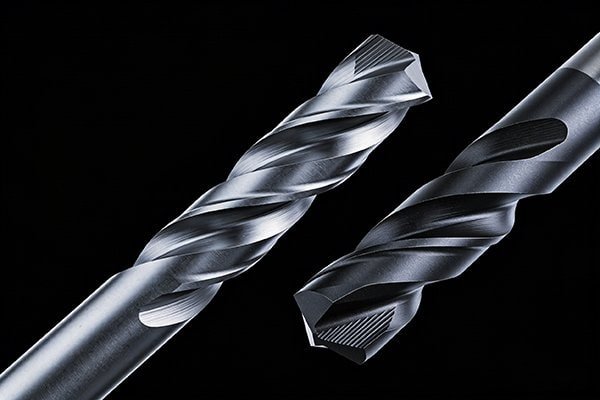
A solid carbide drill1 is a high-performance cutting tool made from tungsten carbide2. It offers superior hardness, heat resistance, and wear resistance. This allows for much faster cutting speeds and a significantly longer tool life3 compared to standard high-speed steel (HSS)4 drills, especially in tough materials.
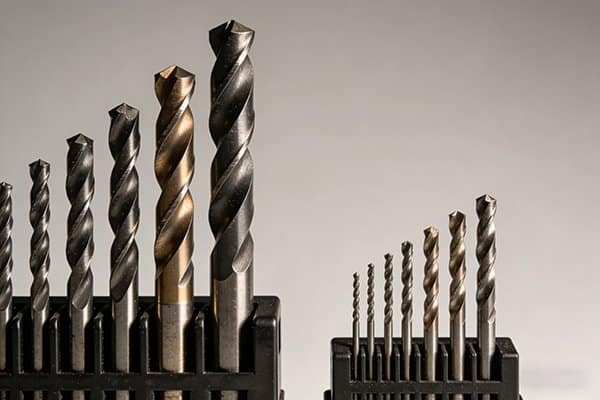
Choosing the right drill bit can feel overwhelming. I've been in this business since 2012, and I've seen it all. A machinist in Brazil called me once, frustrated because his drills were wearing out too fast on a big stainless steel job. He was using a standard HSS drill. We switched him to one of our coated solid carbide drill1s, and his tool life3 increased by more than ten times. It's not just about buying a tool; it's about buying the right solution. Let’s walk through what you need to know to find that solution every time.
Why choose solid carbide over HSS or cobalt drills?
Are your HSS drills running too slow? You're constantly changing worn-out tools, which stops production and hurts your bottom line. It's time to consider a serious upgrade.
Solid carbide drills are chosen for their massive gains in efficiency and lifespan. They can run 3 to 5 times faster than HSS and last dozens of times longer. This makes them the best choice for high-volume production and for machining difficult materials like stainless steel or hardened alloys5.
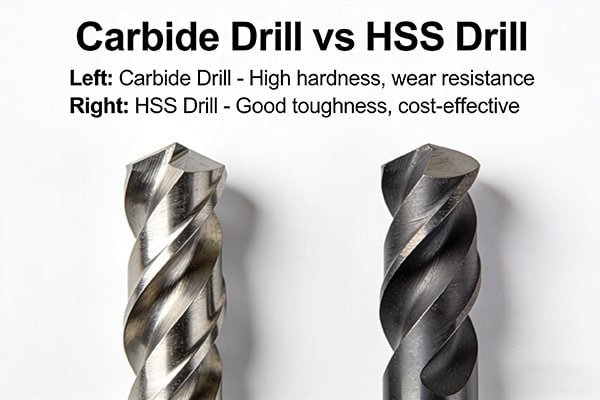
In our factory, we work with cutting tools all day, every day. The difference between High-Speed Steel (HSS) and solid carbide is like night and day. HSS is a tough steel, which is good, but it softens quickly when it gets hot. Cobalt drills are a step up from HSS, with a bit of cobalt mixed in to handle more heat. But solid carbide is in a different league. It's made from tungsten carbide2 powder fused with a binder like cobalt. This material is incredibly hard and stays hard even at very high temperatures. We call this "hot hardness." This single property is why carbide can cut so much faster and last so much longer.
Performance Comparison
Let's break down the key differences in a simple way.
| Feature | High-Speed Steel (HSS) | Cobalt | Solid Carbide |
|---|---|---|---|
| Hardness | Good | Better | Best |
| Heat Resistance | Fair | Good | Excellent |
| Typical Speed | Slow | Medium | Very Fast |
| Tool Life | Short | Medium | Very Long |
| Cost | Low | Medium | High |
| Best For | General purpose, soft materials | Abrasive materials, stainless | Hard materials, high production |
While the initial price of a solid carbide drill1 is higher, the performance benefits almost always lead to a lower cost per hole6. You get more parts done in less time, with fewer tool changes.
What are the most critical features to check before you buy?
You're looking at a catalog, and all the drills look like simple metal sticks. But picking the wrong one can break the tool, scrap the part, and stop your machine.
Before buying, you must check four things: the carbide grade7, the drill point geometry8, the flute design9, and the coating10. These features directly impact the drill's performance, lifespan, and suitability for the material you are cutting. A small detail here can make a huge difference in your results.
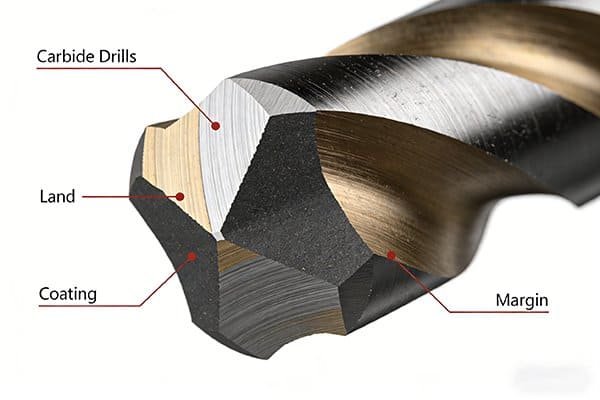
I've learned that the details are everything. A drill isn't just a drill. It's a precisely engineered tool. Let's look at the most important parts you need to understand.
1. Carbide Grade
Not all carbide is the same. A "micro-grain" carbide has very small particles, which makes it very tough and resistant to chipping. This is great for unstable conditions or tough materials. A grade with a higher cobalt content might be better for resisting heat. We use premium tungsten steel from sources like Walter in Germany to ensure our grades are consistent and high-quality.
2. Drill Point Geometry
The tip of the drill does all the work. The most common feature is the point angle.
- 118° Angle: A general-purpose angle for soft materials like aluminum and mild steel.
- 135°/140° Angle: A flatter angle used for harder, tougher materials like stainless steel and high-temp alloys. It requires more thrust but creates a more accurate hole. Many modern drills also have a "self-centering" or "split-point" design, so you don't need a center drill first.
3. Flute Design
The spiral grooves on a drill are called flutes. They do one critical job: get the chips out of the hole. A "slow" spiral (lower helix angle, like 30°) is strong and good for hard materials. A "fast" spiral (higher helix angle, like 45°) is better for soft materials like aluminum because it ejects chips very quickly.
4. Coating
The coating10 is a micro-thin layer applied to the drill that makes it better. It's not just for color.
- TiN (Titanium Nitride): A basic, gold-colored coating10 for general use.
- TiAlN (Titanium Aluminum Nitride): A popular, high-performance coating10. It's excellent for high-heat applications like drilling stainless or hardened steel.
- Specialty Coatings: There are many others, like DLC for aluminum, that reduce friction. We have five different coating10 series to match any application.
How do you match a drill to your material and machine?
You bought a top-of-the-line drill, but it broke on the first hole. You blame the tool, but the real problem is a mismatch. You need the right tool for the right job.
To match a drill, first look at your workpiece material and choose a drill with the right geometry and coating10. Second, look at your CNC machine11. It must be rigid and have enough spindle speed (RPM) to use the carbide drill effectively. A weak machine will cause vibrations that shatter a carbide tool.
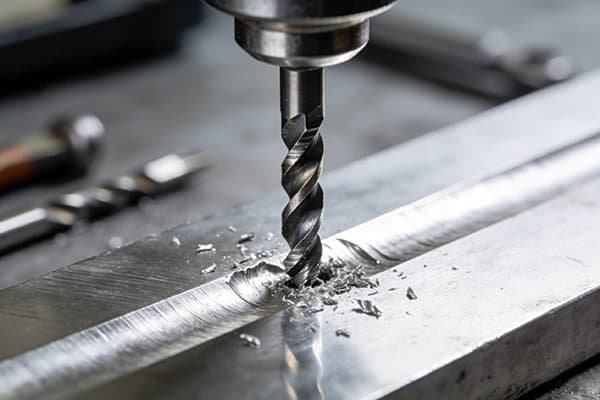
This is one of the most common issues we help our customers with. A customer in Poland was trying to drill hardened steel with a standard drill for mild steel. It just wouldn't work. We helped him select a drill with a tough carbide grade7, a 140° point angle, and a TiAlN coating10. The problem was solved instantly. Your machine and your material dictate your tool choice.
Matching the Drill to the Workpiece Material
Different materials create different challenges. Here is a simple guide to help you get started.
| Workpiece Material | Recommended Drill Features |
|---|---|
| Aluminum | A fast helix angle (for chip removal), polished flutes, and a sharp cutting edge. A coating10 like DLC can prevent material from sticking to the tool. |
| Stainless Steel | A tough carbide grade7, a 135° or 140° self-centering point12, and a heat-resistant coating10 like TiAlN. Internal coolant is highly recommended. |
| Hardened Steel (45-65 HRC) | A very wear-resistant micro-grain carbide, a robust web design, and an advanced coating10 designed for extreme heat. |
| Cast Iron | A drill with high abrasion resistance. A straight flute design9 can sometimes be used. The coating10 should be designed to resist abrasive wear. |
Matching the Drill to Your Machine
A solid carbide drill1 is a high-performance tool, and it needs a high-performance machine.
- Rigidity: Carbide is very hard but also brittle. If your machine's spindle, tool holder, or work-holding is not rigid, it will vibrate. This vibration, or "chatter," will chip and break the drill bit.
- Spindle Speed (RPM): Carbide drills need to run fast to work correctly. If your machine can't reach the recommended RPM, you won't get the tool's full benefit.
- Coolant: For deep holes or tough materials, through-spindle coolant is a game-changer. It blasts chips out of the hole and keeps the cutting edge cool. Many of our drill series (3D, 5D, 8D, etc.) are available with internal coolant13 channels for this reason.
How do you evaluate the true cost vs. the price tag?
You see an expensive carbide drill and a cheap HSS drill. It feels smart to save money and buy the cheaper one. But this often costs you more in the long run.
The true cost of a drill is the "cost per hole6," not the purchase price. A carbide drill might cost three times more, but if it drills 20 times more holes and works five times faster, it is dramatically cheaper. You must factor in tool life3, cycle time, and machine downtime14.

I always tell our customers, especially the purchasing managers, to look beyond the price on the invoice. Your goal is to make parts efficiently and profitably. The drill is just a small part of that total cost. A cheap tool that wears out quickly forces your expensive CNC machine11 and its operator to sit idle while tools are changed. That downtime14 is incredibly expensive.
Calculating Your Cost Per Hole
Here's a simple way to think about it:
Cost Per Hole = (Tool Price / Number of Holes Drilled) + (Machine Cost Per Minute * Time to Drill One Hole)
Let's imagine your machine's time is worth $60 per hour, or $1 per minute.
- HSS Drill: Costs $10, drills 100 holes, and takes 30 seconds (0.5 minutes) per hole.
- Cost per hole = ($10 / 100) + ($1 * 0.5) = $0.10 + $0.50 = $0.60 per hole.
- Carbide Drill: Costs $30, drills 2,000 holes, and takes 6 seconds (0.1 minutes) per hole.
- Cost per hole = ($30 / 2,000) + ($1 * 0.1) = $0.015 + $0.10 = $0.115 per hole.
In this example, the "expensive" carbide drill is more than five times cheaper to use.
The Hidden Costs of a Cheap Tool
- Downtime: Every time an operator stops to change a tool, you lose money. A drill that lasts an entire shift without being changed is far more valuable than one that needs to be replaced every hour.
- Inconsistent Quality: Worn tools produce oversized or rough holes. This can lead to scrapped parts, which is a total loss of material, time, and money. A long-lasting carbide drill produces consistent, high-quality holes for thousands of cycles.
What makes a supplier a reliable partner for your tooling needs?
You found a supplier with low prices online. But when you have a technical problem, you can't get any help. The tools are inconsistent, and your production suffers.
A reliable supplier15 is a partner, not just a seller. They provide consistent, high-quality tools, offer expert technical support16 to solve your problems, and maintain a stable inventory so you never have to wait. They should care about improving your machining process, not just making a single sale.

Since we founded NV-Tool in 2012, our goal has been to be a partner to our B2B customers. We work with distributors, large machine shops, and automotive manufacturers in markets from Mexico to Poland. They don't just need tools; they need reliable solutions. A good partner understands this. They invest in their manufacturing, their people, and their customers' success. I believe that's what sets a great supplier apart.
Key Qualities of a Good Supplier
- Advanced Manufacturing: A good partner controls their quality. We have our own production lines for inserts, solid carbide end mills, and PVD coating10s. This means we can ensure every tool meets our high standards.
- Premium Materials: The final tool is only as good as the raw material it's made from. A reliable supplier15 is transparent about where their materials come from.
- Comprehensive Technical Support: Your supplier should be able to provide cutting parameters, help you troubleshoot problems, and recommend the best tool for a new job. This support saves you time and money.
- Guaranteed Satisfaction: A partner stands behind their product. That's why we offer a 100% satisfaction guarantee. If our tools don't provide exceptional value, we'll give you a full refund.
- Stable Inventory & Logistics: You need your tools on time. A good partner keeps thousands of standard items in stock and has experience with international shipping, like our free shipping offer for orders over $30,000 USD.
Where can you find our full range of solid carbide drill1s for sale?
You've learned what to look for in a carbide drill and a supplier. Now you need a reliable source for high-performance tools. Where do you go from here?
We offer a complete range of solid carbide drill1s for industrial B2B clients. Our lineup includes our 3D, 5D, 8D, and up to 16D series, with options for internal coolant13 and micro-drilling17. You can access our full catalog by contacting our team directly for a consultation and wholesale pricing.
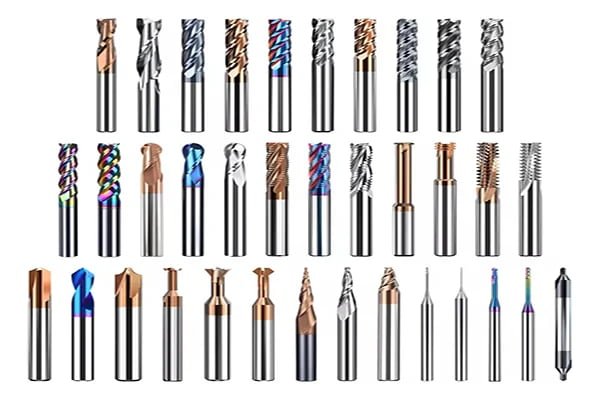
We are a factory, and our focus is on serving manufacturers, distributors, and large machine shops. We do not engage in retail business. Our strength is in providing industrial-grade cutting tools at a great value, either from our huge stock of standard products or through custom solutions designed for your specific needs. We have helped over 1,000 customers in 25 countries improve their drilling operations, and we are confident we can help you too.
Our Solid Carbide Drill Solutions
- Standard Drills (3D/5D/8D): For general-purpose to deep-hole drilling.
- Deep Hole Drills (12D/16D): Engineered for stability in very deep holes.
- Internal Coolant Options: Available for most series to maximize performance and tool life3.
- Micro Drills: For precision drilling of very small holes.
If you are a distributor, a large manufacturing company, or a machine shop with high tool consumption, we want to be your partner. We are committed to building long-term relationships by providing excellent tools and dedicated support.
Conclusion
Choosing the right solid carbide drill1 means looking at the material, features, and true cost. A reliable supplier15 who acts as a partner is the key to your success.
Explore the advantages of solid carbide drills for high-performance cutting and longer tool life. ↩
Learn about tungsten carbide's properties and why it's ideal for cutting tools. ↩
Find strategies to maximize the lifespan of your drilling tools. ↩
Understand the key differences between HSS and solid carbide drills for better tool selection. ↩
Learn about the challenges of drilling hardened alloys and the best practices. ↩
Learn how to evaluate the true cost of drilling to optimize your budget. ↩
Discover how different carbide grades impact the performance and durability of drills. ↩
Learn about the significance of drill point geometry in achieving precise drilling. ↩
Explore how flute design influences chip removal and drilling efficiency. ↩
Find out how various coatings enhance drill performance and longevity. ↩
Get insights on selecting a CNC machine that complements solid carbide drill usage. ↩
Discover the benefits of self-centering points for accurate drilling. ↩
Explore how internal coolant can improve drilling performance and tool life. ↩
Understand how downtime affects productivity and costs in manufacturing. ↩
Discover the key traits of a reliable supplier that can enhance your machining process. ↩
Find out what technical support you should expect from your tooling supplier. ↩
Learn about micro-drilling techniques and their importance in precision tasks. ↩