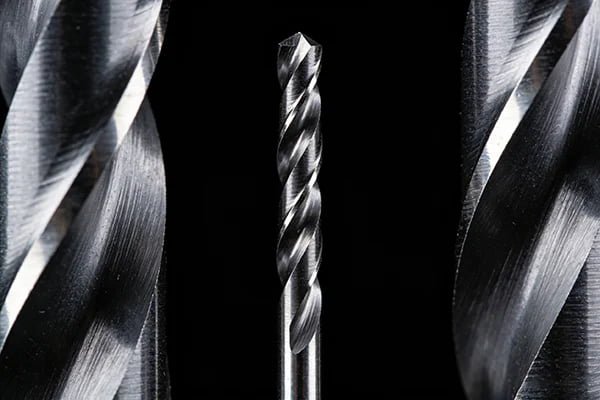
Struggling with slow drilling speeds and drills that wear out too fast? This downtime costs money. Carbide drills offer a massive leap in speed, tool life, and overall performance.
A carbide drill is a cutting tool made from extremely hard tungsten carbide. It is essential for high-performance machining because it cuts much faster, lasts significantly longer, and handles difficult materials far better than standard high-speed steel (HSS) drills, boosting productivity and precision in any workshop.
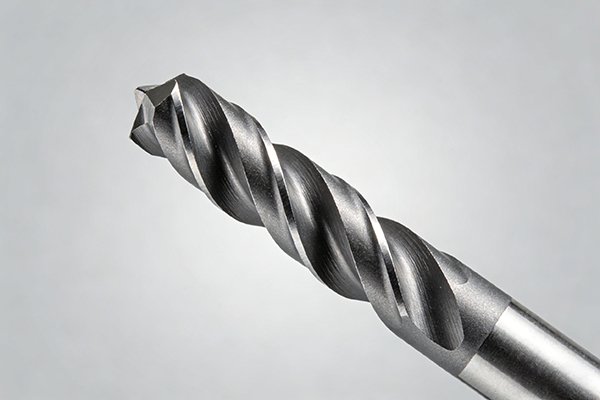
You've probably heard machinists praise carbide tools, but what really sets them apart from the old HSS drills we all started with? It's not just a minor upgrade; it's a completely different class of tool technology. The difference in performance is so huge that it can fundamentally change how a shop approaches a job, turning a difficult task into a profitable one. Let's break down the science behind this amazing material and see why it has become a game-changer for any serious manufacturing operation.
What is "cemented carbide" actually made of?
Ever wonder what makes carbide so incredibly tough? The name "tungsten steel" is a bit misleading. The real secret is in its unique composite structure, which is far from simple steel.
Cemented carbide is a composite material, not just a type of steel. It’s made by mixing very fine tungsten carbide (WC) powder with a metal binder, which is usually cobalt (Co). This mix is then pressed into shape and heated in a furnace, a process called sintering.
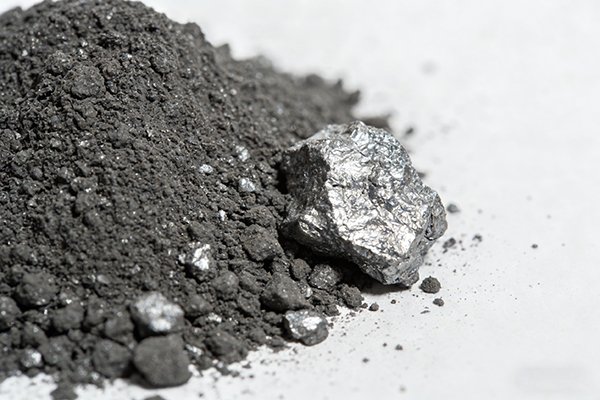
When I first got into this business, I thought "tungsten steel" meant it was just a very hard type of steel. But it's a completely different technology called powder metallurgy. We start with two key ingredients. The first is tungsten carbide (WC) powder. This stuff is incredibly hard and gives the drill its amazing wear resistance. But on its own, it's too brittle. That's where the second ingredient, cobalt (Co), comes in. Cobalt acts like a glue, holding all the hard tungsten carbide grains together. It provides the toughness needed to keep the tool from shattering under cutting pressure. By changing the amount of cobalt, we can fine-tune the drill's properties. More cobalt means more toughness for rough jobs, while less cobalt means higher hardness for fine finishing.
| Component | Chemical Symbol | Primary Function |
|---|---|---|
| Tungsten Carbide | WC | Provides extreme hardness and wear resistance |
| Cobalt Binder | Co | Provides toughness and holds WC grains together |
How hard is carbide compared to high-speed steel (HSS)?
You know carbide is hard, but do you know how much harder it really is? The difference isn't just a small step up; it's a massive leap in material science.
Carbide is dramatically harder than high-speed steel (HSS). On the Rockwell Hardness scale, solid carbide typically measures around 90 HRA or more. In contrast, even the best HSS usually stops at about 65-67 HRC. This extreme hardness is the reason carbide resists wear so well.
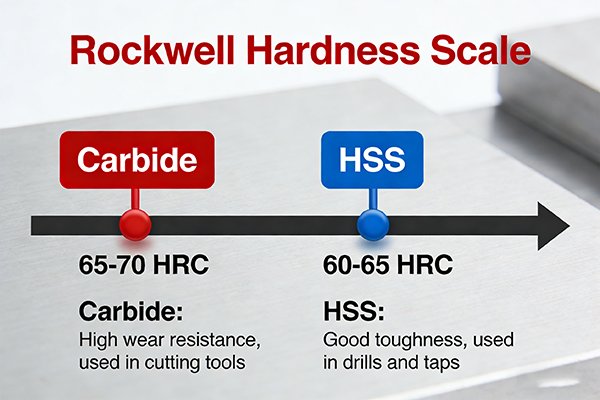
It's one thing to see the numbers, but it's another to feel the difference on the machine. An HSS drill feels capable, like a good quality knife. A carbide drill feels more like a diamond; it just doesn't want to get dull. We use different scales to measure them—HRA for the super-hard carbides and HRC for steels. While they aren't directly one-to-one, the gap is huge. This superior hardness means a carbide drill can slice through materials that would instantly dull an HSS bit. We use them on hardened steels, tough stainless grades, and abrasive cast irons. The carbide edge just keeps cutting, maintaining its sharpness for thousands of holes where an HSS drill might only last for a hundred. This is the key to consistent, high-quality production.
| Feature | High-Speed Steel (HSS) | Cemented Carbide |
|---|---|---|
| Hardness (Typical) | 65-67 HRC | >90 HRA |
| Wear Resistance | Good | Exceptional |
| Impact on Machining | Requires slower speeds | Allows much higher cutting speeds |
| Tool Life | Moderate | Extremely long |
Why can carbide drills run so much faster and hotter?
If you push an HSS drill too fast, you'll burn it up in seconds. But carbide drills seem to thrive on the heat and speed. The reason is a special property called "hot hardness."
Carbide drills can run so fast and hot because of their exceptional hot hardness. Unlike HSS, which gets soft at high temperatures, carbide keeps its extreme hardness even when it's glowing red-hot, at around 800-1000°C. This lets it hold a sharp edge at incredible cutting speeds.
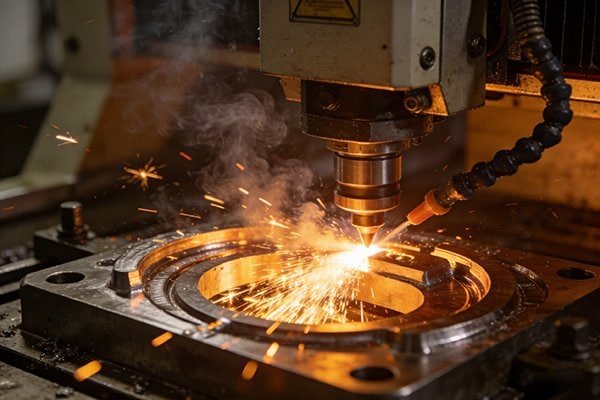
I remember the first time I saw a carbide drill running properly. The chips were coming off blue and sometimes even red, and the speed was unbelievable. The secret is that carbide doesn't care about the heat. HSS is still steel, and when steel gets too hot, it anneals—it loses its hardness and the cutting edge is gone. Carbide's internal structure is just much more stable at high temperatures. This property is why we can run our spindles at speeds 3 to 5 times faster than with HSS. On top of that, we add advanced coatings like TiAlN (Titanium Aluminum Nitride). This thin ceramic layer acts as a heat shield, protecting the carbide substrate and reducing friction. This lets us push the speeds and feeds even higher, which means we make parts faster and our machine time is more profitable.
| Tool Material | Max. Safe Temperature | Consequence of Exceeding Limit |
|---|---|---|
| High-Speed Steel (HSS) | ~600°C | Rapidly softens, cutting edge fails |
| Uncoated Carbide | ~800°C | Retains hardness and cutting ability |
| Coated Carbide (TiAlN) | ~1000°C+ | Coating protects substrate, longer life |
What is the main weakness of a carbide drill?
Carbide sounds like the perfect tool material, but it has one major catch. If you don't respect its limits, it can break instantly, costing you a tool, a part, and a lot of time.
The main weakness of a carbide drill is its brittleness. While it is incredibly hard, it does not have the toughness of HSS. This means it is very sensitive to shock, vibration, and bending. A poor setup, machine vibration, or an interrupted cut can easily cause the drill to chip or shatter.
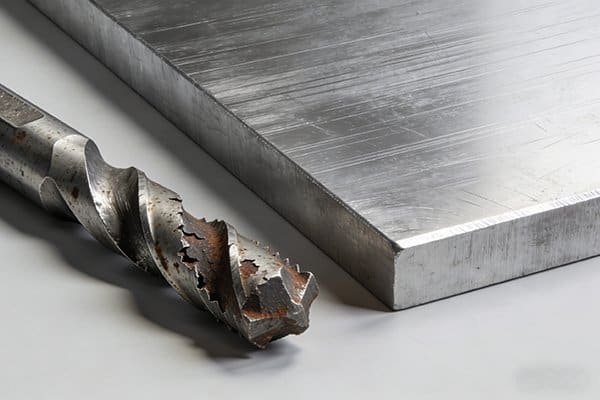
There is always a trade-off in material science between hardness and toughness. Think of it like this: a pane of glass is very hard, but it shatters if you drop it. A rubber mallet isn't hard at all, but you can't shatter it. Carbide is a lot like glass—super hard, but brittle. HSS is much tougher and can handle a lot more abuse. In our shop, this means we have to be very careful with our setups when using carbide. The machine tool must be rigid and stable. The workpiece has to be clamped down securely so it can't move. We use high-quality tool holders, like hydraulic chucks or precision collets, to minimize runout. Any vibration or unexpected shock can snap a carbide drill in an instant. This is why carbide demands a stable, controlled, and professional machining environment to perform its best.
What are the different types of carbide drills?
Not all carbide drills are built the same way. Using the wrong type for your specific application can lead to poor results, broken tools, or wasted money. Let's look at the main categories.
The main types are solid carbide, carbide-tipped, and indexable insert drills. Solid carbide drills are made entirely of carbide for maximum rigidity. Carbide-tipped drills have a steel body with a brazed carbide tip. Indexable drills use replaceable carbide inserts in a steel holder, offering great economy for larger holes.
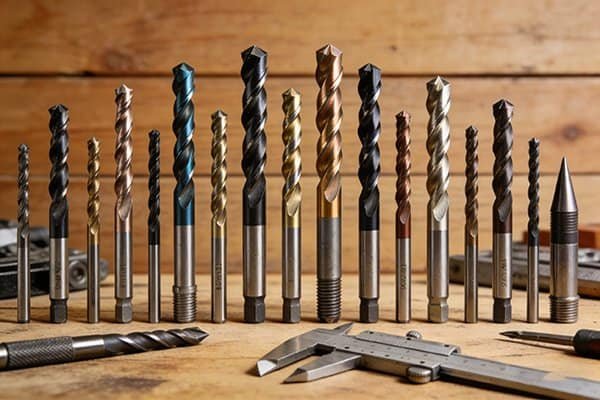
In our factory, we manufacture all three types because our customers have different needs. Solid carbide drills are the champions of precision and performance. They are best for small to medium-sized holes where accuracy and hole quality are critical. Many of them have coolant channels running through the center to blast chips out of the hole. Carbide-tipped drills are a good middle-ground. They have a tough steel body that can absorb some vibration, with a hard carbide tip doing the cutting. They are more affordable than solid carbide but not as rigid. Finally, for big holes, indexable insert drills are the most economical choice. You have a reusable steel body and just replace the small, inexpensive carbide inserts when they wear out. It's not as precise as a solid carbide drill, but for roughing out large holes, it's the most cost-effective way to go.
| Drill Type | Best For... | Key Advantage | Key Disadvantage |
|---|---|---|---|
| Solid Carbide | High precision, difficult materials | Maximum rigidity, speed, and accuracy | Higher initial cost, brittle |
| Carbide-Tipped | General purpose, job shops | Good balance of cost and performance | Less rigid than solid carbide |
| Indexable Insert | Large diameter holes, high volume | Lowest cost per hole, easy maintenance | Lower precision, needs a rigid setup |
When should you always choose a carbide drill over HSS?
Knowing when to spend the extra money on carbide can be a tough call. But in certain situations, making the wrong choice will cost you much more in lost time and poor quality.
You should always choose a carbide drill for high-volume production, where cycle time is critical. It's also the only real choice for machining hard or abrasive materials like stainless steel, hardened steel, titanium, or cast iron. Finally, use carbide when you need superior hole quality and tight tolerances.
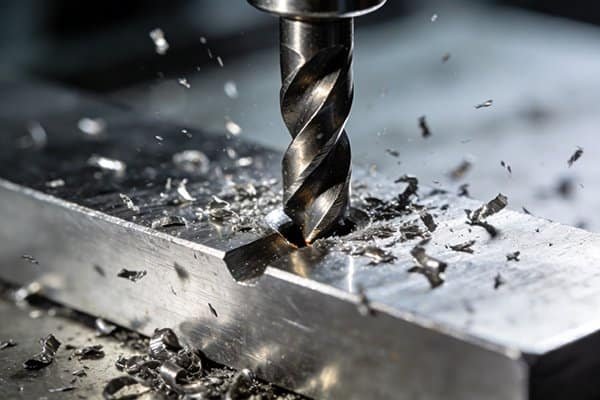
In our experience helping customers, the decision becomes very clear in three main situations. First is high-volume production. A carbide drill might cost more upfront, but if it runs four times faster and lasts ten times longer, the savings in machine time and labor are massive. Your cost per hole drops significantly. The second situation is when you're cutting difficult materials. If you're trying to drill hardened tool steel or work-hardening stainless steel with HSS, you're going to have a bad day. Carbide is designed for these tough jobs. It cuts them cleanly without wearing out after a few holes. The third case is when precision is non-negotiable. The incredible rigidity of a solid carbide drill means it drills a straighter, rounder, and more accurately sized hole. This often means you can skip a follow-up reaming operation, saving a whole step in the process.
Conclusion
Carbide drills are essential for modern manufacturing. Their amazing speed, longevity, and ability to cut tough materials make them a vital tool for any shop focused on real productivity and precision.