
Struggling with tools that wear out too fast? This constant replacement eats into your profits and slows down production. You need a material that can withstand demanding machining conditions1.
Carbide's remarkable wear resistance2 comes from its composite structure. It combines extremely hard tungsten carbide (WC) particles3 with a tough cobalt (Co) metal binder4. The WC provides hardness, while the cobalt prevents the tool from shattering, creating a perfect balance for superior performance and tool life5e](https://nv-tool.com/how-do-you-develop-a-winning-machining-strategy/)%%%FOOTNOTE_REF_6%%%.
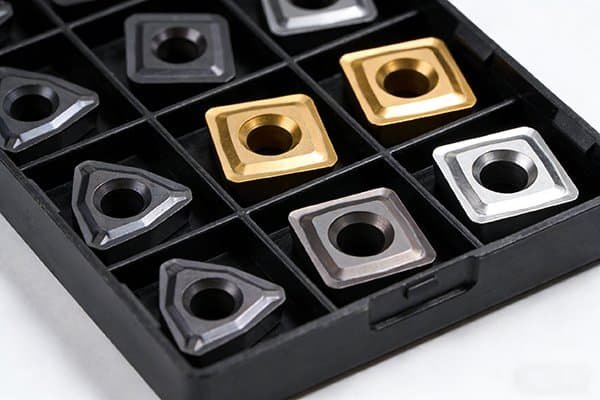
In my years in the cutting tool industry7, I've seen countless shops transform their efficiency just by understanding the fundamentals of their tools. It’s not just about buying a tool; it’s about knowing why it works. This knowledge is the key to unlocking better performance, longer tool life6, and ultimately, a healthier bottom line for your business. Let's dive into what makes carbide the champion of wear resistance.
What is carbide's secret to resisting wear?
Are your tools failing sooner than you expect? It's frustrating when tools can't handle the pressure, leading to frequent changes and inconsistent parts. You need a reliable solution.
The secret is its two-part composition. Tungsten carbide (WC) particles are incredibly hard, providing the primary defense against abrasion. A metallic cobalt (Co) binder then acts like cement, holding these hard particles together and giving the tool the toughness it needs to resist chipping8 and breaking.
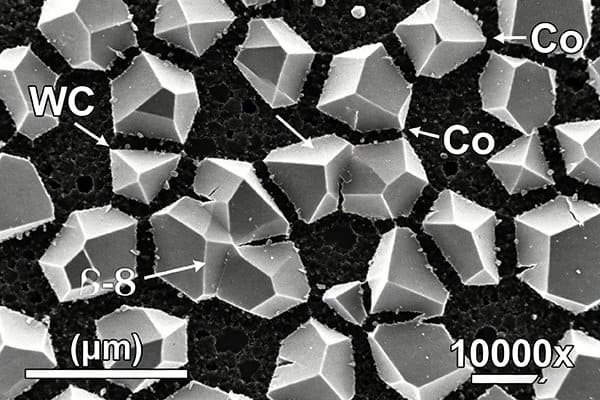
To really understand this, think of it like reinforced concrete. The tungsten carbide particles are the hard gravel and stones. On their own, they are strong but brittle. The cobalt binder is the cement that holds all the stones together, creating a single, robust structure that is far stronger than either component alone. The WC particles are the first line of defense, directly resisting the abrasive forces from the workpiece. The cobalt binder provides the essential toughness, absorbing impacts and preventing the tool from fracturing under the immense stress of cutting. This clever combination is why cemented carbide can outperform materials like high-speed steel9 by such a wide margin. It’s a perfect partnership between hardness and toughness, engineered at a microscopic level.
How does the cobalt binder create the wear vs. toughness trade-off?
Have you ever picked a tool that was too brittle and chipped, or one that was too soft and wore out quickly? Finding that perfect balance for your job can be tricky.
The amount of cobalt binder directly controls the trade-off between hardness and toughness. A lower cobalt content10 results in a harder, more wear-resistant tool, ideal for finishing. A higher cobalt content10 makes the tool tougher and more impact-resistant, perfect for roughing and interrupted cuts.
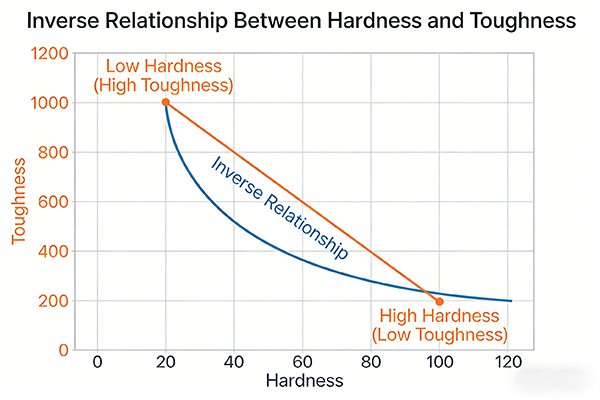
The cobalt content10 is like a tuning knob for the tool's properties. When we manufacture carbide, we precisely control this ratio to create different grades for different applications. More cobalt creates a "cushion" around the hard tungsten carbide particles, making the overall material better at absorbing shocks. This is why high-cobalt grades excel in roughing or when machining on less stable machines. On the other hand, reducing the cobalt packs the hard WC particles closer together, increasing the overall hardness and wear resistance of the tool. This is ideal for smooth, continuous finishing cuts where dimensional accuracy and surface finish are critical. Understanding this trade-off is the first step to choosing the right grade.
| Cobalt Content | Key Property | Best For... |
|---|---|---|
| Low (3-6%) | High Hardness | Finishing, continuous cutting, high precision |
| Medium (7-9%) | Balanced | General purpose machining, versatile applications |
| High (10-15%) | High Toughness | Roughing, interrupted cuts, unstable conditions |
How does carbide grain size11 fine-tune its wear properties?
Do you find that even within the same grade, some tools perform better than others? The secret might be smaller than you think. It often comes down to the microscopic grain structure.
The size of the tungsten carbide (WC) grains is another critical factor. Finer grain size11s create a denser, more uniform material with higher hardness and better wear resistance. Tools made with submicron or ultra-fine grain carbide12 can hold a sharper edge and last significantly longer.
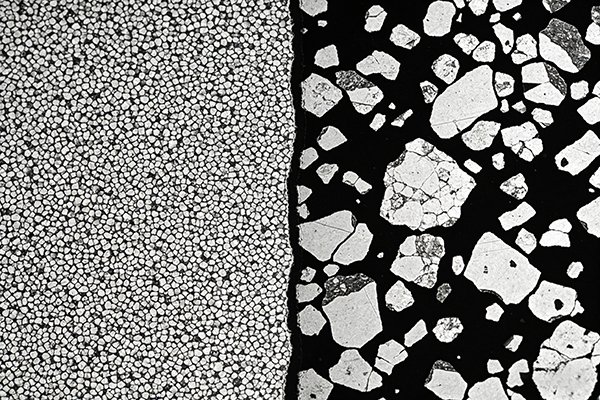
Imagine building a wall. A wall made from small, tightly-packed, uniform bricks will be stronger and more stable than a wall built from large, irregular boulders. The same principle applies to carbide. When the WC grains are very small (at the submicron or "nano" level), there are more grain boundaries within the material. These boundaries act as barriers that stop cracks from growing, which increases both hardness and toughness. This dense structure allows us to grind an extremely sharp and durable cutting edge13, which is essential for machining tough materials or achieving a mirror-like surface finish14. At NV-Tool, we invest in processes that produce these ultra-fine grain carbides because we know they deliver the superior performance and tool life5e](https://nv-tool.com/how-do-you-develop-a-winning-machining-strategy/)%%%FOOTNOTE_REF_6%%% our customers demand.
What are the primary types of wear that carbide combats?
Is your tool failing in different ways on different jobs? Sometimes it chips, sometimes it gets dull, and sometimes a crater forms on the top. Understanding the enemy is half the battle.
Carbide tools are engineered to fight several types of wear. The most common are abrasive wear15, where hard particles in the workpiece scratch the tool, and thermal wear16, where high temperatures soften the cutting edge13. Carbide's high hardness and "red hardness" (strength at high temperatures) are its key defenses.
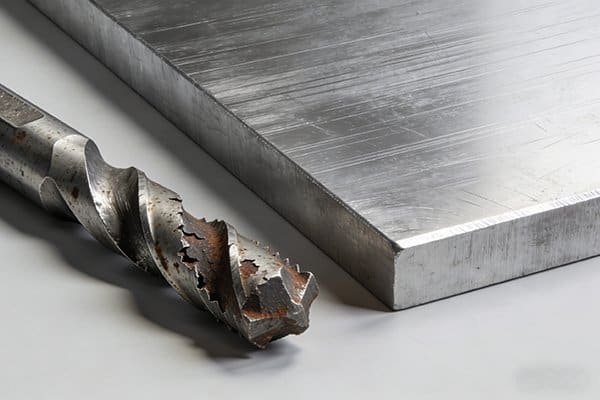
Let’s break down the main challenges a tool faces and how carbide wins the fight.
- Abrasive Wear: This is like sandpapering the tool. It happens when machining materials17 with hard inclusions, like cast iron or composites. The extreme hardness of the tungsten carbide particles directly resists this scratching and grinding action.
- Crater Wear: This occurs on the top face of the tool, caused by a chemical reaction between the hot chip and the tool material. It's common at high cutting speeds. Carbide's ability to stay hard at high temperatures (its red hardness) and specialized coatings significantly reduce this effect.
- Flank Wear: This is the steady dulling of the cutting edge13 from rubbing against the workpiece. Again, high hardness is the primary defense, ensuring the tool holds its sharp edge for longer, maintaining accuracy.
- Chipping: This is a catastrophic failure caused by impact, common in interrupted cuts. The toughness provided by the cobalt binder is crucial here, as it absorbs the shock and prevents the brittle edge from fracturing.
How are carbide grades classified for wear applications?
Does looking at a tool catalog with hundreds of grades feel overwhelming? All those numbers and letters can be confusing, but there is a system to make sense of it all.
Carbide grades are most commonly classified using the ISO system, which groups them by the material they are designed to cut (P, M, K, N, S, H). Within each group, grades are numbered to indicate their position on the toughness-versus-wear-resistance scale.
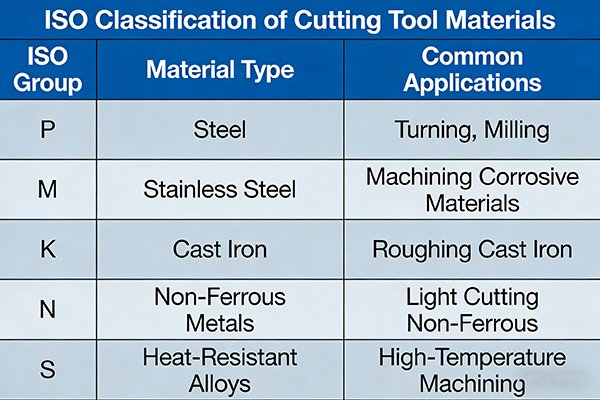
This system makes selection much simpler. It’s a universal language for machinists and engineers. Each letter represents a different class of workpiece material, each with its own unique machining challenges. For example, the 'P' group is for steels, which generate a lot of heat, so 'P' grades need excellent high-temperature wear resistance. The 'K' group is for cast iron, which is very abrasive, so 'K' grades prioritize hardness. The numbers that follow the letter help you fine-tune your choice. A low number (e.g., K10) indicates high wear resistance for finishing, while a higher number (e.g., K30) indicates higher toughness for roughing. Learning this system empowers you to quickly narrow down the best options for your specific job.
| ISO Code | Material Group | Primary Challenge |
|---|---|---|
| P (Blue) | Steels | High Heat, Crater Wear |
| M (Yellow) | Stainless Steels | Built-Up Edge, Work Hardening |
| K (Red) | Cast Irons | Abrasive Wear |
| N (Green) | Non-ferrous (Aluminum) | Sticking, Adhesion |
| S (Orange) | Superalloys & Titanium | Extreme Heat, Low Conductivity |
| H (Gray) | Hardened Materials | Extreme Abrasion |
How do you select the right carbide grade for your specific wear problem?
Are you tired of guessing which tool to use? Choosing the wrong grade costs you time and money through broken tools, poor finishes, and scrapped parts. There is a better way.
To select the right grade, start by identifying your workpiece material using the ISO chart (P, M, K, etc.). Then, consider your operation: choose a tougher grade for roughing and a harder, wear-resistant grade for finishing. Finally, assess your machine's stability.
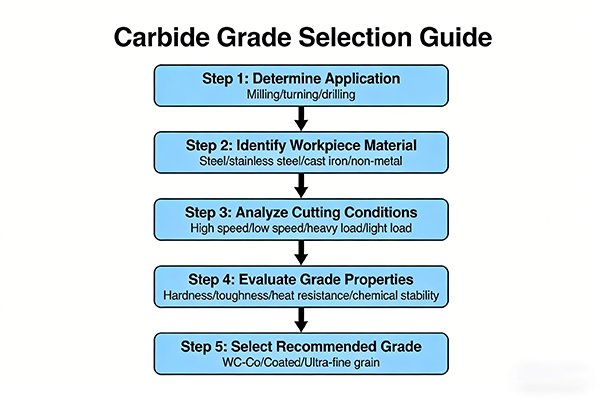
Here is a simple, step-by-step process we use with our customers to pinpoint the perfect tool every time.
- Start with the Material: This is the most important step. Match your workpiece (steel, stainless, aluminum) to its ISO code (P, M, N). This immediately narrows your options to the right family of grades.
- Define the Operation: Are you doing heavy roughing with deep cuts? You need toughness to prevent breakage, so look for a higher ISO number (e.g., P30, P40). Are you doing light finishing passes for a beautiful surface? You need wear resistance to hold size, so choose a lower number (e.g., P10, P15).
- Check Your Setup: A brand new, rigid CNC machine can handle harder, more brittle grades. An older machine with some play in the spindles or workholding might require a tougher grade to compensate and avoid chatter-induced chipping8.
- Analyze the Failure: Look at your used tool. Is it slowly worn down? You need a harder grade. Is it chipped or broken? You need a tougher grade. This feedback is crucial for optimizing your next choice.
If you're ever unsure, just ask us. We're here to help.
Conclusion
Carbide's superior wear resistance is a result of its engineered structure. By balancing hard WC particles and a tough cobalt binder, we create tools that last longer and perform better.
Learn about the challenges faced in machining and how carbide tools address them. ↩
Explore the unique properties of carbide that enhance its durability and performance in machining. ↩
Learn about the role of tungsten carbide particles in creating high-performance cutting tools. ↩
Discover how cobalt enhances the toughness and durability of carbide tools. ↩
Find out how carbide tools outperform others in terms of longevity and efficiency. ↩
Understand the various factors that affect the lifespan of cutting tools. ↩
Stay updated on the latest developments and innovations in the cutting tool sector. ↩
Discover the reasons behind chipping and how carbide's design prevents it. ↩
Find out why carbide is often preferred over high-speed steel for cutting tools. ↩
Understand the impact of cobalt content on the hardness and toughness of carbide tools. ↩
Learn how the size of carbide grains influences tool hardness and wear resistance. ↩
Explore the advantages of using ultra-fine grain carbide for cutting tools. ↩
Explore the characteristics of an effective cutting edge and how carbide excels. ↩
Discover the techniques and properties that allow carbide tools to create high-quality finishes. ↩
Understand the challenges of abrasive wear and how carbide tools combat it effectively. ↩
Explore the effects of high temperatures on cutting tools and how carbide resists them. ↩
Find out which materials are best suited for use with carbide cutting tools. ↩