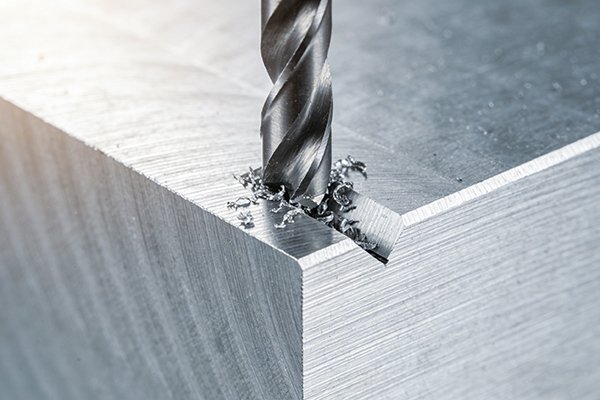
Choosing the wrong drill bit wastes time, money, and materials. A snapped bit or a slow, chattering cut can ruin a project, forcing you to start over.
The best drill bit depends entirely on your job. For general-purpose work, use HSS1. For tougher materials like stainless steel, choose cobalt. For high-volume production2 in very hard or abrasive materials3 on a rigid CNC machine4, you must use solid carbide for its speed and long life.
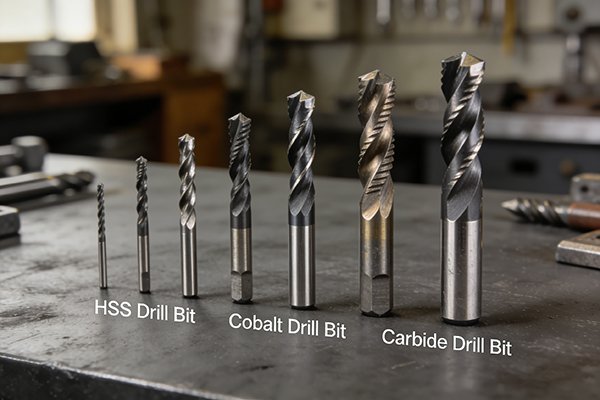
As a cutting tool manufacturer, I get this question almost every day. It's probably the most fundamental decision a machinist makes. The price difference between these tools is huge, so picking the right one is critical for your bottom line. Let's break it down so you can choose with confidence every single time.
Why is "Hardness vs. Toughness5" the most important trade-off?
Ever had a super-hard, expensive drill bit snap on the first hole? It's frustrating and makes you question the tool. The problem wasn't the tool; it was the trade-off.
Hardness allows a tool to resist wear, while toughness6 allows it to resist chipping and breaking under shock. You can't maximize both. An extremely hard material is almost always brittle (low toughness6). Understanding this balance is the key to choosing the right drill for your specific application.
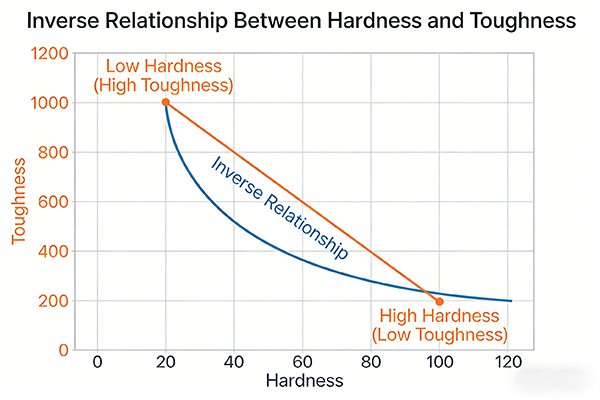
In my years of helping machine shops, I've seen that this single concept, once understood, solves most tool failure7 problems. Hardness lets you cut faster and longer in ideal conditions. Toughness is your insurance policy when conditions aren't perfect. One is about performance, the other is about survival.
The Core Conflict: Hardness vs. Toughness5
The performance of any cutting tool comes down to this fundamental balance. Let's define them clearly:
- Hardness: This is the tool's ability to resist abrasion and deformation. A harder material can maintain a sharp cutting edge8 for longer and can cut other hard materials. We measure it in Rockwell Hardness9 (HRC or HRA).
- Toughness: This is the tool's ability to absorb energy and resist impact without fracturing. A tough tool can handle vibrations, interrupted cuts, and less-than-stable setups.
Here is how our three drill bit types stack up:
| Material | Hardness (Resists Wear) | Toughness (Resists Breaking) |
|---|---|---|
| High-Speed Steel10 (HSS1) | Good | Excellent |
| Cobalt11 (HSS1-Co) | Better | Good |
| Solid Carbide12 | Excellent | Fair |
As you can see, they have an inverse relationship. The incredibly hard carbide is also the most brittle. The super-tough HSS1 can't hold its edge like carbide can. Cobalt11 sits right in the middle, offering a blend of both properties.
What makes High-Speed Steel10 (HSS1) the universal baseline?
You need a reliable, all-around drill bit for various jobs in your shop. Buying specialized, expensive bits for every single material is not practical or cost-effective for most people.
High-Speed Steel10 (HSS1) is the answer. It offers the best combination of toughness6 and affordability, making it the perfect workhorse. It handles common materials like mild steel, aluminum, and wood, and it’s forgiving in less-than-perfect drilling conditions13, like with a hand drill or drill press.
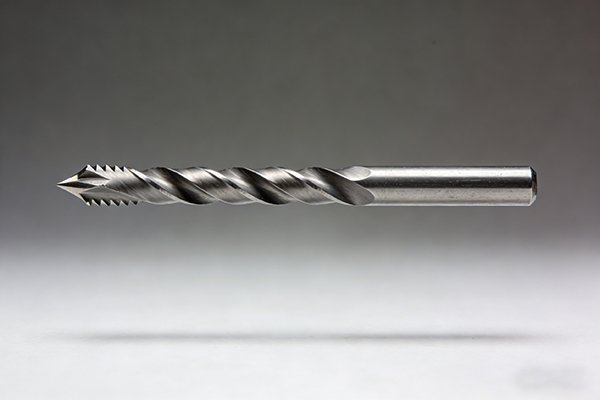
We manufacture millions of HSS1 tools, and they remain our most popular category for a reason. They are the default choice for maintenance departments, job shops, and anyone who needs versatility. HSS1 is tough enough to survive being dropped or used in a wobbly setup, where a carbide drill would instantly shatter. It’s a tool you can rely on without having to worry too much.
The All-Purpose Workhorse
HSS1 gets its name because it can maintain its hardness at the high temperatures generated by high-speed cutting, at least compared to older carbon steels.
- Key Characteristics: Its defining feature is its excellent toughness6. This makes it resistant to bending and impact. If your machine isn't perfectly rigid or the workpiece isn't clamped securely, HSS1 is your safest bet. It has moderate "red hardness14," meaning it starts to soften around 600°C, so you can't push it with extreme speeds.
- Best Use Cases: It's ideal for general-purpose drilling15 in soft to medium-hardness materials.
- Low-carbon steel
- Aluminum alloys
- Wood and plastics
- Machine Suitability: Because of its toughness6, HSS1 performs well on equipment with lower rigidity, such as bench drills, radial drills, and older CNC machine4s. It can also be easily resharpened, extending its life and value.
How does cobalt boost performance for harder metals?
Your standard HSS1 bits are burning up or wearing out way too fast on stainless steel. You're wasting time with slow speeds and are constantly changing tools.
The solution is to add cobalt. A cobalt drill bit isn't a completely different material; it's an upgraded version of HSS1 that gives you the extra heat resistance you need.
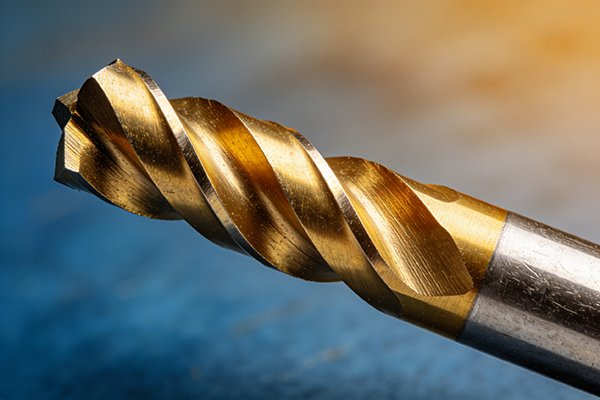
Cobalt11 drill bits are essentially premium HSS1. By adding 5% (M35) or 8% (M42) cobalt to the steel alloy, we dramatically increase its "red hardness14." This means it stays hard at higher temperatures, allowing you to drill tougher, abrasive materials3 like stainless steel at higher speeds.
The Upgrade for Tough Jobs
Think of cobalt drills as the bridge between HSS1 and carbide. They offer a significant performance boost over standard HSS1 without the extreme brittleness and cost of solid carbide. I often recommend them to clients who are struggling with stainless or other high-strength alloys.
- Key Characteristics: The main benefit is superior red hardness14. Cobalt11 bits maintain their cutting edge8 at temperatures up to 650°C. This translates to 30-50% more wear resistance than HSS1. While they are slightly more brittle than HSS1, they are still much tougher than carbide, making them suitable for a wider range of machine conditions.
- Best Use Cases: They are the go-to choice when HSS1 fails but carbide is too risky or expensive.
- Stainless steel
- High-temperature alloys
- Titanium alloys
- High-strength steels
- Important Note: To get the most out of a cobalt drill, you need good cooling. Since they generate and withstand more heat, coolant is critical to flush chips and prevent that heat from damaging the workpiece.
When is the extreme hardness of carbide non-negotiable?
You're running a high-volume production2 job, drilling thousands of holes in abrasive cast iron. Your HSS1 and cobalt bits are wearing out constantly, causing machine downtime and inconsistent results.
For maximum speed, tool life, and precision in demanding production environments, solid carbide is the only answer. Its performance is in a completely different league, but it comes with strict requirements.
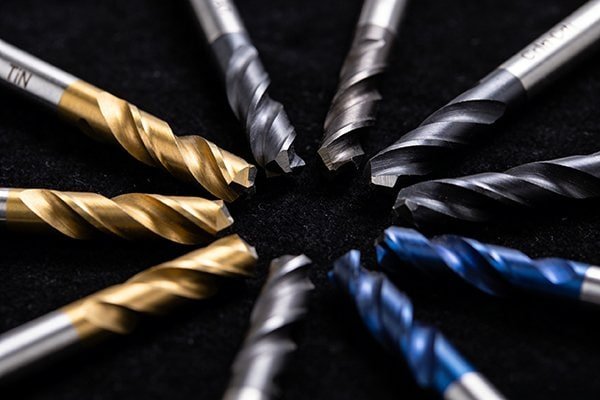
Carbide is non-negotiable when cycle time is money. Its extreme hardness and ability to withstand temperatures of 800-1000°C allow for cutting speeds 3 to 10 times faster than HSS1. For our customers in automotive and aerospace manufacturing, this translates directly to higher output and lower cost-per-part.
The Ultimate Production Tool
Carbide isn't a type of steel; it's a composite material made from tungsten carbide particles sintered with a cobalt binder. This gives it properties that steel can't match.
- Key Characteristics: Its primary strengths are extreme hardness (often over HRA 90) and phenomenal wear resistance. Its biggest weakness is high brittleness. It has almost no tolerance for vibration, unstable clamping, or off-center drilling. Any shock can cause it to chip or shatter.
- Best Use Cases: Carbide shines in high-speed, high-feed applications on very stable machines.
- Cast iron and ductile iron
- Hardened steels (above 45 HRC)
- Abrasive composites (e.g., carbon fiber, fiberglass)
- High-silicon aluminum alloys
- Machine Suitability: To use carbide effectively, you need a modern, high-rigidity CNC machining center. The precision and stability of the machine are essential to protect the brittle tool and unlock its incredible performance potential.
How do you match the drill bit to the material you're drilling?
You're standing in front of the machine with a piece of metal, but you're not sure which drill bit to grab. Guessing wrong could mean a broken tool or a ruined workpiece.
There's a simple logic to it. Match the tool's properties to the material's demands. A simple chart can help you make the right choice quickly and confidently every time.
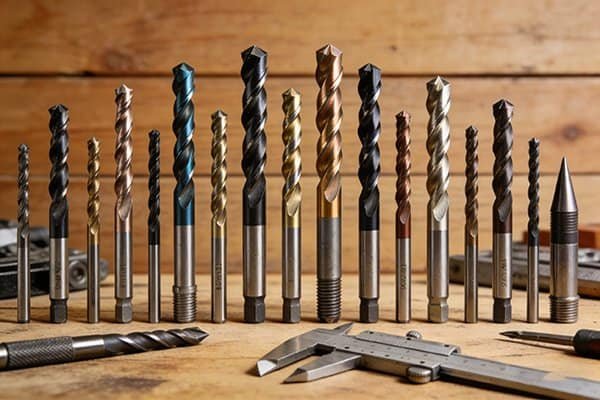
As a tool supplier, our job is to make this simple for our partners. You don't need to memorize metallurgy tables. You just need to follow a basic progression: start with HSS1, upgrade to cobalt for tougher stuff, and use carbide for high-production on hard and abrasive materials3. The key is to know when to make the jump to the next level.
A Practical Selection Guide
Let's put everything together in a straightforward table. This is the decision-making process I walk my clients through every day.
| Material Group | Recommended Drill Bit | Why It's the Best Choice |
|---|---|---|
| Soft & General Materials<br>(Low-Carbon Steel, Aluminum, Wood, Plastics) | HSS1 | The most cost-effective and toughest option. It's forgiving and perfect for materials that don't require high heat resistance. |
| Tough & Gummy Materials<br>(Stainless Steel, Alloy Steel, Titanium) | Cobalt11 (HSS1-Co) | The added cobalt increases heat resistance, preventing the cutting edge8 from dulling when drilling materials that generate a lot of heat. |
| Hard & Abrasive Materials<br>(Cast Iron, Hardened Steel >45 HRC, Composites) | Solid Carbide12 | Only carbide has the hardness and wear resistance to handle these materials at productive speeds. Its use is mandatory for high-volume production2. |
Remember, this guide assumes you are using the right machine for the job. Trying to use a carbide drill in a wobbly drill press on stainless steel is a recipe for disaster, even if the chart suggests carbide for hard materials. The machine's condition is just as important as the material.
Is a more expensive drill bit always a better value?
You see a $50 carbide drill bit next to a $5 HSS1 bit and wonder if it's really ten times better. Spending more doesn't guarantee a better result if it's the wrong tool.
No, the most expensive bit is not always the best value. True value is measured by the cost-per-hole16, not the initial price tag of the tool itself.

A cheap HSS1 bit is the clear winner for drilling a few holes in a 2x4. But in a CNC machine4 running 24/7, that $50 carbide bit might produce 5,000 holes at high speed, while the HSS1 bit produces 100 holes slowly before wearing out. The carbide bit delivers far better value in that context.
Calculating True Value: Cost-Per-Hole
When we help our industrial clients optimize their processes, we don't focus on tool price. We focus on the total cost of making a hole. This includes the tool cost, machine time, labor, and downtime for tool changes.
Let's look at two scenarios:
Scenario 1: Job Shop - 10 Holes in Mild Steel
- HSS1 Bit ($5): Drills all 10 holes easily. Cost-per-hole is $0.50 (tool cost only).
- Carbide Bit ($50): Also drills the holes, but the risk of breaking it in a less-than-perfect setup is high. Cost-per-hole is $5.00.
- Conclusion: The HSS1 bit provides the best value.
Scenario 2: Production - 10,000 Holes in Cast Iron
- Cobalt11 Bit ($15): Drills 250 holes per bit. You'd need 40 bits. Total tool cost = $600. Add in the downtime for 39 tool changes.
- Carbide Bit ($50): Drills 2,500 holes per bit. You'd need 4 bits. Total tool cost = $200. It also runs 5x faster, drastically cutting machine time and labor costs.
- Conclusion: The carbide bit, despite its higher initial price, offers massively better value by reducing total production costs17.
Conclusion
Choosing the right drill is simple: Use HSS1 for general jobs, upgrade to cobalt for tough metals like stainless, and invest in carbide for high-volume production2 in hard materials.
Explore the benefits of HSS drill bits, known for their toughness and versatility in various applications. ↩
Explore best practices for optimizing high-volume drilling operations for efficiency. ↩
Discover the ideal drill bits for tackling abrasive materials effectively. ↩
Explore how CNC machines enhance drilling precision and efficiency in manufacturing. ↩
Understand the critical trade-off between hardness and toughness to choose the right drill bit for your needs. ↩
Learn why toughness is crucial for drill bits to withstand impact and vibrations. ↩
Understand the common causes of tool failure to avoid costly mistakes. ↩
Explore tips for preserving the cutting edge of your drill bits for longer life. ↩
Gain insights into Rockwell Hardness measurement and its significance in selecting drill bits. ↩
Find out why High-Speed Steel is the go-to option for general-purpose drilling tasks. ↩
Learn how cobalt drill bits enhance drilling efficiency, especially for tough materials like stainless steel. ↩
Discover why solid carbide drill bits are essential for high-speed production and abrasive materials. ↩
Explore how different drilling conditions influence the selection of drill bits. ↩
Learn about red hardness and its importance in maintaining cutting performance at high temperatures. ↩
Learn about general-purpose drilling and the tools best suited for it. ↩
Understand how to calculate cost-per-hole to determine the best value for your drilling needs. ↩
Learn strategies to minimize production costs while maximizing drilling efficiency. ↩