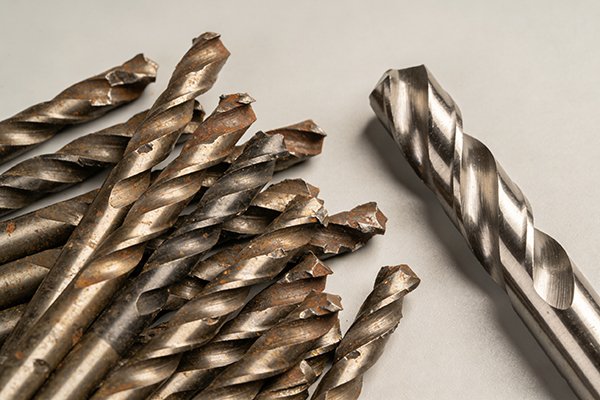
Choosing the wrong drill bit wastes time, ruins parts, and costs you money. This guide simplifies the process, ensuring you pick the perfect solid carbide drill every time.
The best solid carbide drill bit matches your specific application. For hard materials and high-volume production, a coated, multi-flute bit with through-coolant is ideal. Always match the drill's geometry, coating, and point angle to your workpiece material for the best performance and tool life.
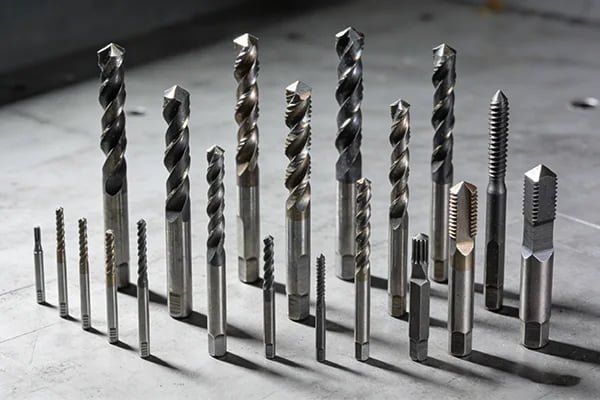
I've been in the cutting tool business for over a decade, and I've seen firsthand how the right drill bit can completely transform a machining operation. A solid carbide drill isn't just a tool; it's an investment in efficiency, precision, and profitability. But with so many options, it's easy to feel overwhelmed. That's why I put together this guide. We'll break down everything you need to know, step-by-step, so you can drill with confidence. Let's start with the most common question I get from clients.
When Should You Use a Solid Carbide Drill Bit Instead of HSS?
Tired of slow cycle times and constant tool changes with HSS drills? This downtime costs you money. Solid carbide boosts speed and tool life, protecting your budget.
Use solid carbide for high-volume production, machining tough materials like hardened steel or stainless steel, and when hole accuracy is critical. HSS is better for general-purpose jobs, low-volume work, or when using less rigid machines where brittle carbide might chip.
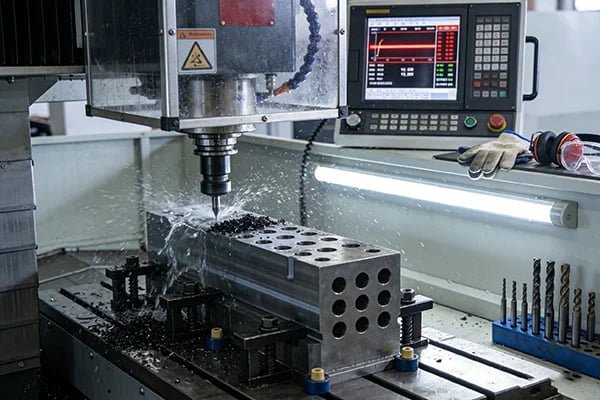
In our factory, we see the difference every day. While High-Speed Steel (HSS) is a great, affordable option for maintenance work or one-off jobs on a manual mill, it simply can't keep up in a modern production environment. Solid carbide is in a different league. Its main ingredient, tungsten carbide, gives it extreme hardness and wear resistance1. This means you can run it two to three times faster than HSS2, drastically cutting cycle times. This high rigidity also means less deflection, giving you straighter, more accurate holes3, which is critical for parts with tight tolerances. While the upfront cost is higher, the extended life and massive boost in productivity mean the cost-per-hole is significantly lower4. For any serious production on CNC machines, especially with difficult materials, carbide is the clear winner.
Here's a simple breakdown of the core differences:
| Feature | Solid Carbide | High-Speed Steel (HSS) |
|---|---|---|
| Hardness & Wear | Extremely high, lasts much longer | Good, but wears quickly in hard materials |
| Cutting Speed | Very High (2-3x faster than HSS) | Moderate |
| Rigidity | Excellent, minimal deflection | Good, but can flex in deep holes |
| Cost per Bit | Higher | Lower |
| Best For | Production, hard materials, precision | General purpose, soft materials, manual machines |
What Do Features Like Coatings and Flute Counts Actually Mean for My Work?
Confused by terms like TiAlN, 2-flute, or 3-flute? Choosing wrong hurts performance and tool life. We'll explain these features so you can pick the right tool.
Coatings add hardness and lubricity for longer life and higher speeds. More flutes (e.g., 3 or 4) give a stronger core and better finish but have less room for chips. Fewer flutes (e.g., 2) are better for materials that produce long, stringy chips.
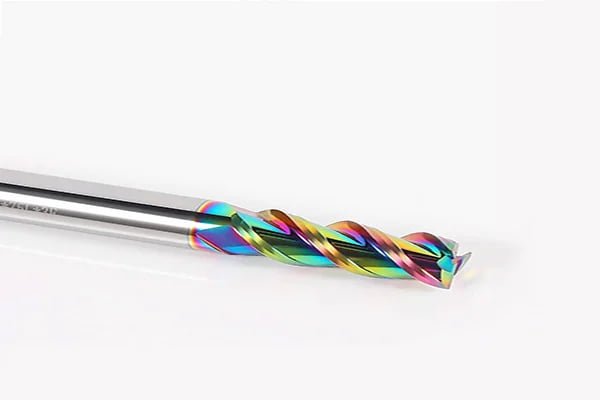
Think of coatings as a protective shield for your drill bit. They are micro-thin ceramic layers that do two main things: increase surface hardness and reduce friction.5 A harder surface resists abrasive wear, while reduced friction prevents chips from welding to the tool and helps heat escape with the chip. This allows you to run the drill faster and longer. At NV-Tool, we offer several PVD coatings, and each has its purpose. For example, a TiAlN (Titanium Aluminum Nitride) coating is a great all-rounder for steels and stainless steels because it forms a protective layer of aluminum oxide at high temperatures6.
Flute count is all about balancing strength and chip evacuation.
- 2-Flute Drills: These are the most common. They have large flute valleys, which provide excellent space for chips to exit the hole. This is crucial in materials like aluminum that produce large, stringy chips.
- 3-Flute Drills (and more): Adding a third flute increases the "core" diameter of the drill, making it much more rigid.7 This is great for producing very round, accurate holes and can allow for higher feed rates. However, the smaller flute space means they are best suited for materials that produce small, manageable chips, like cast iron.
How Do I Match a Drill Bit to My Workpiece Material (Steel, Aluminum, etc.)?
Using a general-purpose drill on a tough alloy can cause instant failure. This ruins the part and the tool. We'll show you how to match the bit to the job.
For steels and cast iron, use a coated carbide drill with a 135-140° point angle. For aluminum, use a polished, uncoated, or specialized coated bit with a sharper point and deep flutes. For stainless steels, use a tough grade of carbide with a robust coating.
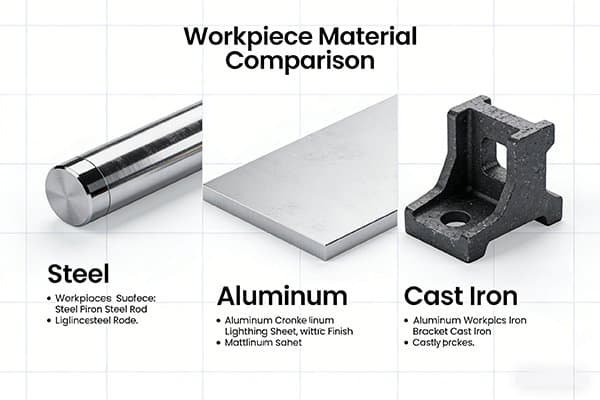
Matching the drill to the material is the most important step. Different materials behave differently when cut, and the drill's geometry must be designed to handle that behavior. Over the years, we've developed specific solutions for our customers in the automotive, mold & die, and aerospace industries. It all comes down to controlling the chip and managing heat. For example, stainless steel is notorious for work-hardening and generating a lot of heat.8 You need a drill with a very tough cutting edge and a specific coating that can withstand high temperatures without breaking down. Aluminum, on the other hand, is soft and "gummy." The biggest challenge is preventing the chips from sticking to the drill.9 For this, we recommend drills with highly polished flutes and a sharp cutting edge to slice the material cleanly.
Here is a basic guide we share with our clients:
| Material Group | Key Challenge | Recommended Drill Features |
|---|---|---|
| Carbon & Alloy Steels | General abrasion and heat | 135°-140° point, TiAlN or similar coating |
| Stainless Steels | Work hardening, high heat | Tough carbide grade, heat-resistant coating, strong edge |
| Cast Iron | Highly abrasive | Wear-resistant carbide grade, 3-flute design for stability |
| Aluminum | Gummy, long chips | Sharp 118°-130° point, polished flutes, 2-flute design |
| High-Temp Alloys | Extreme heat, high pressure | Specialized geometry, advanced high-temp coating |
What are the Ideal Speeds and Feeds to Start With for Carbide Drill Bits?
Guessing speeds and feeds is a huge risk. Go too fast, you burn the tool. Go too slow, you waste time. We provide a safe starting point for success.
Always start with the manufacturer's recommendations provided on the packaging or website. As a general rule for carbide in mild steel, start around 100-150 SFM (Surface Feet per Minute) and a feed of 0.003-0.005 IPR (Inches Per Revolution) for a 1/2" drill.10
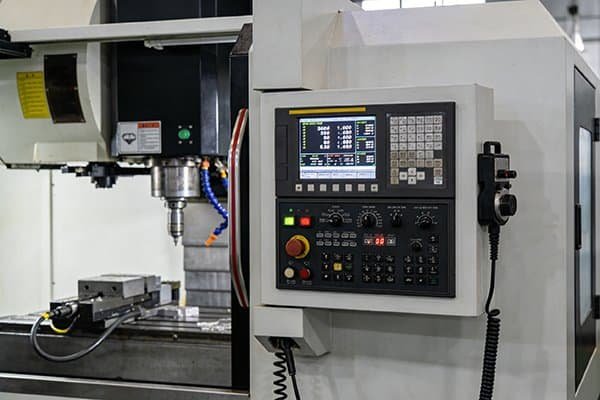
Speeds and feeds are not a "set it and forget it" parameter. They are a starting point that must be optimized for your specific machine, setup rigidity, and coolant delivery. "Speed" refers to the spindle RPM, which dictates how fast the cutting edges are moving across the material surface (measured in SFM or m/min). "Feed" is how fast the tool advances into the material (measured in IPR or mm/rev). Getting this balance right is key. A good chip—one that is small, manageable, and carries heat away—is the best sign of correct parameters.11 If your chips are turning blue or black, your speed is likely too high. If you are getting a long, stringy chip when you should be getting a small curl, your feed might be too low. We always provide our customers with a complete set of cutting parameter recommendations for our tools, but here is a very basic starting chart.
| Material | Starting Surface Speed (SFM) |
|---|---|
| Mild Steel | 120 - 200 |
| Stainless Steel | 80 - 150 |
| Cast Iron | 150 - 250 |
| Aluminum | 300 - 800 |
Note: These are starting points. Always consult your tool supplier and adjust based on real-world results.
How Can I Extend the Life of My Solid Carbide Drill Bits?
Replacing expensive carbide drills too often destroys your profit margin. These simple checks can double your tool life. We'll show you how to maximize your investment.
To maximize tool life, use a high-quality tool holder to minimize runout, apply generous coolant (through-spindle is best), use a spot drill for precise entry, and fine-tune your speeds and feeds. Avoid pecking cycles, as they cause premature chipping.

A solid carbide drill is a precision instrument, and it needs to be treated like one. The number one killer of carbide tools is runout. Runout is the wobble or off-center rotation of the tool. Even a tiny amount causes one cutting edge to take a bigger "bite" than the other, leading to uneven wear and rapid failure.12 Investing in a high-quality collet, hydraulic, or shrink-fit holder is the best thing you can do for your drills. Second is coolant. It's not just for cooling; it's essential for flushing chips out of the hole. If chips pack in the flutes, the drill will break. This is why our 3D, 5D, and 8D drills with internal coolant channels are so popular for deep-hole drilling—they blast chips out from the point of cut. Finally, be gentle on entry. Pecking (drilling a little, retracting, and re-engaging) is very hard on the fragile corners of a carbide drill. It's much better to use a consistent feed rate with good coolant pressure to keep chips flowing out smoothly.
Conclusion
Choosing the right carbide drill isn't complex. By matching the tool, material, and parameters, you unlock higher productivity and lower costs for every single hole you drill.
"Wear Characteristics of WC-Co Cutting Tools Obtained by the U ...", https://pmc.ncbi.nlm.nih.gov/articles/PMC12387649/. A materials-science reference on cemented tungsten carbide documents its high hardness and wear resistance, supporting its use as a cutting-tool substrate for abrasive machining conditions. Evidence role: definition; source type: education. Supports: Tungsten carbide provides solid carbide drills with extreme hardness and wear resistance.. Scope note: This supports the material property generally, not the performance of any specific drill design. ↩
"Carbide vs High Speed Steel - Facebook", https://www.facebook.com/titansofcnc/posts/carbide-vs-high-speed-steel-/1511833477182978/. A machining handbook or university cutting-speed table comparing carbide and high-speed-steel tools reports substantially higher allowable cutting speeds for carbide tooling, supporting the stated speed advantage. Evidence role: statistic; source type: education. Supports: Solid carbide drills can often be run two to three times faster than HSS drills.. Scope note: The exact multiplier depends on workpiece material, coating, coolant delivery, tool geometry, and machine rigidity. ↩
"[PDF] DRILLING TECHNICAL GUIDE - USCTI", https://www.uscti.com/uscti-pages/HOLEMAKING%20-%20Technical%20Data.pdf. A mechanical or manufacturing-engineering source explaining tool stiffness, elastic deflection, and dimensional accuracy supports the mechanism by which a more rigid drill can reduce deflection and improve hole straightness. Evidence role: mechanism; source type: education. Supports: Higher rigidity reduces drill deflection and can improve hole straightness and accuracy.. Scope note: The source would support the mechanical principle; actual hole accuracy also depends on fixturing, spindle condition, drill geometry, and process parameters. ↩
"Optimizing economics of machining for LM25Al/VC composite ... - PMC", https://pmc.ncbi.nlm.nih.gov/articles/PMC11937586/. A manufacturing-economics source describing the relationship among tool life, cycle time, tool cost, and unit machining cost supports the inference that longer tool life and faster cutting can reduce cost per hole. Evidence role: general_support; source type: education. Supports: Despite higher upfront cost, carbide drills can reduce cost per hole through longer life and productivity gains.. Scope note: This is contextual support; it does not prove a lower cost per hole for every carbide drill application because tool price, setup, failure rate, and production volume vary. ↩
"Characterization and Evaluation of Engineered Coating Techniques ...", https://pmc.ncbi.nlm.nih.gov/articles/PMC9415707/. A peer-reviewed review of physical vapor deposition coatings for cutting tools describes thin ceramic coatings as increasing surface hardness and reducing friction or wear at the tool-chip interface. Evidence role: definition; source type: paper. Supports: Cutting-tool coatings are thin ceramic layers that increase surface hardness and reduce friction.. Scope note: The magnitude of hardness and friction reduction varies by coating chemistry, substrate preparation, and cutting conditions. ↩
"The Oxidation Behaviour and Notch Wear Formation of TiAlN ... - PMC", https://pmc.ncbi.nlm.nih.gov/articles/PMC8048706/. A materials paper on TiAlN coatings reports that oxidation at elevated temperatures can form an alumina-rich protective layer, supporting the mechanism cited for high-temperature cutting performance. Evidence role: mechanism; source type: paper. Supports: TiAlN coatings can form a protective aluminum-oxide layer at high temperatures.. Scope note: This supports the oxidation mechanism, not the broader value judgment that TiAlN is the best choice for all steels or stainless steels. ↩
"[PDF] DRILLING TECHNICAL GUIDE - USCTI", https://www.uscti.com/uscti-pages/HOLEMAKING%20-%20Technical%20Data.pdf. A drill-geometry or machining reference explaining the relationship between flute design, web or core thickness, and torsional/bending stiffness supports the claim that additional flutes can increase drill rigidity. Evidence role: mechanism; source type: education. Supports: Increasing flute count can increase drill core diameter and rigidity.. Scope note: The effect depends on the exact drill geometry; more flutes can also reduce chip space and are not universally superior. ↩
"Work Hardening and When It Should Scare You - In The Loupe", https://www.harveyperformance.com/in-the-loupe/avoid-work-hardening/. A materials or machining reference on stainless steels describes their tendency to work-harden during machining and their relatively poor thermal conductivity, supporting the need for heat-resistant tooling strategies. Evidence role: mechanism; source type: education. Supports: Stainless steel commonly work-hardens and creates heat-management challenges during machining.. Scope note: The severity varies among stainless grades, especially between austenitic, ferritic, martensitic, and precipitation-hardening alloys. ↩
"[PDF] Machining of Aluminum and Aluminum Alloys", https://materialsdata.nist.gov/bitstream/handle/11115/200/Machining%20of%20Al.pdf?sequence=3&isAllowed=y. A machining study on aluminum alloys and built-up edge describes chip adhesion at the tool surface as a common problem when cutting ductile aluminum, supporting the claim about sticking chips. Evidence role: mechanism; source type: paper. Supports: Aluminum machining can suffer from chip adhesion or built-up edge, making chip sticking a key challenge.. Scope note: Chip adhesion depends on the aluminum alloy, coating, cutting speed, lubrication, and tool surface finish. ↩
"Speeds and Feeds", https://web.mae.ufl.edu/designlab/Advanced%20Manufacturing/Speeds%20and%20Feeds/Speeds%20and%20Feeds.htm. A university or machining-reference speeds-and-feeds table listing starting parameters for carbide drilling in mild steel would support the approximate SFM and IPR range given for a 1/2-inch drill. Evidence role: statistic; source type: education. Supports: A carbide drill in mild steel can use approximate starting parameters around 100–150 SFM and 0.003–0.005 IPR for a 1/2-inch drill.. Scope note: Speeds and feeds are starting values only and must be adjusted for alloy grade, drill coating, coolant, hole depth, and machine rigidity. ↩
"Understanding the Relationship between Surface Quality and Chip ...", https://pmc.ncbi.nlm.nih.gov/articles/PMC11050977/. A metal-cutting reference explaining chip formation and heat partition in machining supports the statement that chips remove a substantial portion of cutting heat and that chip form is used as a diagnostic indicator of cutting conditions. Evidence role: mechanism; source type: education. Supports: Chip form and heat removal by chips can indicate whether drilling speeds and feeds are appropriate.. Scope note: Chip appearance is an indirect diagnostic and should be interpreted alongside tool wear, hole quality, coolant condition, and machine load. ↩
"Uneven tool wear across a solid carbide drill's cutting edge can ...", https://www.facebook.com/SandvikCoromantOfficial/posts/uneven-tool-wear-across-a-solid-carbide-drills-cutting-edge-can-result-in-shorte/2093131684074435/. A precision-machining study on drill runout and tool wear supports the mechanism that eccentric rotation creates unequal cutting-edge loading, accelerating uneven wear and potential tool failure. Evidence role: mechanism; source type: paper. Supports: Drill runout causes unequal edge loading, uneven wear, and faster failure.. Scope note: The threshold for harmful runout depends on drill diameter, material, holder quality, spindle condition, and cutting parameters. ↩