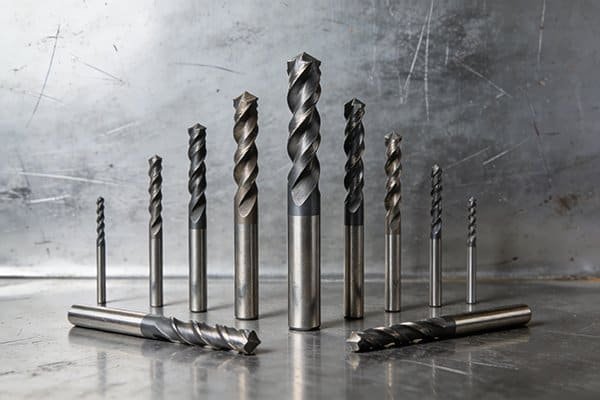
Are you tired of constantly swapping drills for different materials? This costs time and money. A single, versatile drill could simplify your entire process and make your life easier.
Yes, a single carbide drill can work for both cast iron and nonferrous metals like aluminum, but it's a compromise. The best option is an uncoated, polished drill with moderate geometry. It won't be perfect, but it handles both for general-purpose tasks, saving you setup time.
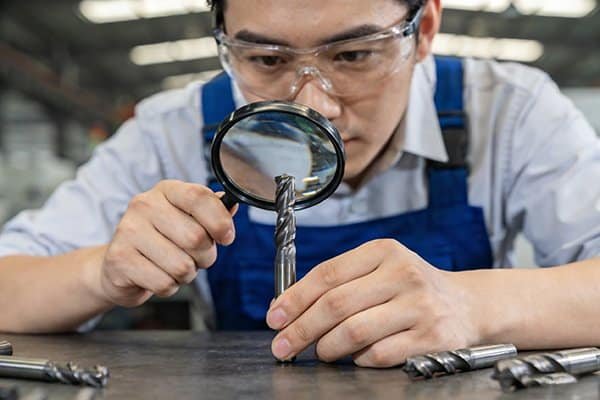
I've been in the cutting tool business for over a decade, and I've seen countless machinists face this exact problem. They want one tool that can do it all to save time and reduce their tool inventory. So, let's explore how this works, when it's a smart move, and what to look for. This knowledge can help you make better decisions on the shop floor.
Why do cast iron and aluminum require different drill designs?
Using the wrong drill creates serious problems. You get poor finishes, broken tools, and wasted material. Understanding each material's unique behavior is the first step to getting your drilling right.
Cast iron is hard and abrasive, creating powder-like chips1, so it needs a strong, robust drill. Aluminum is soft and gummy, creating long, stringy chips2, so it needs a very sharp drill with excellent chip evacuation. Their opposing natures demand different tool designs.
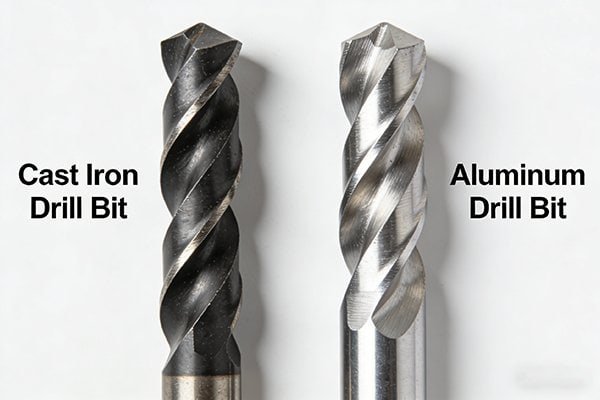
Let's look at the core differences. Cast iron is brittle. When you drill it, the material fractures into small, dusty chips. In contrast, aluminum is ductile. It deforms and shears, producing long, continuous chips that can be a real headache. This fundamental difference dictates everything about the drill's design. A drill made for cast iron needs strength above all else to resist abrasive wear. A drill for aluminum needs extreme sharpness and wide-open flutes for chip evacuation. If you use an aluminum-specific drill on cast iron, the sharp edge will likely chip almost immediately.3 If you use a stout cast iron drill on aluminum, the material will stick to the duller edge, causing a terrible hole finish and likely breaking the tool.
Here is a simple table to show the differences:
| Feature | Cast Iron Machining | Aluminum Machining |
|---|---|---|
| Chip Type | Powdery, short | Long, stringy |
| Primary Tool Need | Wear resistance, edge strength | Sharpness, chip evacuation |
| Common Failure Mode | Abrasive wear, edge chipping | Built-up edge (BUE), flute clogging |
| Tool Design Focus | Robustness and durability | Keenness and slickness |
This clearly shows why a specialized tool for each material will always give the best results. The ideal designs are fundamentally at odds with each other.
What geometry makes a drill versatile for both materials?
Finding a one-size-fits-all drill seems impossible. The geometry for iron is strong and robust, but the geometry for aluminum is sharp and sleek. A compromise must be found to bridge this gap.
A versatile drill has moderate geometry. It typically features a medium helix angle (around 35°-40°), a standard 135° point angle4, and a slightly strengthened but still sharp cutting edge. This design is robust enough for cast iron and sharp enough for aluminum.
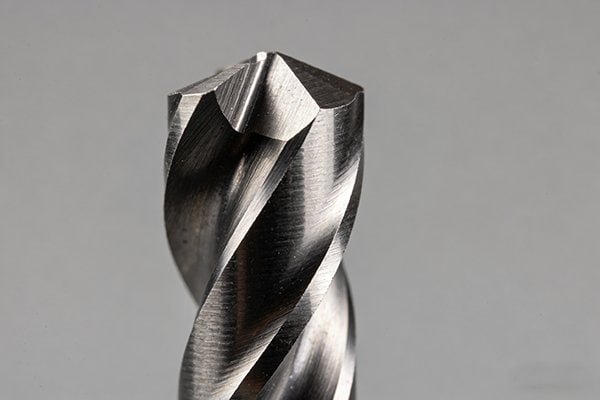
Creating a "jack-of-all-trades" drill is an exercise in balancing opposing characteristics. You can't have the extreme sharpness needed for perfect aluminum drilling and the brute strength needed for long life in cast iron. So, we have to aim for the middle ground. From my experience, this is how we find that balance.
Finding the Sweet Spot in Geometry
The whole idea is to avoid the extremes that make a drill specialized.
- Point Angle: A 140° angle is great for cast iron's hardness, while a 118° angle is better for soft aluminum.5 A 135° point angle is a very common and effective compromise.6 It provides good centering capabilities and decent strength for a wide range of materials.
- Helix Angle: Cast iron works well with a lower 30° helix, while aluminum needs a high 45° helix to pull out stringy chips. A versatile drill will often use a 35° or 40° helix. This helps clear chips in both materials without severely weakening the cutting edge.
- Edge Preparation: Instead of a razor-sharp edge (for aluminum) or a heavily strengthened T-land (for cast iron), a versatile drill will have a very light "hone." This adds just enough strength to resist chipping in cast iron without causing excessive material buildup in aluminum.
This "middle-of-the-road" approach is the secret. It won't win any performance awards against a specialized drill, but it gets the job done reliably in a mixed-material environment.
Why is an uncoated drill often better for this dual role?
Coatings promise longer tool life and better performance. But choosing the wrong one for aluminum can cause a disaster. Sometimes, the simplest solution—no coating at all—is actually the most effective one.
An uncoated, polished drill is often best because many standard coatings, like TiAlN, have a chemical reaction with aluminum that causes it to stick7. A polished surface is slick enough for aluminum and durable enough for short runs in cast iron, making it the most reliable universal choice.
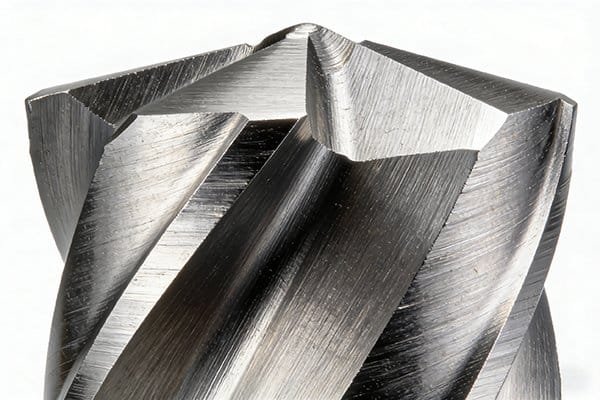
This might sound strange at first. In our industry, we're always told that coatings extend tool life. While that is true, the chemistry between the coating and the workpiece material is incredibly important. Many people learn this the hard way.
The Coating and Material Reaction
The problem is all about aluminum's unique properties.
- The Aluminum-Titanium Problem: The most common PVD coatings, such as Titanium Aluminum Nitride (TiAlN), are excellent for steel and cast iron. However, the aluminum in the workpiece has a chemical affinity for the titanium in the coating. At machining temperatures, the aluminum workpiece can literally weld itself to the tool. This is called a built-up edge (BUE), and it ruins the surface finish and quickly leads to tool failure.8
- The Universal Solution: Polishing: An uncoated solid carbide drill with highly polished flutes is the perfect compromise.
- For Aluminum: The mirror-like finish is extremely slick, which prevents gummy aluminum chips from sticking and clogging the flutes.
- For Cast Iron: The raw carbide substrate is already very hard and wear-resistant.9 It is perfectly capable of handling the abrasiveness of cast iron for many general-purpose jobs.
While a diamond coating would be superior for both materials, it is very expensive. For a cost-effective and versatile tool, a simple uncoated, polished drill is the industry standard for a reason.
How should you adjust your parameters between materials?
You have your versatile drill. But using the same speed and feed for cast iron and aluminum is a recipe for failure. You must adapt your machine settings for each material to succeed.
For aluminum, run fast and feed moderately (high SFM, moderate IPR). For cast iron, slow down the speed significantly to manage heat and wear10, but maintain a healthy feed rate to form a proper chip and avoid rubbing (low SFM, moderate IPR).
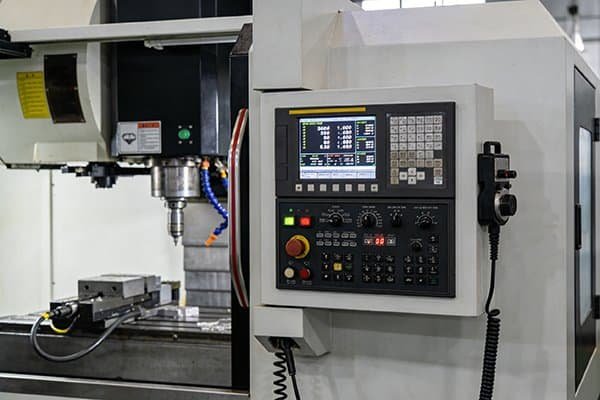
Using one tool does not mean using one set of parameters. Adjusting your speeds and feeds is non-negotiable for success. I always tell my clients to think of it like driving a car—you wouldn't use the same speed and acceleration on a gravel road as you would on a smooth highway.
Adjusting for Different Materials
Here’s a practical breakdown of the changes you need to make at the machine.
- Cutting Speed (SFM/RPM): This is the most critical adjustment.
- Aluminum: Run it fast. Aluminum is a great thermal conductor, so heat dissipates quickly away from the tool.11 High speeds allow for efficient material removal.
- Cast Iron: Run it slow. Cast iron is abrasive and generates a lot of heat right at the cutting edge. High speeds will quickly wear down and burn up the drill's edges.
- Feed Rate (IPR/FPR):
- Both Materials: The feed rate can often be surprisingly similar. You need to maintain a consistent chip load to ensure the tool is cutting, not just rubbing against the material. For cast iron, a healthy feed rate prevents the tool from just grinding away. For aluminum, it helps form a consistent, manageable chip.
Here is a simple reference table for a general-purpose carbide drill:
| Parameter | Aluminum | Cast Iron |
|---|---|---|
| Cutting Speed | High (e.g., 300-600 SFM) | Low (e.g., 100-250 SFM) |
| Feed Rate | Moderate | Moderate |
| Coolant | Flood coolant is a must | Optional, but helps clear dust |
Always start with the tool manufacturer's recommendations and adjust from there. Listening to the sound of the cut is just as important as reading the chart.
When should you use a specialized drill instead?
A versatile drill is great for convenience and flexibility. But when does this convenience become a liability? Knowing when to switch to a specialized tool is key to maximizing efficiency and quality.
Use a specialized drill for high-volume production, tight tolerance requirements, or difficult-to-machine alloys. When performance, tool life, and hole quality are top priorities, the extra cost of a specialized tool is easily justified by productivity gains and reduced scrap.
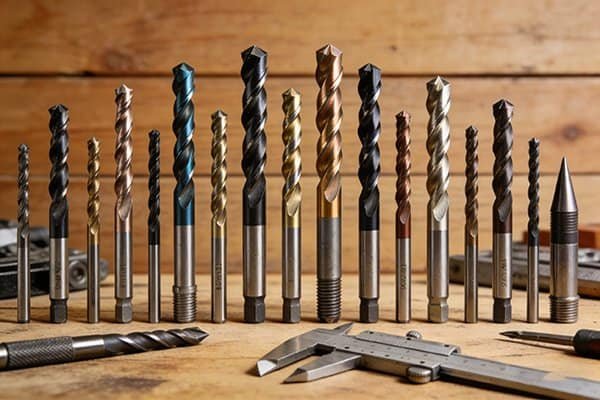
The "one-size-fits-all" approach has its limits. It is a strategy for flexibility, not for peak performance. In my years of supplying tools to machine shops, I've learned that you must recognize when it's time to invest in a specialist tool.
Knowing When to Specialize
You should absolutely switch to a dedicated drill in these scenarios:
- High-Volume Production: If you are drilling thousands of holes in the same material, a specialized drill is a must. A drill designed for cast iron will last much longer, and a drill for aluminum will run much faster. The small time savings per hole add up to massive productivity gains over the course of the job.
- Strict Hole Quality Requirements: If you need a perfect surface finish or very tight diameter tolerances, a versatile drill might not be consistent enough. An aluminum-specific drill with sharp, polished edges will prevent built-up edge and give you a much better, more consistent finish.
- Difficult Materials: When you're not just drilling standard cast iron or 6061 aluminum, things change. For high-silicon aluminum (with Si > 12%) or tough ductile iron, a general-purpose drill will fail quickly.12 These abrasive and tough materials demand specific geometries and coatings (like diamond for high-silicon aluminum).
A versatile drill is a hero in a job shop doing varied, low-quantity work. But as soon as a job becomes a regular, high-volume part of your production, it's time to optimize with a specialized tool.
Conclusion
A versatile drill is a great problem-solver for mixed-material jobs. But for high performance and volume production, always choose a specialized tool. It’s about using the right tool for the job.
"[PDF] Effects of Microstructure, Mechanical and Physical Properties on ...", http://www.eng.usf.edu/~volinsky/metals-GraphiteCastIronMachinability.pdf. A machining reference or materials text should support that gray cast iron’s graphite-containing, brittle microstructure tends to fracture into discontinuous chips and that cast irons are commonly abrasive in cutting operations. Evidence role: mechanism; source type: education. Supports: Cast iron is hard and abrasive and tends to form short, powder-like or discontinuous chips during drilling.. Scope note: Support may vary by cast-iron grade, since gray, ductile, and white cast irons differ substantially in machinability. ↩
"[PDF] PHYSICS BASED PROCESS MODELING OF SERRATED CHIP ...", https://rucore.libraries.rutgers.edu/rutgers-lib/61057/PDF/1/play/. A manufacturing or machining source should support that aluminum alloys are comparatively ductile and may form continuous chips in drilling, requiring attention to chip evacuation. Evidence role: mechanism; source type: education. Supports: Aluminum commonly behaves as a ductile, gummy material in machining and can produce long, continuous chips.. Scope note: The claim is most applicable to many wrought aluminum alloys; high-silicon casting alloys and some heat-treated alloys can machine differently. ↩
"[PDF] Face Milling Tool Geometry And Cutting Performance Of Silicon ...", https://preserve.lehigh.edu/system/files/derivatives/coverpage/425699.pdf. A machining text or cutting-tool study should support that brittle or abrasive work materials increase the need for edge strength and can cause chipping of overly sharp or weak cutting edges. Evidence role: mechanism; source type: education. Supports: A drill geometry optimized for aluminum may have insufficient edge strength for abrasive cast iron and may chip prematurely.. Scope note: The word “immediately” is application-dependent and would require specific cutting conditions, tool geometry, and cast-iron grade to prove directly. ↩
"[PDF] Untitled - C", https://web.eng.fiu.edu/MARIO/Hole%20Making%20Handouts.pdf. A drilling handbook or manufacturing-engineering source should document typical twist-drill helix and point-angle ranges and describe intermediate geometries as general-purpose compromises across materials. Evidence role: definition; source type: education. Supports: Moderate drill geometry, including helix angles near 35°–40° and point angles around 135°, can be described as a general-purpose compromise.. Scope note: Exact “versatile” ranges are partly manufacturer- and application-specific rather than universal standards. ↩
"[PDF] Computerized Twist Drill Selection for Cast Iron and Steel", https://scholarworks.uni.edu/cgi/viewcontent.cgi?article=4665&context=grp. A drilling reference should support the general relationship between drill point angle and work material, namely that larger point angles are used for harder materials while smaller point angles are often used for softer materials. Evidence role: mechanism; source type: education. Supports: Drill point-angle selection varies by material hardness, with larger angles commonly associated with harder materials and smaller angles with softer materials.. Scope note: The specific pairing of 140° with cast iron and 118° with aluminum may be a practical convention rather than a single universal recommendation. ↩
"[PDF] operating instructions & drill information", https://nps.edu/documents/111291366/113869380/Drill_Dr_Bit_Sharpener.pdf/bf43f9ed-899d-4fe0-b048-7d7442aa4dba?t=1554211142000. A manufacturing text or university machining note should support that 118° and 135° point angles are common twist-drill geometries, with 135° points often used for harder materials or broader general-purpose drilling. Evidence role: expert_consensus; source type: education. Supports: A 135° drill point is a common compromise geometry for general-purpose drilling across multiple materials.. Scope note: Effectiveness depends on work material, machine rigidity, drill size, and whether the point is split or otherwise thinned. ↩
"Characteristics and Wear Mechanisms of TiAlN-Based Coatings for ...", https://www.mdpi.com/2075-4701/11/2/260. A cutting-tool materials paper should support that titanium-containing coatings can have chemical affinity or adhesion problems with aluminum during machining, contributing to built-up edge or material transfer. Evidence role: mechanism; source type: paper. Supports: Some standard titanium-based coatings, including TiAlN-type coatings, may promote aluminum adhesion or built-up edge under machining conditions.. Scope note: The degree of adhesion depends on coating composition, cutting temperature, lubrication, aluminum alloy, and surface finish. ↩
"Built-up edge effect on tool wear when turning steels at low cutting ...", https://ui.adsabs.harvard.edu/abs/2004JMEP...13..542C/abstract. A machining science source should define built-up edge and support that it can degrade surface finish, alter cutting geometry, and contribute to tool wear or failure. Evidence role: definition; source type: education. Supports: Built-up edge in machining can worsen surface finish and contribute to tool wear or failure.. Scope note: The speed of tool failure is condition-specific; sources may support increased wear risk without proving rapid failure in every case. ↩
"[PDF] Advanced characterization techniques in cemented carbides", https://upcommons.upc.edu/bitstreams/757ac7e7-6c0a-4ca2-bcbe-e9a31484a18f/download. A materials or cutting-tool reference should support that cemented carbide tools have high hardness and wear resistance due to hard carbide particles bonded in a metallic binder. Evidence role: definition; source type: education. Supports: Uncoated cemented carbide substrates are inherently hard and wear-resistant compared with many tool materials.. Scope note: Wear resistance varies with carbide grade, binder content, grain size, and cutting conditions. ↩
"[PDF] THE MACHINABILITY OF AUSTEMPERED DUCTILE IRONS (ADI)", https://etda.libraries.psu.edu/files/final_submissions/15513. A machining handbook or academic source should support that cast iron’s abrasiveness and tool-wear behavior often require lower cutting speeds than aluminum when drilling with carbide tools. Evidence role: expert_consensus; source type: education. Supports: Cast iron typically requires lower cutting speeds than aluminum to control heat and abrasive tool wear.. Scope note: Recommended speeds depend on cast-iron grade, carbide grade, coating, coolant strategy, hole depth, and machine rigidity. ↩
"Thermal conductivity and resistivity - Wikipedia", https://en.wikipedia.org/wiki/Thermal_conductivity_and_resistivity. A materials-property source should support that aluminum has relatively high thermal conductivity compared with ferrous alloys, which can influence heat flow during machining. Evidence role: mechanism; source type: encyclopedia. Supports: Aluminum’s high thermal conductivity helps conduct heat away from the cutting zone relative to many other metals.. Scope note: High bulk thermal conductivity does not by itself determine cutting-edge temperature, which also depends on speed, feed, chip formation, coolant, and tool geometry. ↩
"The Research of Tool Wear Mechanism for High-Speed Milling ...", https://pmc.ncbi.nlm.nih.gov/articles/PMC7956700/. A machining or materials source should support that hypereutectic or high-silicon aluminum alloys are abrasive because of hard silicon particles, and that ductile iron can present distinct machining demands compared with gray iron. Evidence role: mechanism; source type: paper. Supports: High-silicon aluminum and ductile iron can be more demanding to drill than standard aluminum or gray cast iron, often requiring specialized geometry or tool materials.. Scope note: The phrase “fail quickly” is stronger than most general references can prove without specific tool-life tests and cutting parameters. ↩