Drilling cast iron seems simple, but your standard drills wear out too fast1. This costs you time, money, and creates scrap parts, hurting your bottom line.
A true high-performance drill for cast iron is a system. It combines a specific fine-grain carbide material2, advanced cutting geometry with 4-margins, a hard and slick coating like AlTiSiN, and a super-precise manufacturing process. These elements work together for maximum efficiency and tool life.
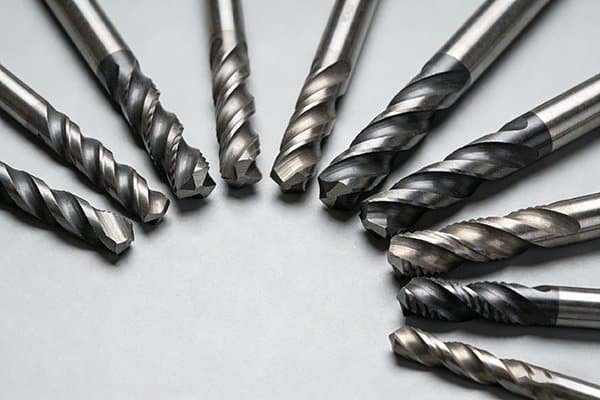
I've spent years in this business, and I've seen countless shops struggle with cast iron. They treat it like a simple material, but the details make all the difference between a profitable run and a pile of broken tools. It’s not just about buying any carbide drill; it’s about understanding what makes one truly "high-performance" for this specific job. Let's break down the key features you need to look for. This checklist will change how you approach your next cast iron project.
What makes cast iron uniquely challenging to drill?
You think cast iron is easy, but its abrasive nature eats standard drills for breakfast. This leads to frequent tool changes, inconsistent hole sizes, and a lot of frustration.
Cast iron's high carbon and silicon content makes it very abrasive3, which quickly dulls a drill's cutting edge. Its internal graphite flakes also create powdery chips4 that can pack flutes, and its brittle nature can cause chipping at the hole entry and exit5.
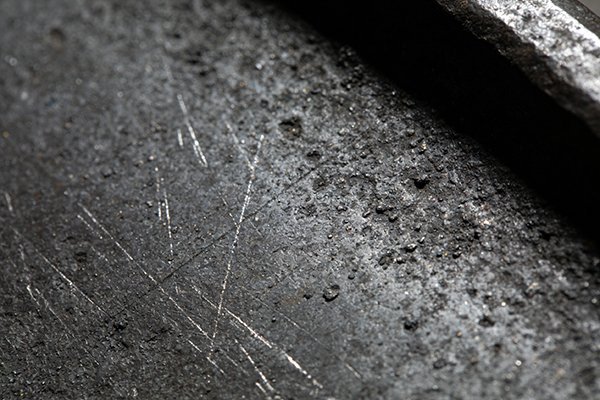
In my experience, many machinists underestimate cast iron. On the surface, it cuts easily, but it's a silent tool killer. The main problem is its microstructure. Cast iron isn't a uniform metal; it contains hard particles like silicon carbides and free graphite. These act like fine-grit sandpaper grinding away at your drill's cutting edge with every rotation. This is what we call abrasive wear. This is why the first pillar of a high-performance drill is the carbide matrix itself. For cast iron, we need a fine-grained, extremely hard carbide grade. This grade is specifically designed to resist this constant grinding action, unlike a tougher grade you might use for steel that needs to resist chipping. The type of cast iron also matters. Grey cast iron is highly abrasive, while ductile iron is tougher6 and can produce slightly longer chips. A high-performance drill is engineered from the ground up to handle these specific challenges.
| Cast Iron Property | Machining Challenge |
|---|---|
| High Graphite Content | Abrasive wear on the cutting edge |
| Silicon Inclusions | Rapid tool dulling and high friction |
| Brittle Nature | Chipping and breakout at hole entry/exit |
| Powdery, Fine Chips | Poor chip evacuation and flute packing |
Why are 4-margin lands critical for hole quality?
Are your drilled holes in cast iron coming out oversized, crooked, or with a poor finish? This leads to rework, scrapped parts, and questions about your process.
A 4-margin land design7 provides double the contact points inside the hole compared to a standard 2-margin drill. This greatly improves stability, guidance, and straightness, resulting in rounder, more accurate holes and a much better surface finish.
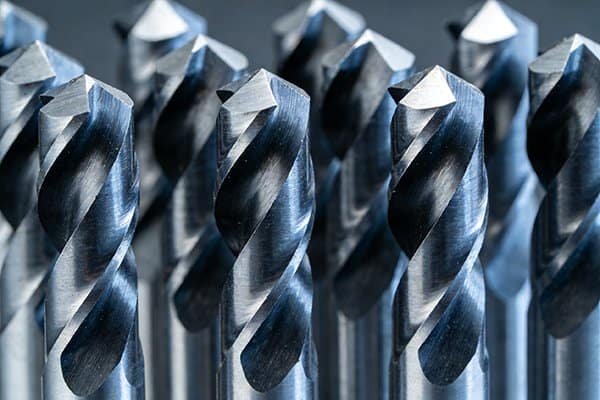
Think of it like trying to stand a pole up on two legs versus four legs. The four-legged base is always going to be more stable. It’s the same principle inside a hole. A standard drill has two margins, or contact points, that guide it. A 4-margin drill has four, creating a much more rigid and stable cutting environment. This is a key part of the second pillar: innovative geometry. This stability directly translates into better hole quality. It prevents the drill from "walking" or wobbling, which is what causes oversized or oval holes. The extra contact points also help burnish the inside of the hole8 as the drill passes through, which gives you a significantly better surface finish. I've found this is especially critical in deep-hole applications or when drilling on machines that aren't perfectly rigid. The added stability from the four margins compensates for other minor imperfections in the setup, ensuring the hole is straight and true from start to finish. It's a simple design change that makes a massive difference in performance and final part quality.
How do flute design and finish prevent chip packing?
Cast iron chips are fine and powdery, and they love to pack into your drill's flutes. This clogs the tool, causes overheating, and can lead to catastrophic drill breakage.
A high-performance drill for cast iron uses deep, wide flutes with a highly polished surface9. This geometry creates more space for chips and the slick finish reduces friction, allowing the powdery cast iron chips to be evacuated smoothly and efficiently.
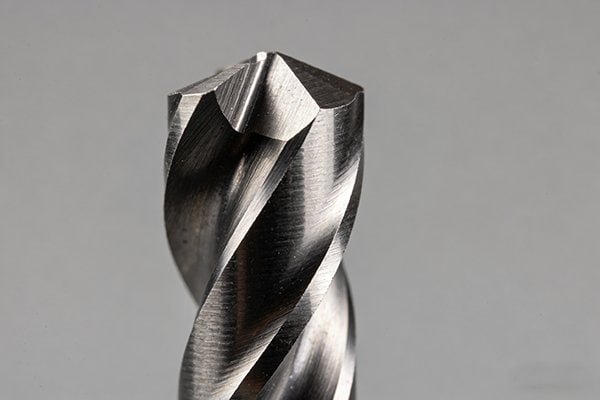
Chip evacuation is everything when drilling cast iron. Unlike steel, which can form long, stringy chips that pull themselves out of the hole, cast iron creates fine, sand-like dust. This dust has no structure and easily gets compacted in the flutes. When the flutes pack with chips10, a few bad things happen very quickly. First, friction skyrockets, generating a ton of heat right at the cutting edge, which can destroy the tool's coating and carbide substrate. Second, the packed chips stop the coolant from reaching the tip. Finally, the pressure can become so great that the drill simply snaps. To prevent this, the geometry of the flutes is critical. High-performance drills have a larger flute valley, which is just a technical way of saying there is more open space for the chips. On top of that, we polish these flutes to a near-mirror finish. This makes the surface incredibly slick, so the chips slide right out instead of sticking. It’s a simple concept, but the manufacturing precision required to achieve it is what separates a standard drill from a high-performance one.
Which coatings provide the best abrasion resistance?
Your drills just don't last on cast iron, and the constant tool replacement is killing your budget and production schedule. You need a better first line of defense against wear.
For cast iron, you need coatings with extreme hardness and a low coefficient of friction. A multi-layer TiAlN is a great all-around choice, but advanced coatings like AlTiSiN, which include silicon, offer superior hardness and wear resistance against highly abrasive materials.
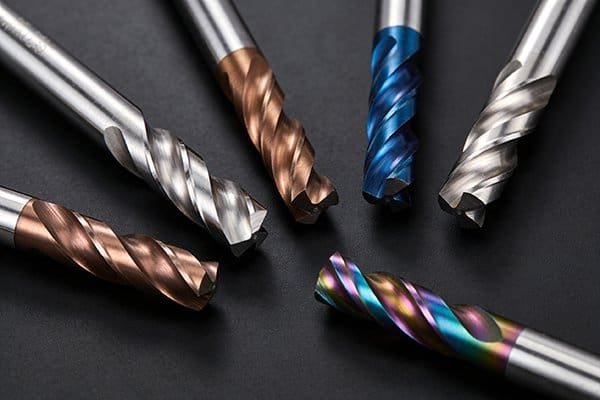
The coating is the armor that protects the carbide drill. It's a micro-thin layer, but it does the heavy lifting when it comes to fighting wear. This is the third pillar of high performance. For the intense abrasive environment of cast iron, not just any coating will do. A basic TiN (gold-colored) coating will wear away almost immediately. A good starting point is TiAlN (Titanium Aluminum Nitride). When this coating gets hot, it forms a microscopic layer of aluminum oxide11 on the surface, which acts as an excellent thermal barrier and is very hard. However, for true high-performance machining, we move to more advanced options. I strongly recommend coatings that include silicon, like AlTiSiN. The silicon creates a nano-composite structure that is significantly harder and slicker than standard TiAlN. This "nano-armor" is exceptionally good at resisting the grinding effect of cast iron, leading to much longer tool life and allowing you to run at higher speeds and feeds. The right coating can easily double or triple the number of holes you get per drill.
| Coating Type | Key Feature | Performance on Cast Iron |
|---|---|---|
| TiN | Basic Hardness | Poor - Wears too quickly |
| TiAlN | High Thermal Stability | Good - A solid all-around choice |
| AlTiSiN | Extreme Hardness & Low Friction | Excellent - The premium choice for high-volume production |
Do you need coolant for high-performance cast iron drilling?
You've heard conflicting advice about using coolant on cast iron. Making the wrong choice can cause thermal shock that cracks your expensive drill or leads to chip packing.
Yes, for high-performance drilling, through-coolant is essential12. Its primary job is not cooling, but forcefully flushing the abrasive, powdery chips out of the hole. This prevents packing, reduces friction, and dramatically extends tool life, enabling much higher machining parameters.
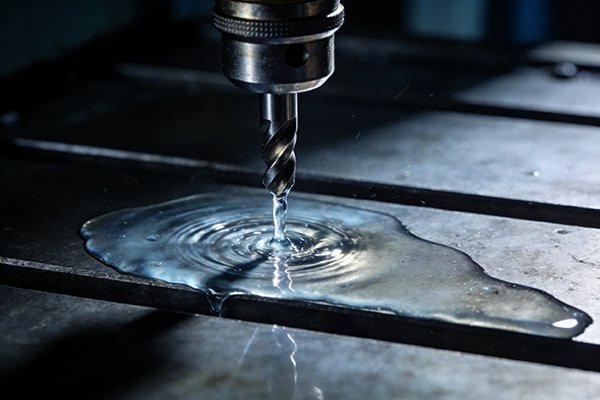
The old rule of "never use coolant on cast iron" comes from the days of HSS tooling, which was very susceptible to thermal cracking. Modern coated carbide drills are far more durable and are designed to be used with coolant. In fact, for high-performance drilling, I’d say it’s a requirement. But its main role has changed. With cast iron, the most important job of the coolant is chip evacuation. A drill with through-coolant holes shoots a high-pressure jet of fluid directly at the cutting tip. This stream acts like a pressure washer, blasting the fine, powdery chips out of the flutes and away from the cutting zone before they have a chance to pack. This single function prevents the number one cause of drill failure in cast iron. Of course, the coolant also helps to reduce friction and keep the cutting edge at a stable temperature, which preserves the life of the coating. Flood coolant from the outside is simply not effective enough to clear chips from deep inside a hole. For speed, reliability, and tool life, through-coolant is the only way to go.
Conclusion
A true high-performance cast iron drill combines a specific carbide grade, advanced 4-margin geometry, a tough AlTiSiN coating, and through-coolant. This complete system ensures efficiency, precision, and longer tool life.
"[PDF] KRISHIAMの0Tſ - DSpace@MIT", https://dspace.mit.edu/bitstream/handle/1721.1/16300/05748085-MIT.pdf?sequence=2. Machining references describe cast irons, especially gray cast iron, as abrasive work materials that accelerate flank wear and edge dulling in conventional drills. Evidence role: general_support; source type: education. Supports: Standard drills wear out quickly when drilling cast iron.. Scope note: The source would support the general wear mechanism, not the article’s specific cost impact for any individual shop. ↩
"Wear Characteristics of WC-Co Cutting Tools Obtained by the U ...", https://pmc.ncbi.nlm.nih.gov/articles/PMC12387649/. Cutting-tool materials literature reports that fine-grained tungsten carbide grades provide high hardness and wear resistance, properties relevant to abrasive machining applications such as cast iron drilling. Evidence role: mechanism; source type: paper. Supports: Fine-grain carbide material is an important component of a high-performance drill for cast iron.. Scope note: This supports the material-property rationale, not a specific branded drill formulation. ↩
"Surface Phenomena at the Interface between Silicon Carbide ... - PMC", https://pmc.ncbi.nlm.nih.gov/articles/PMC8619632/. Metallurgical and machining references identify graphite, carbides, and silicon-rich constituents in cast iron as contributors to abrasive behavior during cutting operations. Evidence role: mechanism; source type: education. Supports: Cast iron’s carbon- and silicon-related microstructure contributes to its abrasiveness in drilling.. Scope note: The degree of abrasiveness varies by cast-iron grade, heat treatment, and microstructure. ↩
"[PDF] Effects of Microstructure, Mechanical and Physical Properties on ...", http://www.eng.usf.edu/~volinsky/metals-GraphiteCastIronMachinability.pdf. Sources on gray cast iron machining note that its flake graphite microstructure promotes discontinuous, short, powder-like chips rather than continuous chips. Evidence role: mechanism; source type: education. Supports: Graphite flakes in cast iron contribute to powdery or discontinuous chips during drilling.. Scope note: This applies most directly to gray cast iron; ductile and compacted graphite irons may form different chip shapes. ↩
"How to Prevent Deep Hole Drill Breakage and Improve ...", https://www.alpha-tech-global.com/new_detail/How-to-Prevent-Deep-Hole-Drill-Breakage-and-Improve-Chip-Evacuation.html. Machining texts describe brittle cast irons as prone to edge breakout or chipping at machined features, particularly when cutting forces are unsupported at entry or exit surfaces. Evidence role: mechanism; source type: education. Supports: The brittleness of cast iron can cause chipping or breakout at drilled-hole entry and exit.. Scope note: The severity depends on drill geometry, feed rate, fixturing, and the specific cast-iron grade. ↩
"Product Applications of Grey Cast Iron vs Ductile Iron in Industrial ...", https://acmefoundry.net/product-applications-of-grey-cast-iron-vs-ductile-iron-in-industrial-components/. Comparative materials references distinguish gray cast iron, with flake graphite and strong abrasive machining characteristics, from ductile iron, whose nodular graphite structure gives higher toughness and different machining behavior. Evidence role: definition; source type: encyclopedia. Supports: Gray cast iron is generally more abrasive, while ductile iron is tougher and machines differently.. Scope note: Machinability also depends on alloying, hardness, pearlite/ferrite content, and heat treatment. ↩
"Drilling Strategies to Improve the Geometrical and Dimensional ...", https://pmc.ncbi.nlm.nih.gov/articles/PMC9820885/. Drilling studies and tooling references describe margin lands as guiding surfaces; four-margin drill designs add bearing contact that can improve drill guidance, hole roundness, and positional stability. Evidence role: mechanism; source type: paper. Supports: A 4-margin land design improves drilling stability and hole quality compared with a standard 2-margin design.. Scope note: Reported benefits depend on tool diameter, depth-to-diameter ratio, machine rigidity, and operating parameters. ↩
"Cast Aluminum Burnishing Drill - Allied Machine and Engineering", https://www.alliedmachine.com/products/specials/superion%C2%AE/solid-carbide/burnishing-drills/cast-aluminum-cab/. Machining references describe drill margins as rubbing or bearing surfaces that can smooth the hole wall, which provides a mechanism for improved surface finish in some drilling conditions. Evidence role: mechanism; source type: education. Supports: Additional drill margins can help smooth or burnish the hole wall and improve surface finish.. Scope note: Burnishing can also increase friction and heat if geometry, lubrication, or parameters are unsuitable. ↩
"Modeling and analysis of chip evacuation forces for deep hole ...", https://www.ideals.illinois.edu/items/126572. Drilling mechanics literature identifies flute geometry and surface condition as important factors in chip evacuation, with larger flute volume and lower friction surfaces helping chips move out of the hole. Evidence role: mechanism; source type: education. Supports: Deep, wide, polished flutes improve chip evacuation in cast iron drilling.. Scope note: The source would support the general chip-evacuation principle, not necessarily the exact optimal flute dimensions for every cast-iron application. ↩
"What To Do When CNC Drilling Causes Tool Breakage - YCM Alliance", https://www.ycmalliance.com/what-to-do-when-cnc-drilling-causes-tool-breakage/. Drilling process references explain that poor chip evacuation can increase torque, frictional heat, and the risk of drill failure or breakage. Evidence role: mechanism; source type: education. Supports: Chip packing in drill flutes increases friction, heat, and risk of drill breakage.. Scope note: The exact threshold for failure depends on hole depth, tool material, feed, speed, coolant delivery, and chip morphology. ↩
"The Oxidation Behaviour and Notch Wear Formation of TiAlN ... - PMC", https://pmc.ncbi.nlm.nih.gov/articles/PMC8048706/. Coating research reports that TiAlN/AlTiN coatings can form a protective alumina-rich oxide scale at elevated cutting temperatures, contributing to oxidation resistance and thermal-barrier behavior. Evidence role: mechanism; source type: paper. Supports: TiAlN coatings can form an aluminum oxide layer that helps protect the cutting tool at high temperature.. Scope note: The formation and effectiveness of the oxide layer depend on coating composition, temperature, atmosphere, and machining conditions. ↩
"Drilling tips - Sandvik Coromant", https://www.sandvik.coromant.com/en-us/knowledge/drilling/drilling-tips. Deep-hole and high-performance drilling references identify internal through-coolant as an effective method for delivering fluid to the cutting zone and evacuating chips from the hole. Evidence role: expert_consensus; source type: education. Supports: Through-coolant is important for high-performance cast iron drilling because it helps flush chips from the hole and sustain tool life.. Scope note: This supports through-coolant as a recognized best practice for demanding drilling; it does not prove it is essential for every shallow or low-volume cast-iron hole. ↩