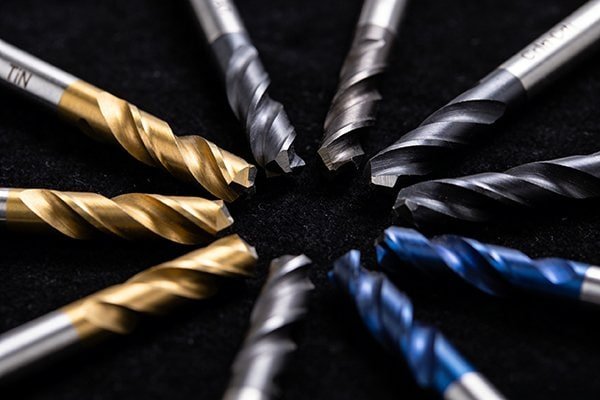
Are you tired of dealing with poor finishes and inaccurate parts? These problems waste time and money. The right coating on your cutting tool is often the simplest, most effective solution.
A tool coating fixes common workpiece problems by reducing friction, managing heat, and maintaining a sharp edge1. This prevents material from sticking to the tool, stops heat from damaging the part, and ensures a consistent, clean cut for better finish and accuracy.
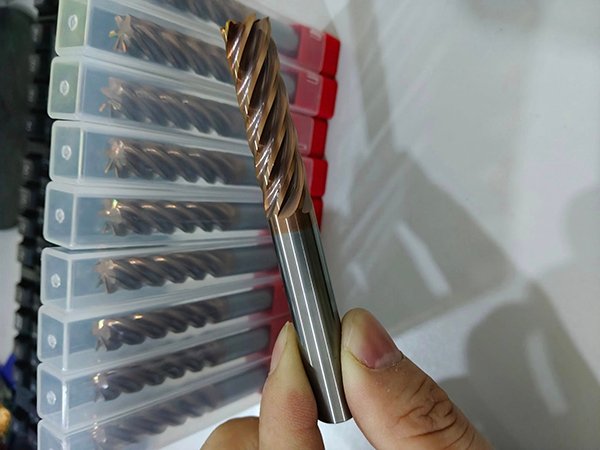
When I first started in this industry, I was amazed that something so thin could make such a huge difference. It’s not just a small improvement; it’s a complete change in how the tool interacts with the material. You might be facing a specific problem right now, like a bad surface finish or parts that are out of spec. Let's break down how a tiny coating layer solves these big headaches and helps you get the perfect workpiece every time.
First, Why Does a Microscopic Coating Layer Have Such a Huge Impact?
It seems hard to believe that a layer thinner than hair can change everything. You might think it's just a sales gimmick. But the science is real and straightforward.
A coating creates a super-hard, low-friction barrier between the tool and the workpiece.2 This barrier stops material from sticking to the tool tip and insulates the part from intense cutting heat. This changes the entire machining process for the better.
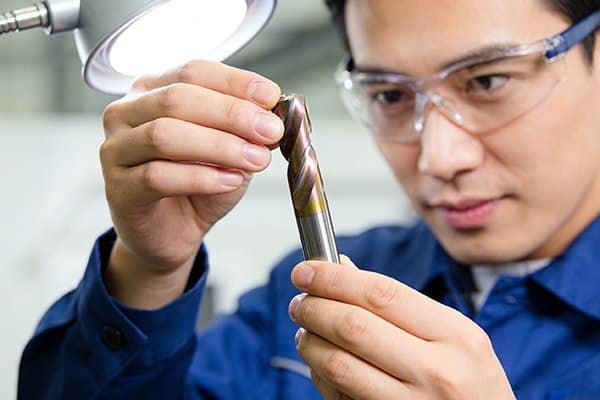
Let's dive a little deeper into how this works. It really comes down to two key jobs: managing friction and controlling heat. First, the coating material itself is very slippery. Coatings like TiAlN (Titanium Aluminum Nitride) have a much lower coefficient of friction than the carbide tool underneath.3 This is important because, during cutting, chips of metal won't "cold-weld" or stick to the tool tip. This sticking action creates something we call a "built-up edge," which is a major cause of poor surface finish. The second job is managing heat. Coatings with aluminum, like AlTiN (Aluminum Titanium Nitride), form a microscopic layer of aluminum oxide when they get hot.4 This layer is a terrible conductor of heat. It acts like a shield, forcing most of the cutting heat to leave with the chip instead of soaking into your workpiece.5 This prevents burns and keeps thin parts from warping.
| Mechanism | How It Works | Impact on Your Workpiece |
|---|---|---|
| Low Friction | The coating is slicker than the tool's base material. | Prevents built-up edge, leading to a smoother surface. |
| Heat Barrier | Forms a heat-blocking layer (Al₂O₃) at high temperatures. | Stops thermal damage, burns, and warping. |
My Workpiece Has a Poor Surface Finish, So Which Coating Is the Solution?
Are ugly scratches and a rough texture ruining your finished parts? This poor surface finish can lead to rejections and wasted material. A good coating creates a much smoother cut.
For a poor surface finish, use a coating like TiAlN or AlCrN.6 These reduce friction and prevent built-up edge, which is the main cause of scratches. This gives you a cleaner cut and a much smoother surface without extra work.
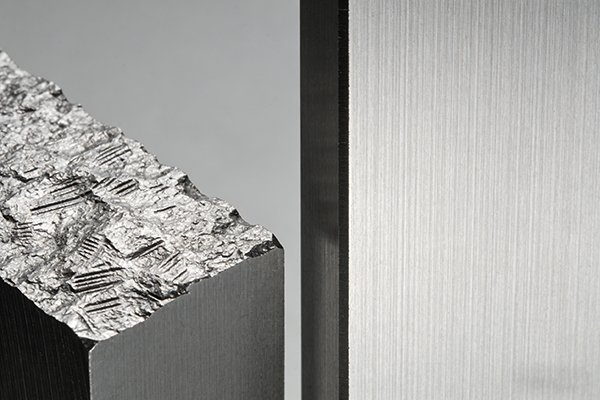
The main enemy of a good surface finish is the "built-up edge," or BUE. Imagine tiny bits of the workpiece material getting so hot and under so much pressure that they weld themselves onto the very tip of your cutting tool. This BUE is unstable. As you continue cutting, it breaks off and can drag across the surface you just machined, leaving behind scratches and gouges. This is why you sometimes see an inconsistent or rough finish. A coating with low friction and poor chemical affinity to your workpiece material solves this. Materials like TiAlN are very slick, so the metal chip slides off easily instead of sticking. Because no BUE forms, the cutting edge stays clean and leaves a smooth, consistent finish behind. This also helps control burrs on the edges of your parts, especially with softer materials like aluminum. You get a better part right off the machine, which reduces the need for secondary deburring or polishing operations.
I'm Struggling with Dimensional Accuracy, So How Can a Coating Help?
Are your parts coming out with inconsistent sizes, especially over a long production run? This inconsistency means failed inspections and unpredictable results. A coating helps by keeping your tool's edge consistent.
A coating dramatically slows down tool wear.7 This keeps the cutting edge sharp and stable for much longer. A stable cutting edge means stable cutting forces, preventing tool deflection and ensuring every part in a batch is machined to the same precise dimension.
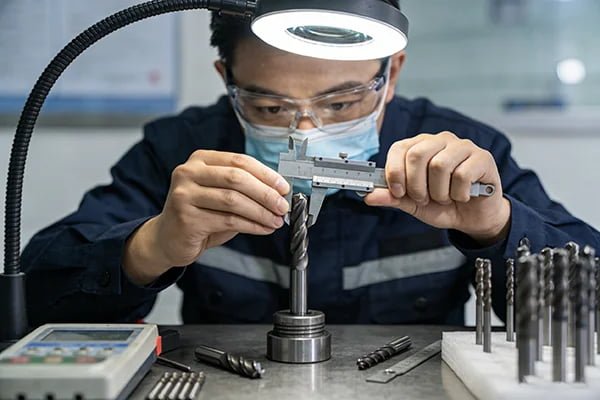
Dimensional accuracy is all about consistency, and consistency depends on a stable cutting process. When an uncoated tool starts to wear, its edge becomes dull. A dull edge requires more force to push through the material.8 This increase in cutting force can cause tiny problems that add up. The tool itself might bend or deflect by a few microns, or it might cause the workpiece to vibrate.9 The result is that the tenth part you make is a slightly different size than the first one. A coating directly fights this problem. By providing a hard, wear-resistant barrier, the coating protects the sharp cutting edge underneath. The tool stays sharp for much longer, so the cutting forces remain low and stable from start to finish. This eliminates the tool deflection and vibration that cause inaccuracies. Furthermore, the heat-blocking ability of the coating prevents the workpiece from expanding due to heat during cutting, which is critical for holding tight tolerances on thin-walled parts.10
| Without Coating | With Coating |
|---|---|
| Edge dulls quickly. | Edge stays sharp longer. |
| Cutting forces increase. | Cutting forces remain stable. |
| Tool deflects or vibrates. | Process is stable and rigid. |
| Dimensions vary per part. | Dimensions are consistent. |
How Do I Prevent Work Hardening on Stainless Steel or Titanium Workpieces?
Are your tools breaking when machining tough materials like stainless steel? This is often due to work hardening, which makes the material even harder to cut as you go.
Use a coating like AlTiN. These coatings stay very sharp and manage heat very well. A sharp edge cuts cleanly without rubbing, and heat control stops the material's structure from changing. This combination is the key to preventing work hardening.
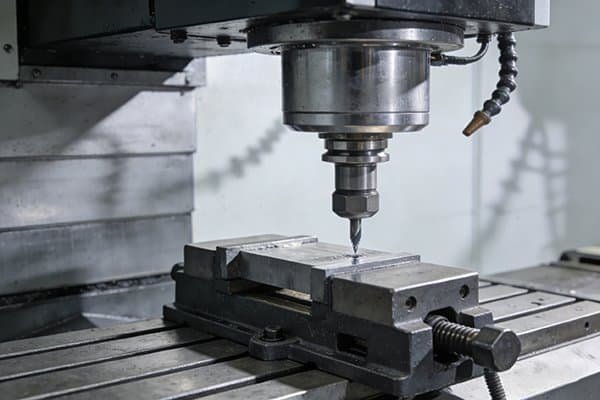
Work hardening is a huge challenge with materials like stainless steel, titanium, and other high-temperature alloys.11 It happens for two main reasons: rubbing from a dull tool and excessive heat. When a tool isn't perfectly sharp, it doesn't just cut the material; it also plows through it and rubs against the surface. This rubbing action hardens the layer of material you're about to cut, making the next pass even more difficult. Heat makes it worse. Too much heat can change the crystal structure of the metal, making it significantly harder. A coating attacks both of these root causes. First, its wear resistance keeps the cutting edge razor-sharp, so it shears the material cleanly instead of rubbing it. Second, a heat-resistant coating like AlTiN creates that thermal barrier we talked about. It keeps the workpiece cool, preventing the structural changes that lead to hardening. This allows you to machine these tough materials more smoothly and with much better tool life.
Is There a Quick Chart for Matching My Workpiece Problem to the Right Coating?
Are you tired of guessing which coating solves which specific machining issue? Choosing the wrong one wastes time and money on trial and error. Here is a simple chart to guide you.
Yes, here is a straightforward guide. For a poor surface finish, use a low-friction coating. For dimensional inaccuracy, choose a wear-resistant coating. For work hardening, select a coating with high heat resistance. This chart simplifies your choice.
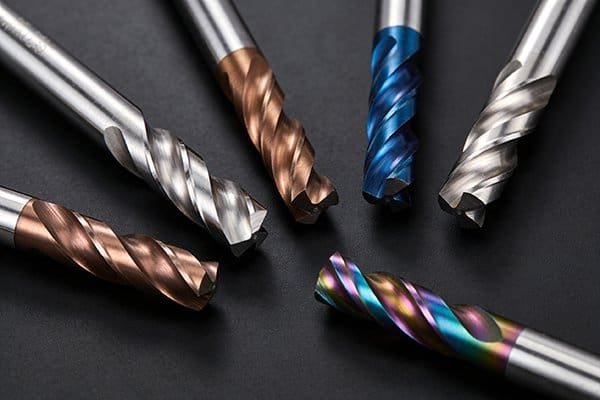
Choosing the right coating can feel complicated, but it's easier when you connect the problem to its root cause. I've put together this table to help you make a quick decision based on the issue you are seeing on your workpiece. This is a great starting point for most common applications. Remember that for highly specialized jobs, our team at NV-Tool is always here to provide a more detailed recommendation. We can help you dial in the perfect combination of tool geometry, carbide grade, and coating to get the best possible results. This chart should help you solve about 80% of the common problems you'll face.
| Workpiece Problem | Root Cause | How Coating Helps | Recommended Coating Type |
|---|---|---|---|
| Poor Surface Finish | Built-Up Edge (BUE) | Reduces friction so chips don't stick. | TiAlN, AlCrN |
| Dimensional Inaccuracy | Tool Wear & Deflection | Maintains a sharp, stable cutting edge. | AlTiN, TiAlN |
| Workpiece Burns | Excessive Heat Transfer | Acts as a thermal barrier, insulating the part. | AlTiN, TiAlN |
| Burrs on Edges | Material Tearing (Dull Edge) | Keeps the edge sharp for a clean shearing action. | TiCN, TiAlN |
| Work Hardening | Heat & Rubbing | Provides heat resistance and maintains sharpness. | AlTiN, AlCrN |
Conclusion
The right tool coating is not just a small upgrade. It is a direct solution to your biggest workpiece problems, improving finish, accuracy, and efficiency while ultimately saving you money.
"Characterization and Evaluation of Engineered Coating Techniques ...", https://pmc.ncbi.nlm.nih.gov/articles/PMC9415707/. A peer-reviewed review of hard protective coatings for cutting tools supports that coatings can reduce friction, improve thermal behavior, and increase wear resistance at the cutting edge. Evidence role: general_support; source type: paper. Supports: Tool coatings improve machining outcomes by reducing friction, managing heat, and maintaining edge integrity.. Scope note: This supports the mechanisms generally; the degree of improvement depends on coating composition, substrate, workpiece material, and cutting conditions. ↩
"Characterization and Evaluation of Engineered Coating Techniques ...", https://pmc.ncbi.nlm.nih.gov/articles/PMC9415707/. An academic source on PVD/CVD cutting-tool coatings describes hard nitride coatings as protective surface layers that provide high hardness and lower friction at the tool–chip interface. Evidence role: mechanism; source type: education. Supports: Cutting-tool coatings act as hard, low-friction barriers between tool and workpiece.. Scope note: The source would establish the coating function in general rather than prove performance for every coating or machining setup. ↩
"Investigations on friction and wear mechanisms of the PVD-TiAlN ...", https://www.academia.edu/11554231/Investigations_on_friction_and_wear_mechanisms_of_the_PVD_TiAlN_coated_carbide_in_dry_sliding_against_steels_and_cast_iron. Materials-property data or a peer-reviewed tribology study comparing TiAlN coatings with cemented carbide supports that TiAlN can exhibit lower friction under relevant contact conditions. Evidence role: statistic; source type: paper. Supports: TiAlN coatings can have a lower coefficient of friction than an uncoated carbide substrate.. Scope note: Friction coefficients vary substantially with counterface, temperature, lubrication, load, and test method, so the source should be treated as contextual rather than universal. ↩
"Titanium aluminium nitride - Wikipedia", https://en.wikipedia.org/wiki/Titanium_aluminium_nitride. A peer-reviewed study of AlTiN/TiAlN oxidation behavior supports that aluminum-containing nitride coatings can form protective alumina-rich oxide layers at elevated temperatures. Evidence role: mechanism; source type: paper. Supports: Aluminum-containing cutting-tool coatings such as AlTiN can form aluminum oxide layers at high temperature.. Scope note: The temperature range and oxide composition depend on coating chemistry, deposition method, and exposure environment. ↩
"A computational approach to evaluate temperature and heat ...", https://www.sciencedirect.com/science/article/abs/pii/S0890695503001603. Sources on machining heat partition and alumina thermal properties support that low-thermal-conductivity oxide layers can reduce heat flow into the tool or workpiece, while much cutting heat is carried away by chips. Evidence role: mechanism; source type: paper. Supports: An aluminum oxide-rich layer can act as a thermal barrier and influence heat flow during cutting.. Scope note: The exact heat partition is process-specific and depends on cutting speed, tool geometry, coolant, workpiece material, and coating thickness. ↩
"(PDF) Surface roughness analysis in machining of titanium alloy", https://www.academia.edu/3989864/Surface_roughness_analysis_in_machining_of_titanium_alloy. Comparative machining studies of TiAlN or AlCrN coated tools provide contextual support that these coatings can improve surface roughness relative to uncoated tools in selected materials and cutting conditions. Evidence role: case_reference; source type: paper. Supports: TiAlN or AlCrN coatings can help improve surface finish in some machining applications.. Scope note: This does not prove TiAlN or AlCrN is optimal for every poor-finish problem; surface finish also depends on tool geometry, parameters, machine rigidity, and workpiece alloy. ↩
"Influence of Nanocomposite PVD Coating on Cutting Tool Wear ...", https://pmc.ncbi.nlm.nih.gov/articles/PMC12073052/. Peer-reviewed wear studies and reviews of coated carbide tools support that hard coatings commonly reduce flank wear, crater wear, or abrasive wear compared with uncoated tools under comparable cutting conditions. Evidence role: general_support; source type: paper. Supports: Cutting-tool coatings can slow tool wear compared with uncoated tools.. Scope note: The word “dramatically” is condition-dependent; the magnitude of wear reduction varies with coating, material, speed, feed, and cooling method. ↩
"Comparison of Tool Wear, Surface Roughness, Cutting Forces, Tool ...", https://pmc.ncbi.nlm.nih.gov/articles/PMC10303288/. Metal-cutting research on tool wear and cutting forces supports that increasing edge wear or edge radius generally increases cutting and thrust forces. Evidence role: mechanism; source type: paper. Supports: Tool dulling or wear increases the cutting force required during machining.. Scope note: The relationship can vary with cutting regime, material, chip formation mode, and whether lubrication or coolant is used. ↩
"Cutting Force—Vibration Interactions in Precise—and Micromilling ...", https://pmc.ncbi.nlm.nih.gov/articles/PMC12348374/. Machining dynamics literature supports that cutting forces can cause tool deflection and excite vibration or chatter, affecting dimensional accuracy and surface quality. Evidence role: mechanism; source type: education. Supports: Cutting forces can lead to tool deflection or vibration in machining.. Scope note: The size of deflection depends on tool overhang, stiffness, force level, machine structure, and fixturing; “a few microns” is illustrative rather than universal. ↩
"(PDF) Dimensional, geometrical, thermal and tool deflection errors ...", https://www.academia.edu/99585360/Dimensional_geometrical_thermal_and_tool_deflection_errors_compensation_in_5_Axis_CNC_milling_operations. Sources on thermal error in machining and thermal expansion support that heat generated during cutting can change workpiece dimensions, with thin-walled parts being especially sensitive to thermal and mechanical deformation. Evidence role: mechanism; source type: paper. Supports: Cutting heat can cause workpiece expansion and dimensional error, particularly in thin-walled parts.. Scope note: The source would support thermal expansion as an accuracy issue; direct proof that a given coating prevents it requires process-specific measurement. ↩
"Harnessing strengthening-metastability synergy for extreme work ...", https://pmc.ncbi.nlm.nih.gov/articles/PMC12848114/. Materials and machining references support that austenitic stainless steels, titanium alloys, and nickel-based high-temperature alloys can be difficult to machine partly because of work hardening or strain hardening behavior. Evidence role: expert_consensus; source type: education. Supports: Work hardening or strain hardening is a recognized machining challenge for stainless steels, titanium alloys, and high-temperature alloys.. Scope note: The severity of work hardening varies by alloy grade and machining parameters; titanium’s machining difficulty also involves low thermal conductivity and chemical reactivity. ↩