Choosing the right end mill feels overwhelming. The wrong choice costs you time, money, and scrapped parts. This guide makes the decision simple and clear for you.
A high-performance coated end mill uses a specific coating to increase hardness, reduce friction, and resist heat1. This allows for faster cutting speeds, much longer tool life, and superior surface finishes2 on your parts. It directly lowers your overall cost per component.
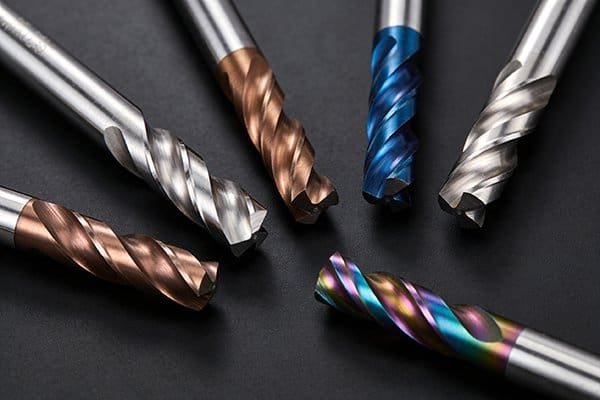
But simply picking a tool with a coating isn't enough. Not all coatings are created equal, and the secret to unlocking true performance lies in understanding what that thin layer actually does for you. To really get the most out of your tools and your machine, you need to know which coating to use for which job. Let's break it down together.
Why Is the Coating More Than Just a Color?
You see tools in gold, black, or violet. Do you just guess which one is best? That's a gamble with your money. Let's look at the real benefits behind the color.
A coating is a micro-thin layer3 engineered to dramatically improve a tool's performance. It increases surface hardness for wear resistance, reduces friction for smoother chip flow, and acts as a thermal barrier. This protects both the tool and your workpiece from damaging heat.
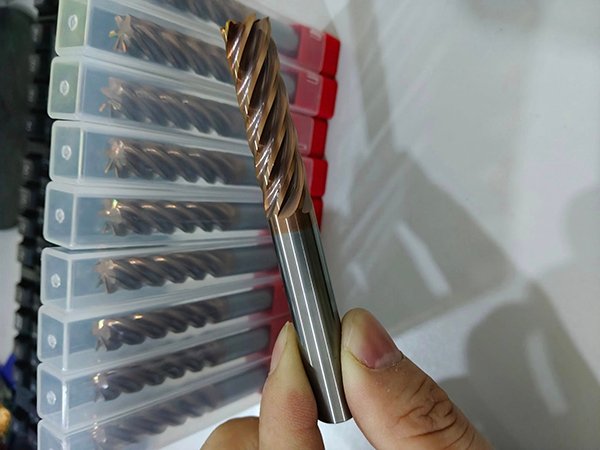
The coating on an end mill is one of the most important factors for performance. I've seen it firsthand in my shop for years. A good coating directly impacts the quality of your finished part in a few key ways. It’s not just about making the tool last longer; it’s about making a better part, faster.
Better Surface Finish
A major job of the coating is to be slippery. Materials like TiAlN have a low coefficient of friction4. This means the metal chips you create are less likely to stick to the tool's cutting edge. When chips stick, they form a "built-up edge5." This built-up edge can break off and scratch the surface of your workpiece, leaving a poor finish. A coated tool prevents this, giving you a clean, smooth surface without those ugly drag marks.
Less Heat Damage
Coatings with aluminum, like TiAlN or AlTiN, do something amazing. At high temperatures, they form a super-thin layer of aluminum oxide6. This layer is like a ceramic heat shield. It stops heat from the cut from soaking into your workpiece. Most of the heat gets carried away with the chip7. This is critical for thin-walled parts that can warp from heat or for mold steels where you must avoid surface burns.
| Benefit | How the Coating Helps | Impact on Your Part |
|---|---|---|
| Improved Finish | Reduces friction and built-up edge. | Eliminates scratches and drag marks. |
| Prevents Warping | Acts as a thermal barrier. | Keeps heat out of the workpiece. |
| Maintains Accuracy | Slows down edge wear. | Ensures consistent part dimensions. |
| Reduces Burrs | Keeps the cutting edge sharp. | Less time spent on deburring later. |
What Are the 'Workhorse' Coatings I Absolutely Must Know?
You see a lot of acronyms like TiN, TiCN, TiAlN. It is easy to get lost in the technical jargon. Let's focus on the four most common coatings you will use every day.
The four essential coatings are TiN (gold, general-purpose), TiCN (grey/blue, for abrasive materials), TiAlN (violet/black, for high speeds), and AlTiN (dark grey/black, for high-heat jobs)8. Each one offers a unique balance of hardness and heat resistance for different tasks.
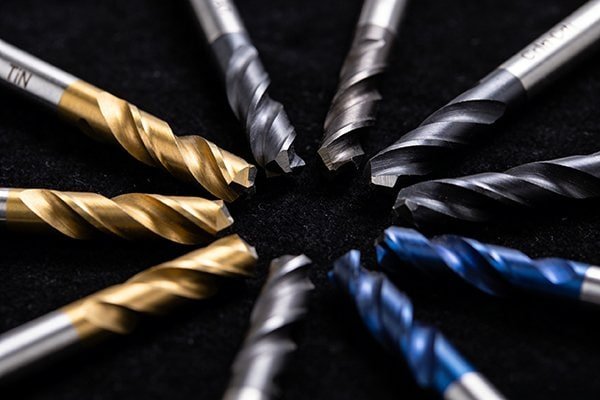
These four coatings cover probably 90% of the milling applications I see in shops around the world. Understanding what each one does best is the fastest way to improve your machining results. Think of them as different tools in your toolbox. You wouldn't use a hammer to turn a screw, and you shouldn't use a basic TiN coating for hardened steel. Let's look at each one.
The Main Players
-
TiN (Titanium Nitride): This is the classic, gold-colored coating. It's a great all-around performer for general-purpose machining in softer steels, aluminum, and plastics. It's not the best for high heat, but it is affordable and its bright color makes it very easy to see when the cutting edge starts to wear down.
-
TiCN (Titanium Carbonitride): This coating is harder and more wear-resistant than TiN9. You'll often see it in a grey or bluish color. It's excellent for cutting abrasive materials like cast iron or high-silicon aluminum. The trade-off is that it has lower heat resistance, so you typically need to run it with coolant.
-
TiAlN (Titanium Aluminum Nitride): This is my go-to for high-speed machining in steels and stainless steels. It has fantastic heat resistance because of that aluminum oxide layer10 I mentioned. You can often run this coating dry, which saves on coolant costs. It has a distinctive violet or dark grey color.
-
AlTiN (Aluminum Titanium Nitride): This is the big brother to TiAlN. It has even more aluminum, which gives it superior hardness and heat resistance. This is the coating you want for difficult materials like hardened steels, titanium, and other high-temp alloys. It's perfect for aggressive, high-performance milling.
| Coating | Color | Hardness | Max Temp | Best Use Case |
|---|---|---|---|---|
| TiN | Gold | Good | ~600°C | General Purpose, Non-Ferrous |
| TiCN | Blue-Grey | Better | ~400°C | Abrasive Materials (Cast Iron) |
| TiAlN | Violet-Black | Excellent | ~800°C | High-Speed Steel Machining |
| AlTiN | Dark Grey | Superior | ~900°C | Hardened Steel, Titanium |
How Do I Match a Coating to My Specific Material?
You have your material and your end mill. But using the wrong coating can ruin both of them quickly. Here is a simple guide to help you make the right match every time.
For general steels, TiAlN is a great start. For aluminum, use a very smooth, uncoated, or specialized coating like DLC to prevent material from sticking. For tough exotic alloys like Inconel, you need maximum heat resistance, so AlTiN or other advanced coatings are necessary.
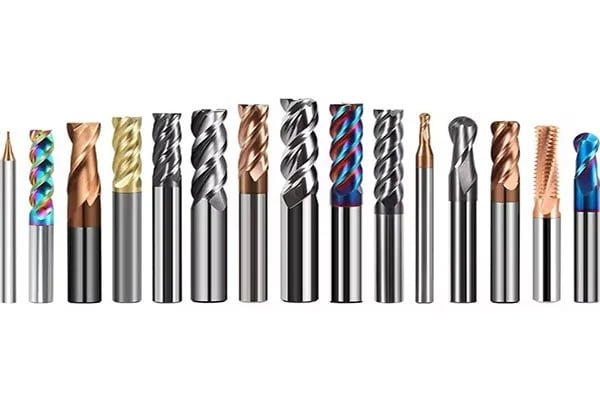
Matching the coating to the material is where you get the biggest return on your investment. A premium coating used on the wrong material is just a waste of money. But the right pairing can make a tool last twice as long and cut twice as fast. I always break it down into three main material groups.
Machining Steels & Stainless Steels
These materials generate a lot of heat, especially when you push the speeds and feeds. The name of the game here is heat resistance. This is why TiAlN is the workhorse. It forms that protective aluminum oxide layer that keeps the carbide substrate from getting soft. It allows you to run faster and hotter, which means shorter cycle times. For tougher stainless steels or tool steels, stepping up to AlTiN gives you an even greater thermal barrier and better wear resistance.
Machining Aluminum & Non-Ferrous Metals
With aluminum, the main enemy is not heat, but "built-up edge" (BUE). Aluminum is sticky, and it loves to weld itself to the cutting tool11. When this happens, it ruins your surface finish and can even break the tool. So, for aluminum, you need a coating with high lubricity, meaning it's very slippery. A bright, uncoated tool with highly polished flutes works well. For even better performance, a specialized coating like ZrN (Zirconium Nitride) or DLC (Diamond-Like Carbon) is incredibly slick and prevents any sticking12. You should avoid coatings with aluminum in them, like TiAlN, as the coating can have a chemical reaction with the workpiece.
Machining Exotic Alloys (Titanium, Inconel)
These materials are the toughest challenge. They are incredibly strong, abrasive, and generate extreme heat during cutting. A standard coating will fail almost instantly. Here, you need the absolute best in hardness and heat resistance. AlTiN is a good starting point because of its high aluminum content and ability to withstand very high temperatures. This is also where advanced multi-layer coatings come into play, offering a combination of properties specifically designed to handle these difficult-to-machine materials.
When Should I Consider Advanced or Multi-Layer Coatings?
You have mastered the basic coatings. But you are still not getting the performance you need for a tough job. It might be time to look at an advanced coating.
Consider advanced or multi-layer coatings when machining difficult materials like hardened steels over 55 HRC or aerospace superalloys. They are also ideal for high-volume production where maximizing tool life and cutting speeds gives you a significant cost advantage.
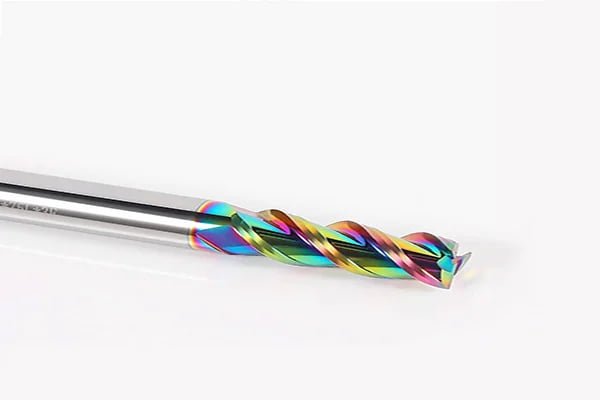
The standard workhorse coatings are fantastic, but sometimes you run into a job that requires something more. That's where advanced and multi-layer coatings come in. Think of a multi-layer coating like plywood. Instead of one solid block, it's made of many very thin, different layers. Each layer is engineered to do a specific job. One layer might provide extreme hardness, the next provides lubricity, and another provides a thermal barrier. This combination gives you performance that a single-layer coating just can't match.
When to Make the Upgrade
-
High-Hardness Machining: Are you milling tool steel or a mold after it has been heat-treated? You need a coating that is harder than the material you are cutting. Advanced coatings like nACo® or other proprietary nanocomposite coatings are designed for this. They maintain their hardness at extreme temperatures.
-
High-Temperature Alloys: When you are machining materials for the aerospace or medical industry, like Inconel or Titanium, the heat is incredible. It can destroy a tool in seconds. A multi-layer coating designed for these superalloys will have layers that both resist the heat and prevent the chemical reactions that cause the tool to break down.
-
High-Volume Production: If you are running thousands of parts in an automated cell, tool life is everything. A surprise tool failure can scrap an expensive part and shut down production. Spending a little more on an advanced coating that provides predictable, extended tool life is a smart investment. The lower cost-per-part and increased reliability will easily pay for the more expensive tool.
Is There a Simple Chart to Help Me Choose?
This is a lot of information to remember. It can be hard to recall all the details when you are on the shop floor. Here is a simple chart to help you out.
Yes, here is a quick reference guide. This cheat sheet matches common coatings to different materials and machining conditions. Use it as a starting point to select the best end mill for your specific job. It will save you time and improve your results.
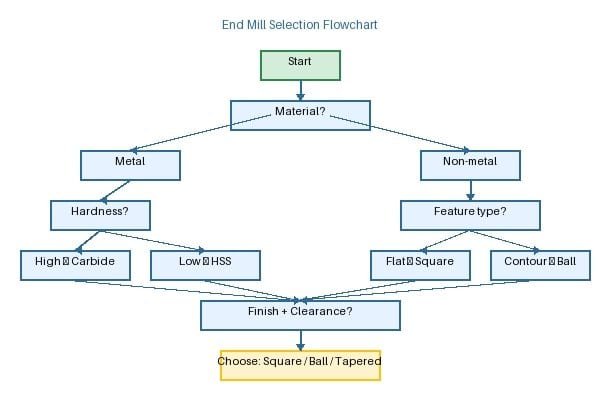
I tell everyone in my shop to use a chart like this as a starting point. It won't be perfect for every single application, because factors like your machine's rigidity, your tool holding, and your use of coolant all matter. But it will get you in the right ballpark 99% of the time. From there, you can fine-tune your speeds and feeds to get the perfect result. Remember, if you ever have a really tough application, our team at NV-Tool is always here to help you find the perfect solution.
Coating Selection Cheat Sheet
| Coating | Key Feature | Best For... | Avoid Using On... |
|---|---|---|---|
| Uncoated (Bright) | High Sharpness, Low Cost | Aluminum, Plastics, Wood | Steels, Abrasive Materials |
| TiN | General Purpose, Wear ID | Softer Steels (<40 HRC), Brass | Hardened Steels, High-Temp Alloys |
| TiCN | Hardness, Abrasion Resistance | Cast Iron, High-Silicon Aluminum | High-Speed, Dry Machining |
| TiAlN | Heat Resistance, High Speed | Steels, Stainless Steels, Dry Milling | Aluminum, Soft Non-Ferrous |
| AlTiN | Superior Heat & Hardness | Hardened Steels (>50 HRC), Titanium | Aluminum, Low-Speed Machining |
| ZrN / DLC | Extreme Lubricity (Slickness) | Aluminum, Copper, Composites | Ferrous Materials (Steels) |
Conclusion
Choosing the right coating is not just a small detail. It is a core strategy for making better parts, getting longer tool life, and lowering your overall manufacturing costs.
"Force and Wear Analysis of PVD Coated Cutting Tool - a Review", https://www.academia.edu/100190595/Force_and_Wear_Analysis_of_PVD_Coated_Cutting_Tool_a_Review. A materials-engineering review of hard PVD coatings for cutting tools supports that nitride-based coatings can increase tool-surface hardness, lower friction, and improve oxidation or thermal resistance during machining. Evidence role: general_support; source type: paper. Supports: A high-performance coated end mill uses a specific coating to increase hardness, reduce friction, and resist heat.. Scope note: The source would support the general mechanism of coated cutting tools rather than the performance of any specific end mill brand or geometry. ↩
"Machinability and ANN based prediction of surface roughness ...", https://pmc.ncbi.nlm.nih.gov/articles/PMC12381297/. Machining studies comparing coated and uncoated carbide tools report that appropriate coatings can permit higher cutting speeds and reduce flank wear, with corresponding effects on surface roughness. Evidence role: general_support; source type: paper. Supports: Coated end mills can allow faster cutting speeds, longer tool life, and improved surface finishes.. Scope note: Performance gains depend on workpiece material, coating composition, cutting parameters, coolant use, and tool geometry. ↩
"[PDF] PERFORMANCE OF COATED CUTTING TOOLS IN MACHINING", http://conferences.sta.uwi.edu/iconetech2020/documents/RSRevuru-PERFORMANCEOFCOATEDCUTTINGTOOLSINMACHINING.pdf. Reference descriptions of physical vapor deposition coatings for cutting tools identify these coatings as thin films, commonly only a few micrometers thick, deposited on the tool surface. Evidence role: definition; source type: education. Supports: A cutting-tool coating is a micro-thin layer applied to the tool surface.. Scope note: Exact coating thickness varies by process, coating system, and manufacturer specification. ↩
"Tribological Behaviors of Super-Hard TiAlN Coatings Deposited by ...", https://pmc.ncbi.nlm.nih.gov/articles/PMC8950791/. Tribological studies of TiAlN coatings report friction coefficients and wear behavior under sliding or cutting-related conditions, supporting the characterization of TiAlN as a friction-reducing hard coating. Evidence role: mechanism; source type: paper. Supports: TiAlN coatings can reduce friction at the cutting-tool surface.. Scope note: Reported friction coefficients vary with counterface material, temperature, lubrication, deposition method, and test conditions. ↩
"Effect of Built-Up Edge Formation during Stable State of Wear in AISI ...", https://pmc.ncbi.nlm.nih.gov/articles/PMC5706177/. Machining references define built-up edge as adhered workpiece material on the cutting edge and describe its association with poor surface finish and unstable cutting behavior. Evidence role: mechanism; source type: education. Supports: Built-up edge forms when work material adheres to the cutting edge and can degrade surface finish.. Scope note: The severity of built-up edge depends strongly on workpiece material, speed, feed, rake geometry, and lubrication. ↩
"The Oxidation Behaviour and Notch Wear Formation of TiAlN ... - PMC", https://pmc.ncbi.nlm.nih.gov/articles/PMC8048706/. Oxidation studies of TiAlN and AlTiN coatings describe the formation of protective alumina-rich oxide scales at elevated temperatures, which contributes to their oxidation resistance. Evidence role: mechanism; source type: paper. Supports: Aluminum-containing TiAlN or AlTiN coatings can form a thin aluminum-oxide layer at high temperatures.. Scope note: The temperature and completeness of alumina-scale formation depend on aluminum content, coating architecture, atmosphere, and exposure time. ↩
"Approximately Model of the Maximum Temperature on the Chip ...", https://pmc.ncbi.nlm.nih.gov/articles/PMC8156705/. Machining heat-transfer literature explains that a major fraction of heat generated in metal cutting is removed by the chip, with the distribution among chip, tool, and workpiece varying by cutting conditions and material. Evidence role: mechanism; source type: paper. Supports: In metal cutting, much of the generated heat can be carried away by the chip rather than remaining in the workpiece or tool.. Scope note: The exact heat partition is not universal and changes with speed, feed, tool material, coating, coolant, and workpiece properties. ↩
"Titanium Coatings TiN, TiCN, TiAlN, AlTiN", https://www.hannibalcarbide.com/technical-support/titanium-coatings/. Cutting-tool coating references classify TiN, TiCN, TiAlN, and AlTiN as common hard coatings with differing hardness, oxidation resistance, and application ranges in machining. Evidence role: definition; source type: education. Supports: TiN, TiCN, TiAlN, and AlTiN are common end-mill coatings with distinct application profiles.. Scope note: Color and application labels are common industry descriptions but can vary with coating thickness, deposition process, and manufacturer formulation. ↩
"TiN vs TiCN Coating: Comparison & Applications Guide", https://providencemetallizing.com/feeds/blog/ticn-vs-tin-coating. Comparative coating data in cutting-tool literature indicate that TiCN generally has higher hardness and improved abrasive wear resistance relative to TiN under many test conditions. Evidence role: general_support; source type: paper. Supports: TiCN is generally harder and more wear-resistant than TiN.. Scope note: Relative performance may differ by deposition method, carbon content, coating thickness, substrate, and machining environment. ↩
"Processing of Al2O3-AlN Ceramics and Their Structural, Mechanical ...", https://pmc.ncbi.nlm.nih.gov/articles/PMC8538631/. Research on TiAlN coatings attributes their high-temperature oxidation resistance to the formation of alumina-containing surface scales that slow further oxidation. Evidence role: mechanism; source type: paper. Supports: TiAlN has strong high-temperature resistance associated with formation of an aluminum-oxide protective layer.. Scope note: This supports the high-temperature oxidation mechanism, not necessarily all machining outcomes in every steel or stainless-steel operation. ↩
"[PDF] Effect of Machining Feed on Surface Roughness in Cutting 6061 ...", https://open.clemson.edu/cgi/viewcontent.cgi?article=1060&context=auto_eng_pub. Machining studies of aluminum alloys describe adhesion and built-up edge formation on cutting tools as common causes of degraded surface quality and tool-performance problems. Evidence role: mechanism; source type: paper. Supports: Aluminum machining is prone to adhesion or built-up edge on the cutting tool.. Scope note: Adhesion tendency varies by aluminum alloy, silicon content, cutting speed, tool finish, coolant, and coating chemistry. ↩
"Tailoring the performance of DLC coatings through interlayer ... - PMC", https://pmc.ncbi.nlm.nih.gov/articles/PMC12518648/. Studies of ZrN and diamond-like carbon coatings report low-friction behavior and reduced adhesion in non-ferrous machining contexts, supporting their use where aluminum sticking is a concern. Evidence role: mechanism; source type: paper. Supports: ZrN and DLC coatings can reduce friction and adhesion when machining aluminum or other non-ferrous materials.. Scope note: The phrase “prevents any sticking” is stronger than typical evidence; studies usually show reduced adhesion under specified test or machining conditions, not complete prevention in all cases. ↩