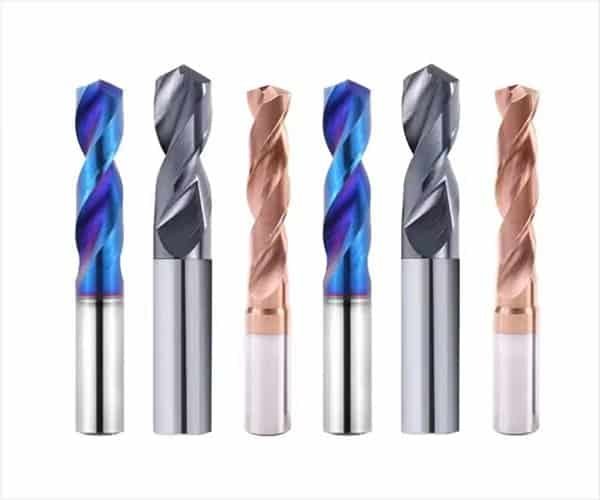
Are you struggling with poor surface finishes and broken tools? Choosing the wrong end mill wastes time and material, directly hurting your bottom line and delaying critical jobs.
High-performance end mill design is driven by a balance of three key factors1. These are the number of flutes for strength and chip space, the helix angle for cutting force and finish, and the tip geometry and coating, which are engineered for specific materials and tasks.
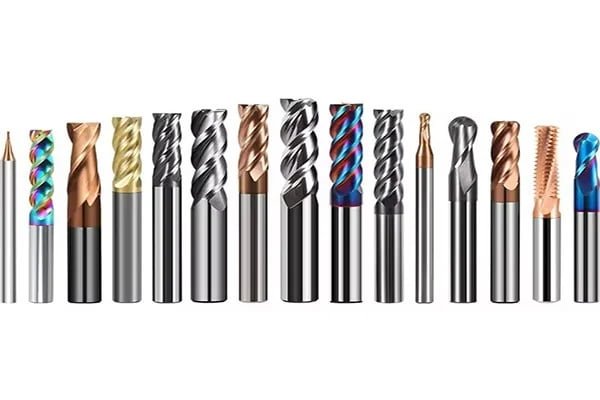
I've been in the cutting tool business for over a decade, and I've seen it all. From small job shops to large automotive manufacturers, the challenges are often the same. A simple misunderstanding of how an end mill is designed can lead to hours of frustration. The good news is that understanding a few core principles can transform your machining operations almost overnight. Let's break down these design elements one by one, so you can select the perfect tool every single time and get the results you need.
What Is the Fundamental Trade-Off Between Strength and Space?
Do you find your tools clogging with chips in soft metals or breaking in hard ones? This frustration comes from an imbalance between chip room and tool strength.
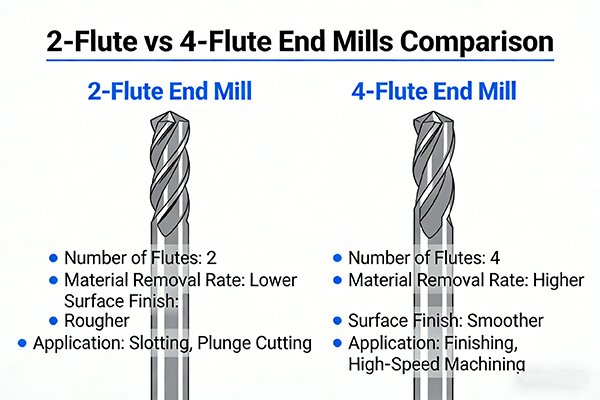
The fundamental trade-off is between chip evacuation space and the end mill's core strength. Fewer flutes create large pockets for chips, ideal for soft materials2. More flutes mean a stronger core and more cutting edges, perfect for harder materials but with less chip room.
Flute Count and Material Application
The number of cutting edges, or flutes, on an end mill is the first major design choice. It directly impacts the tool's strength and its ability to clear away material. The space between the flutes is called the "gullet." A larger gullet allows for bigger chips to be evacuated easily, which is essential when milling soft, gummy materials like aluminum that produce a lot of chips. However, large gullets mean a smaller core diameter, making the tool weaker. On the other hand, adding more flutes increases the core's diameter, making the tool much stronger and more rigid3. This allows you to increase your feed rates and get a better finish in hard materials like steel or titanium4. The downside is that the smaller gullets can get clogged if you're trying to remove too much material at once. It's a constant balancing act.
| Flute Count | Core Strength | Chip Evacuation | Ideal Material | Common Application |
|---|---|---|---|---|
| 1-2 Flutes | Low | Excellent | Aluminum, Plastics | High-volume slotting |
| 3 Flutes | Medium | Good | Aluminum, Steels | General purpose, slotting |
| 4+ Flutes | High | Limited | Steels, Hard Metals | Finishing, peripheral milling |
How Does the Angle of Attack Dictate Cutting Force and Finish?
Are you dealing with constant tool chatter and a rough surface finish? This often forces you to slow down your machine, which kills productivity and wears out tools prematurely.
The helix angle, or angle of attack, dictates how the cutting edge engages the material. A high helix angle creates a smoother, shearing cut that reduces cutting forces and improves finish5. A low helix angle provides a stronger, more direct cut for tough materials6.
Helix Angle's Impact on Machining
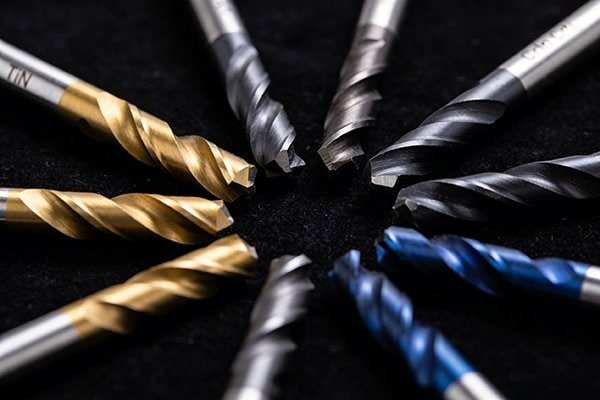
Think of the helix angle as the spiral on the side of the end mill. It determines how gradually the cutting edge enters and exits the material. A high helix angle (like 45° or more) acts like a sharp knife slicing at an angle. This shearing action reduces the cutting force, minimizes vibration, and directs chips up and away from the cutting zone7. This is why we recommend our high-helix tools for finishing operations in hardened steels. The finish is just fantastic. In contrast, a low helix angle (30° or less) or even a straight flute (0°) has a more aggressive, chopping action. This creates a stronger cutting edge that can handle the high impact of roughing tough materials or machining composites. The trade-off is that this can increase radial pressure and lead to more chatter if the setup isn't rigid.
| Helix Angle Range | Cutting Action | Primary Advantage | Best For |
|---|---|---|---|
| High (35°-60°) | Shearing | Excellent Finish | Finishing Steels & Superalloys |
| Standard (30°-35°) | Balanced | Versatility | General Purpose Steel & Iron |
| Low (0°-30°) | Chopping | Strong Edge | Roughing, Tough Materials |
How Is the Tip Engineered for a Specific Machining Task?
Are you using a general-purpose tool for a specialized job? This common mistake leads to inaccurate parts, broken tools, and wasted money because the tool simply isn't built for the task.
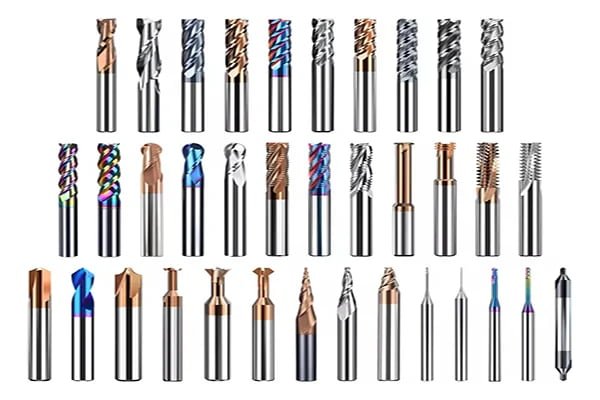
The tip is engineered through its shape and its coating. Shapes like flat, ball nose, or corner radius are chosen for specific geometries. Protective coatings like TiAlN or DLC are applied to add wear resistance and heat tolerance for different materials.
Matching Tip Geometry to the Job
The business end of the tool, the tip, is what does all the work. Its shape must match the feature you are trying to machine. A standard flat-bottom end mill is perfect for creating 90-degree walls in pockets and slots8. But if you're doing 3D surfacing or creating complex molds, you need a ball nose end mill with a fully rounded tip9. For heavy roughing, a corner radius (or bull nose) end mill is a much better choice than a standard flat one. That small radius on the corners dramatically strengthens the weakest part of the tool, preventing chipping and extending tool life. At NV-Tool, we help customers make this choice every day.
| Tip Type | Description | Primary Use Case |
|---|---|---|
| Flat End | Square corner, flat bottom | General milling, pocketing, squaring |
| Ball Nose | Fully rounded tip | 3D contouring, surfacing, mold making |
| Corner Radius | Flat bottom, rounded corners | Roughing, finishing, extends tool life |
The Role of Protective Coatings
If the carbide is the muscle, the coating is the armor. A coating is an ultra-thin (just a few microns) layer of ceramic material applied to the tool's surface. Its job is to protect the tool from heat and abrasion10. For general-purpose work in steel, a TiAlN (Titanium Aluminum Nitride) coating is the industry standard because of its excellent heat resistance. When machining sticky materials like stainless steel or aluminum, a slicker coating like AlCrN or a specialized DLC (Diamond-Like Carbon) coating prevents material from welding to the tool. Choosing the right coating is just as important as choosing the right geometry; it's what allows you to push your speeds and feeds for maximum productivity.
Conclusion
Mastering end mill design principles—flute count, helix angle, and tip engineering—is the key to unlocking efficient, precise, and profitable machining operations for your business.
"Effects of end mill helix angle on accuracy for machining Thin-Rib ...", https://www.academia.edu/10950460/Effects_of_end_mill_helix_angle_on_accuracy_for_machining_Thin_Rib_Aerospace_Component. A machining handbook or university manufacturing text describes end mill performance as depending on cutter geometry, flute configuration, helix angle, material, and coating, supporting the article’s framing of design as a set of interacting variables. Evidence role: general_support; source type: education. Supports: High-performance end mill design is driven by the interaction of flute count, helix angle, tip geometry, and coating.. Scope note: Such sources may list more than three factors, so the citation supports the importance of these factors rather than proving this exact three-factor framework is exhaustive. ↩
"Mill Tooling Guide - Purdue University", https://www.purdue.edu/bidc/resources/metal-working/mill-tooling-guide/. A manufacturing engineering reference explains that fewer-flute end mills provide larger chip spaces and are commonly used where chip evacuation is critical, such as aluminum machining. Evidence role: mechanism; source type: education. Supports: Fewer flutes provide larger chip pockets and are generally appropriate for soft materials that generate larger chip volume.. Scope note: The source may describe typical selection practice; exact suitability still depends on machine rigidity, coolant, tool diameter, and cutting parameters. ↩
"[PDF] Endmill Selection Assessment", https://web.mae.ufl.edu/designlab/TA/Endmill%20Selection%20Assessment.pdf. A machining text or cutter-geometry reference notes that increasing flute count generally increases web or core thickness and tool stiffness, which supports the stated strength trade-off. Evidence role: mechanism; source type: education. Supports: More flutes generally increase an end mill’s core diameter and rigidity.. Scope note: The relationship is general; actual strength also depends on carbide grade, diameter, flute depth, and manufacturer geometry. ↩
"Best Practices for Using 2 and 4 Flute End Mills in Titanium ...", https://samhotool.com/blog/best-practices-for-using-2-and-4-flute-end-mills-in-titanium-manufacturing/. A machining reference or experimental paper on end-milling steels and titanium can support that multi-flute tools increase the number of cutting edges engaged and can improve productivity and surface finish under suitable conditions. Evidence role: general_support; source type: paper. Supports: Higher-flute end mills can enable higher productivity and improved finishing in harder materials such as steel or titanium when applied correctly.. Scope note: This support is conditional because feed rate and surface finish depend strongly on cutting speed, chip load, tool material, coolant, and workpiece alloy. ↩
"The influence of end mill helix angle on high performance ...", https://www.academia.edu/102276120/The_influence_of_end_mill_helix_angle_on_high_performance_milling_process. A peer-reviewed study or machining reference on helix angle in end milling reports that higher helix angles can reduce cutting-force components and improve surface finish by changing the cutting engagement to a more shearing action. Evidence role: mechanism; source type: paper. Supports: A high helix angle promotes a shearing action that can reduce cutting forces and improve surface finish.. Scope note: The effect varies with material, radial engagement, tool overhang, and cutting parameters, so the citation should be read as supporting the general mechanism rather than every application. ↩
"Effects of end mill helix angle on accuracy for machining Thin-Rib ...", https://www.academia.edu/10950460/Effects_of_end_mill_helix_angle_on_accuracy_for_machining_Thin_Rib_Aerospace_Component. A cutter-geometry reference explains that lower helix or straight-flute tools provide a more direct edge engagement and are used where edge strength and resistance to impact are prioritized. Evidence role: mechanism; source type: education. Supports: Low-helix end mills are associated with stronger, more direct cutting edges suitable for tough or interrupted cutting conditions.. Scope note: The source may describe design tendencies rather than a universal rule, since toughness requirements vary by material and operation. ↩
"(PDF) The influence of end mill helix angle on high performance ...", https://www.academia.edu/102276120/The_influence_of_end_mill_helix_angle_on_high_performance_milling_process. A machining reference describes helical flutes as providing an axial component to chip flow, which helps move chips away from the cutting zone during end milling. Evidence role: mechanism; source type: education. Supports: Helical flute geometry helps direct chips away from the cutting zone.. Scope note: Chip evacuation also depends on flute polish, coolant or air blast, tool path, and workpiece material, so helix angle alone is not the sole determinant. ↩
"Learning Platform - Exercise 1", https://nuengr.unl.edu/durhamschool/elearning/Exercise1/index.htm?page=12. A machining or CNC milling reference identifies square or flat end mills as tools used for slots, pockets, and square-bottom features, supporting the geometry-to-feature match described here. Evidence role: definition; source type: education. Supports: Flat or square end mills are commonly used to machine pockets, slots, and square-sided features.. Scope note: The term “perfect” is practical wording; the source would support common suitability rather than guaranteeing dimensional accuracy in every setup. ↩
"Surface Quality Evaluation in the Milling Process Using a Ball Nose ...", https://www.academia.edu/121639357/Surface_Quality_Evaluation_in_the_Milling_Process_Using_a_Ball_Nose_End_Mill. A manufacturing reference defines ball-nose end mills as cutters with a rounded end used for contouring and three-dimensional surface milling, supporting the stated application. Evidence role: definition; source type: education. Supports: Ball-nose end mills have rounded tips and are used for 3D surfacing and contouring work.. Scope note: The citation supports the common use case, while exact tool choice also depends on surface tolerance, toolpath strategy, and scallop-height requirements. ↩
"Characterization and Evaluation of Engineered Coating ... - PMC", https://pmc.ncbi.nlm.nih.gov/articles/PMC9415707/. A materials or tribology reference on hard coatings for cutting tools explains that ceramic coatings such as TiN, TiAlN, AlCrN, and DLC are used to improve wear resistance, reduce friction, and protect tools under high-temperature cutting conditions. Evidence role: expert_consensus; source type: paper. Supports: Protective coatings on carbide cutting tools help resist heat-related wear and abrasion.. Scope note: The citation would support the general role of coatings; performance varies by coating composition, substrate, workpiece material, and cutting environment. ↩