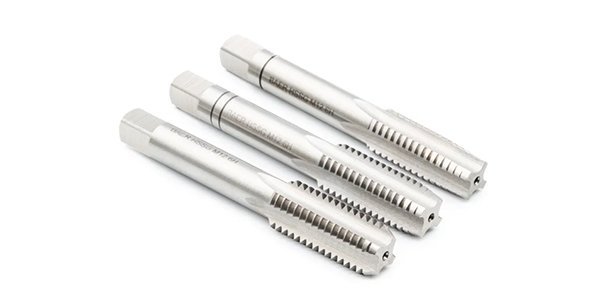
Choosing the wrong tap can break tools, scrap parts, and waste time. You stand there wondering if you made the right call. It’s a frustrating and costly problem.
The choice depends on your material and application. Use a forming tap for ductile materials like aluminum to create stronger, chipless threads. Use a cutting tap for hard or brittle materials like cast iron, where material must be removed.
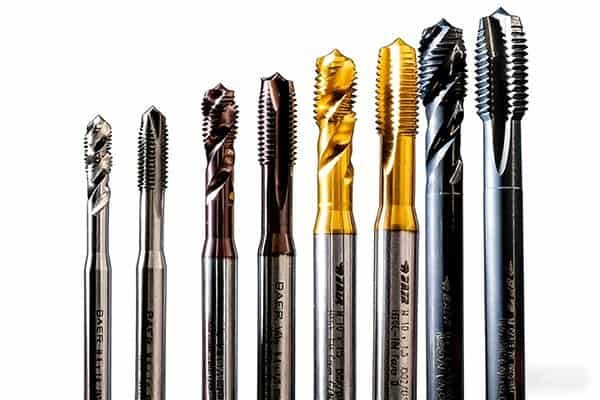
Making the right choice between a forming tap and a cutting tap can feel complicated. But it doesn't have to be. I've broken down the decision into a few simple questions. Answering them will guide you to the perfect tap every single time, saving you from broken tools and scrapped parts. Let's walk through it together.
First, What’s the Fundamental Choice You're Making? (Cut vs. Displace)?
You have a hole, and you need threads. But the way you create those threads can change everything. It's easy to think all taps work the same, but they don't.
The core choice is simple: are you removing material or moving it? Cutting taps slice away metal to create threads, producing chips. Forming taps push material out of the way, creating threads without any chips.
Let's look at this more closely. It's the most important difference to understand.
How a Cutting Tap Works
Think of a cutting tap as a series of tiny knives arranged in a spiral. As you turn the tap into the hole, these sharp edges scrape and carve away material from the inside wall. This action forms the thread grooves. The material that is removed becomes chips. These chips can be long and stringy or small and fragmented, depending on the material. The key problem you always have to solve with a cutting tap is getting those chips out of the way. If they build up, they will jam the tap and break it. The thread itself is essentially "carved out," which means the metal's natural grain structure is cut.
How a Forming Tap Works
A forming tap, also called a roll tap, has no cutting edges. Instead, it has lobes or a polygonal shape. As it rotates and advances into the hole, it acts like a high-pressure press. It forces the material on the hole's inner wall to cold-form, or flow, outwards and upwards. This displaced material is pushed into the shape of the thread, forming both the root and the crest. The biggest advantage here is that it creates absolutely no chips. The metal's grain structure isn't cut; it's compressed and follows the new thread profile, making it much stronger.
| Feature | Cutting Tap | Forming Tap |
|---|---|---|
| Action | Slices and removes material | Pushes and displaces material |
| Chips | Creates chips | Chipless |
| Metal Grain | Severed/Cut | Compressed/Continuous |
Question 1: What Material Are You Tapping? (The Make-or-Break Question)?
You picked a tap and started the machine, only to hear a loud snap. The tap broke inside the workpiece. Now you have a huge problem. This often happens because the tap wasn't right for the material.
Use forming taps for ductile, malleable materials that can flow under pressure, like aluminum, copper, and low-carbon steels. Use cutting taps for brittle or hard materials like cast iron, tool steel, and anything over 35 HRC.
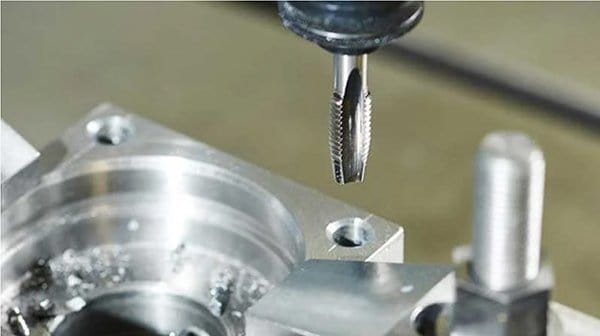
The material you are working with is the single most important factor in this decision. If you get this part wrong, nothing else matters. Forming taps rely on the material's ability to be reshaped without breaking. This property is called ductility. Materials with good ductility, like most aluminum alloys, soft brass, copper, and many low-carbon steels, are perfect candidates. When the forming tap applies pressure, these materials flow smoothly into the thread shape.
On the other hand, if you try to use a forming tap on a brittle material like cast iron, it won't flow. It will crack and crumble, and the tap will likely break immediately. The same goes for very hard materials. Once a workpiece has a hardness above 35 HRC, it becomes too resistant to be cold-formed. For these materials, you have no choice but to use a cutting tap to physically remove the material. Cutting taps are versatile and can handle a much wider range of materials, from soft plastics to hardened steels.
| Tap Type | Recommended Materials | Avoid These Materials |
|---|---|---|
| Forming Tap | Aluminum, Copper, Brass, Low-Carbon Steel, Stainless Steel (300 series) | Cast Iron, Hardened Steels (>35 HRC), Tool Steels, Brittle Plastics |
| Cutting Tap | Almost all materials, including those listed for forming taps | Not applicable; it's the universal choice when forming is not possible |
Question 2: How Important is Thread Strength to Your Application?
Your product is out in the field, and you get a report of a failure. A critical bolt vibrated loose or stripped its threads under load. This can be a disaster for both safety and your reputation.
Formed threads are significantly stronger—up to 20% or more—than cut threads. The cold-forming process hardens the material and creates a continuous grain flow that resists stripping and fatigue, making them ideal for high-stress applications.
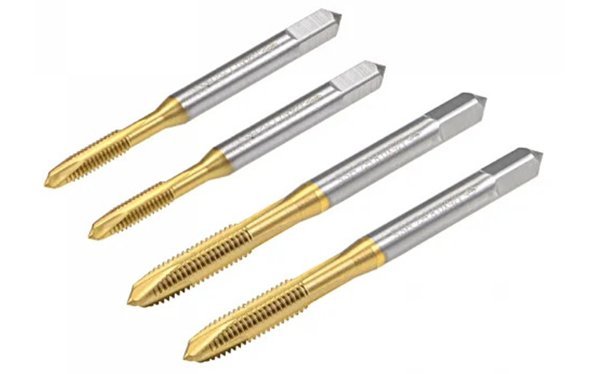
When a cutting tap carves out a thread, it slices right through the material's internal grain structure. This creates sharp points and lines of weakness, especially at the root of the thread. These severed grain lines are like tiny pre-made cracks, making the thread more susceptible to failure from vibration, shock, or high tensile loads.
A forming tap does the opposite. By displacing the material instead of cutting it, the grain structure is forced to flow along the contour of the thread. This process, known as work hardening, compresses the material at the thread's root and flank, making it denser and stronger. The result is a thread with a smooth, burnished surface finish and an unbroken grain flow. This continuous structure is far better at resisting fatigue and tensile forces. If your application involves high vibration (like in automotive or aerospace parts) or requires maximum pull-out strength, a forming tap is the superior choice, assuming the material is suitable.
| Property | Cut Thread | Formed Thread |
|---|---|---|
| Grain Structure | Severed and interrupted | Continuous and compressed |
| Tensile Strength | Standard | Higher |
| Fatigue Resistance | Lower | Significantly Higher |
| Surface Finish | Good | Excellent (Burnished) |
| Best For | General purpose | High-stress, high-vibration applications |
Question 3: Are Chips a Major Problem for You?
You're running a high-volume job, but you have to keep stopping the machine to clear out tangled nests of chips. Or worse, a chip gets packed into a blind hole and breaks your tap.
Forming taps are chipless. This completely eliminates problems with chip evacuation, making them the perfect solution for blind holes and automated, high-volume production where chip management is a major bottleneck.
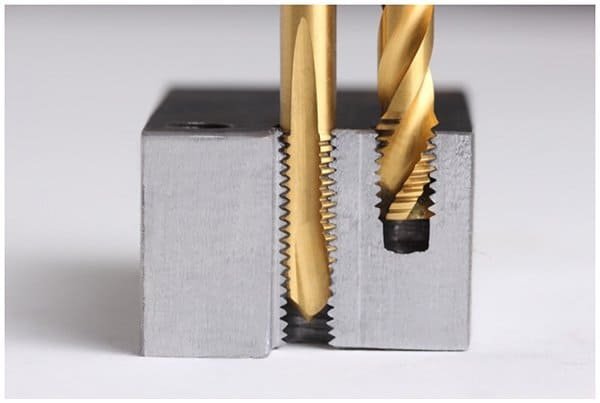
Chip management is one of the biggest headaches in machining, especially with tapping. With cutting taps, you have to constantly think about where the chips are going. In a through hole, you can use a straight-flute tap (also called a "gun tap") that pushes the chips forward and out the bottom. This is relatively easy. But in a blind hole, it's a huge challenge. You must use a spiral-flute tap to pull the chips backward, out of the hole. If the flutes aren't efficient enough, or if your coolant pressure is too low, chips will pack at the bottom of the hole. When the tap hits this packed wad of chips, the torque spikes, and the tap snaps instantly.
Forming taps solve this problem completely. Since no material is removed, there are no chips to manage. This is a massive advantage. You can tap deep blind holes without any fear of chip packing. It also means you can run your machines longer without stopping for cleaning, which significantly boosts productivity in mass production environments. The process is cleaner, more reliable, and much less likely to result in a broken tap, especially in tricky situations like blind holes.
Question 4: Do You Know the Critical Difference in Hole Preparation?
You got a brand new forming tap, drilled the standard pilot hole, and it broke on the very first try. You check the drill size, and it seems right. What went wrong?
Forming taps require a larger and much more precise pilot hole than cutting taps. If the hole is too small, torque will skyrocket and break the tap. If it's too large, the threads won't form completely.
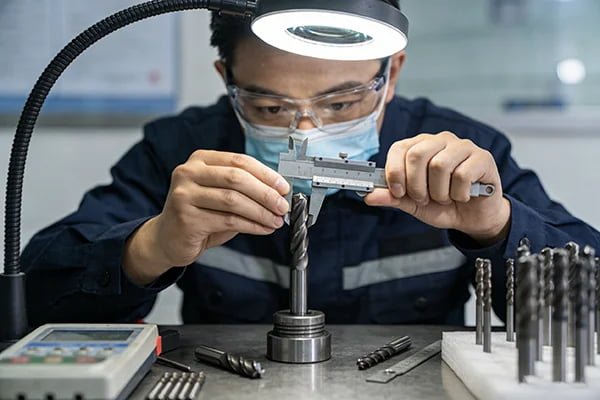
This is the most common mistake people make when switching to forming taps. With a cutting tap, the pilot hole just needs to be big enough for the tap to enter and start cutting. There's a bit of tolerance. With a forming tap, the pilot hole diameter determines the exact amount of material available to be displaced. It has to be perfect. A rule of thumb for the pilot hole size for a forming tap is: Pilot Hole Diameter = Thread Major Diameter - (0.5 × Pitch)
You must use the drill size recommended by the tap manufacturer. There is very little room for error. A hole that is even slightly too small will cause the required torque to increase exponentially, overloading your machine's spindle and breaking the tap. A hole that is too large won't provide enough material to flow into the crests of the thread, resulting in an incomplete thread profile that will fail a GO gauge inspection. Additionally, forming requires 2 to 3 times more torque than cutting. Make sure your machine has enough power. You also need excellent lubrication, not just cooling. A high-pressure, high-lubricity cutting oil is essential to reduce friction and prevent material from sticking to the tap.
Can You Show Me a Simple Cheat Sheet for the Final Decision?
You've learned about materials, strength, chips, and hole prep. It's a lot to remember. You just want a quick way to make the right choice on the shop floor.
Absolutely. This cheat sheet boils everything down to a simple side-by-side comparison. Use it as a quick reference to make a confident decision every time you need to tap a hole.
Sometimes, the best way to decide is to see all the facts laid out clearly. I've put together this table to summarize the key differences and help you choose the right tool for the job quickly and efficiently. Keep this handy, and you'll avoid common mistakes and improve your tapping operations.
| Factor | Cutting Tap | Forming Tap |
|---|---|---|
| How it Works | Slices and removes metal | Pushes and displaces metal |
| Chip Production | Yes, requires chip management | No, chipless process |
| Thread Strength | Standard, from cut material | Higher, from work-hardened material |
| Best Materials | Brittle or hard materials (cast iron, hardened steel) | Ductile materials (aluminum, soft steel, copper) |
| Pilot Hole | Standard size, more forgiving | Larger, requires very high precision |
| Torque Required | Lower | 2-3 times higher |
| Tool Life | Good | Often longer due to no cutting edge wear |
| Ideal Application | General purpose, hard materials, repair work | High-volume production, blind holes, high-strength needs |
| Biggest Pro | Works on almost any material | Stronger threads and no chips |
| Biggest Con | Chip management is a problem, especially in blind holes | Limited to specific materials, requires precise hole and high torque |
Conclusion
Choose a forming tap for ductile materials when you need strong, chipless threads in blind holes. For everything else, especially hard or brittle materials, a cutting tap is your reliable choice.