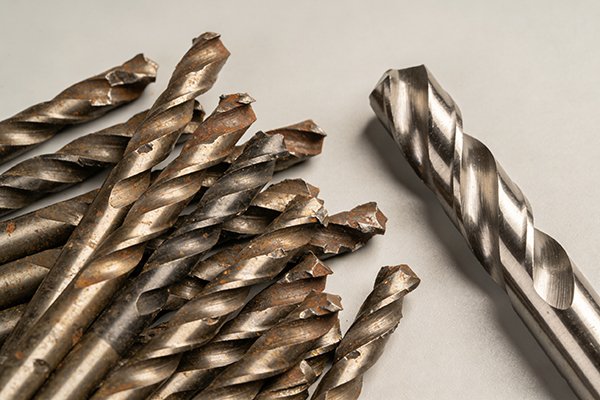
Drilling hardened steel feels impossible. Your standard bits just skate across the surface or snap instantly. You need a tool that can actually handle the job without frustration.
For drilling hardened steel, you need a bit made from a material harder than the steel itself. Your best options are solid carbide drill bits with a TiAlN-based coating1, indexable insert drills for larger holes, or specialized PCBN-tipped drills2 for extremely hard materials (above HRC 60).
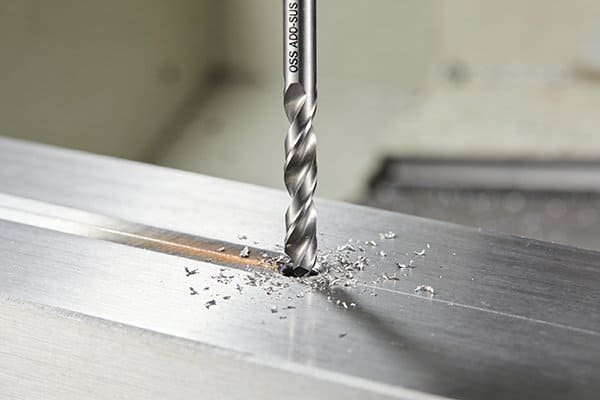
I've spent years in the cutting tool business, and I've seen it all. The broken bits, the ruined workpieces, the wasted time. It almost always comes down to using the wrong tool or the wrong technique. This isn't just about buying a more expensive drill bit; it's about understanding why certain bits work and others fail spectacularly. Let’s dive deep into the specific tools that will turn this challenging task into a routine operation. I'll walk you through exactly what you need to look for.
What Are the Best Drill Bits for Hardened Steel?
You know you need a special bit, but the options are confusing. Choosing the wrong one is a fast way to waste money and ruin your project. Let's clarify.
The best drill bits for hardened steel are Solid Carbide3, Indexable Insert Drills4 (U-Drills), and Polycrystalline Cubic Boron Nitride (PCBN) drills. Each type excels in different situations based on hole size, material hardness, and your budget.
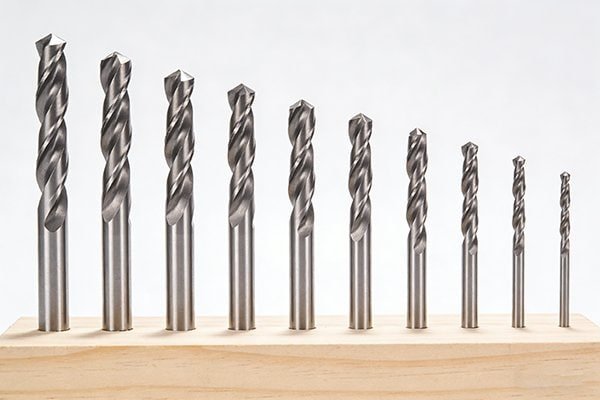
When we talk about machining tough materials, it's a battle of hardness and heat resistance. Standard High-Speed Steel (HSS) bits lose their edge instantly when they meet the heat generated by drilling hardened steel. That's why we have to turn to more advanced materials. These three options are the top contenders in the industry for a reason. They are engineered specifically for this kind of high-stress work. Let's break down what makes each one special and where it shines.
The Top 3 Contenders
| Drill Bit Type | Best For | Key Advantage |
|---|---|---|
| Solid Carbide3 | General purpose, small to medium holes | Excellent balance of hardness, toughness, and cost. |
| Indexable Insert (U-Drill) | Large diameter, shallow holes | Economical for high-volume work; no regrinding. |
| PCBN Tipped | Extremely hard materials (HRC 60+) | Unmatched hardness and thermal stability5. |
As a manufacturer, I see Solid Carbide3 bits as the workhorse. They are made from an ultra-fine tungsten carbide matrix6, which gives them incredible hardness while retaining enough toughness to resist chipping. Their special geometry, with a self-centering chisel edge and a large helix angle, helps cut cleanly and clear chips effectively. For larger holes in a production setting, Indexable U-Drills are a game-changer. You just replace a small, inexpensive insert instead of the whole tool. Finally, for the absolute toughest jobs, like drilling into hardened tool steel above HRC 60, you bring out the specialist: a PCBN-tipped drill. PCBN is second only to diamond in hardness, but it’s very expensive and requires a very rigid machine setup.
How Do You Choose the Right Bit (and Avoid the Wrong One)?
You know the types, but which one is right for your specific job? Making the wrong choice means you'll either break the bit or get poor results. Let's fix that.
Choose your bit based on three factors: the steel's hardness (HRC), the hole diameter, and your budget. Most importantly, always select a bit with a TiAlN-based coating1, as it is critical for handling the extreme heat generated during cutting.
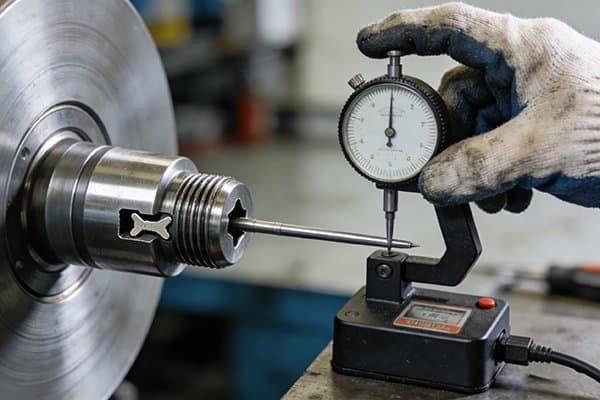
Making the right selection isn't black magic; it's a simple process of matching the tool to the task. I always tell my customers to start by identifying these key variables. Don't just grab the most expensive bit you can find and hope for the best. A PCBN drill is overkill for a 55 HRC steel, and a solid carbide bit might struggle with a 65 HRC mold. The details matter, especially the coating. The coating is not just a color; it's a functional shield that protects the cutting edge7 from heat and wear.
Consider the Material Hardness (HRC)
The Rockwell Hardness Scale (HRC)8 is your guide. For materials up to around 60 HRC, a good quality solid carbide drill is your best friend. It has the strength and heat resistance to perform reliably. Once you start pushing past 60-62 HRC, you are entering the territory where PCBN tools become a necessity. Trying to force a carbide bit through 65 HRC steel is a recipe for failure.
Think About Hole Diameter and Depth
The size of the hole you need to make is a huge factor. For small to medium-sized holes (let's say up to 20mm or 3/4 inch), solid carbide drills offer the best precision and performance. They are rigid and provide a great surface finish. However, when you need to make larger diameter holes, a solid carbide bit becomes extremely expensive. This is where Indexable U-Drills shine. They use a tough steel body with small, replaceable carbide inserts, making them far more economical for hogging out big holes.
The Critical Role of Coatings
This is the part people often ignore. The coating is arguably as important as the bit material itself. For hardened steel, you absolutely need a TiAlN-based coating1 (like AlTiN or TiSiN). At high temperatures, this coating creates a microscopic layer of aluminum oxide, which is like a ceramic shield protecting the cutting edge7. This property is called "red hardness." A critical warning: do NOT use diamond-coated drills on steel. The carbon in the diamond has a chemical affinity for the iron in steel at high temperatures, causing the coating to break down rapidly. It’s a common and costly mistake.
What's the Correct Technique to Avoid Breaking Bits?
You finally bought the perfect, expensive drill bit. You put it in your drill, and it snaps on the first hole. What went wrong? The right tool is only half the battle.
To avoid breaking bits, you must ensure a completely rigid setup9. Use a CNC machine10 or sturdy mill, not a hand drill. Use the correct low speed and steady feed rate, employ peck drilling11 to clear chips, and use appropriate cooling.
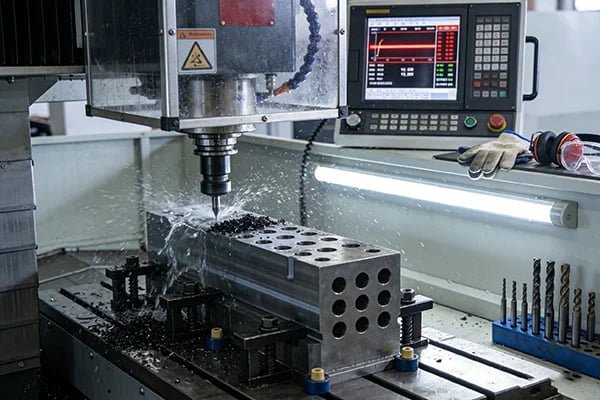
I can't stress this enough. Carbide and PCBN are incredibly hard, but they are also brittle, like glass. Any vibration, wobble, or shock will shatter them. You can't just power through hardened steel like you do with wood or mild steel. It requires a different mindset—one of precision, control, and patience. Over the years, I've seen more high-performance tools12 broken by poor technique than by actual wear and tear. Let's go over the key steps to ensure your investment pays off.
Machine and Workpiece Rigidity is Key
First things first: your setup must be rock-solid. This means using a CNC machining center or a heavy-duty milling machine. Forget about using a hand drill or a flimsy drill press; they simply don't have the rigidity to keep the bit stable. The workpiece must be clamped down securely, and the tool holder13 must be in excellent condition with minimal runout. Any movement or chatter is the enemy and will lead to a broken bit almost immediately.
Speeds and Feeds: The Magic Formula
Every tool manufacturer, including us at NV-Tool, provides recommended cutting parameters14. Start there. The general rule for hardened steel is to run at a lower surface speed (RPM) to manage heat and use a consistent, positive feed rate. Don't be timid with the feed. Feeding too slowly causes the bit to rub instead of cut, which generates excessive heat and dulls the edge quickly. A steady, calculated feed ensures you are forming a proper chip and getting under the work-hardened layer.
Peck Drilling for Chip Evacuation
When you drill a deep hole, chips can get packed in the flutes. This packing increases torque and heat, which is a primary cause of bit breakage. To prevent this, use a "peck drilling11" cycle. This means you drill for a short distance (e.g., half the drill's diameter), then retract the bit completely out of the hole to clear the chips, and then plunge back in to continue drilling. It takes a little longer, but it's the safest and most reliable way to drill deeper holes in tough materials.
What's the Final Verdict and Top Recommendation?
We've covered a lot of ground, from materials to coatings to techniques. It can feel like a lot to remember when you just need to make a hole. So what's the bottom line?
For over 90% of hardened steel applications, my top recommendation is a high-quality solid carbide drill bit with a TiAlN-based (AlTiN or TiSiN) coating. It provides the best combination of performance, versatility, and value for your money.
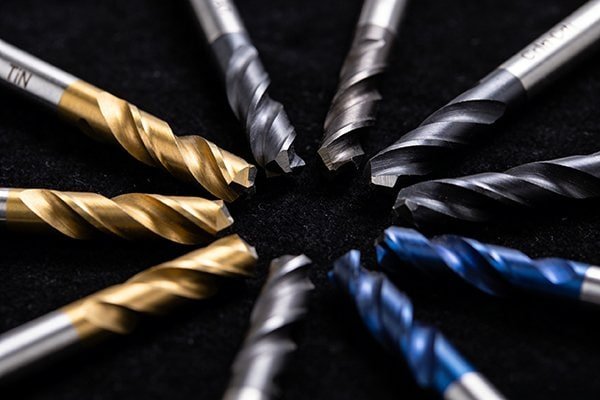
After helping thousands of customers across 25 countries, I've learned what works in the real world. While PCBN and U-Drills have their specific, important uses, the coated solid carbide drill is the undisputed champion for general-purpose hardened steel drilling15. It's the tool that will solve the problem for most machine shops, mold makers16, and manufacturers without requiring a massive investment or highly specialized equipment. It's the reliable workhorse you can depend on.
In my experience running our factory, NineVibe Tools, the biggest breakthrough for our customers comes when they switch from a generic bit to a properly engineered tool. A solid carbide drill designed for hardened steel isn't just a bit of metal; it's a complete system. The carbide grade is selected for toughness, the geometry is optimized for a clean cut, and the coating is designed to fight off extreme heat. When you pair this tool with the right technique—a rigid setup9 and correct parameters—you get clean, accurate holes every single time. U-Drills are your go-to for production runs with large holes, and PCBN is for those rare, ultra-hard jobs. But for everyday challenges, a coated solid carbide bit is the answer. We manufacture these exact tools, and I stand by their performance because I see the results every day.
Conclusion
Success in drilling hardened steel comes down to two things: using the right tool and the right technique. Choose a coated solid carbide bit and ensure a rigid setup9.
Understand the critical role of TiAlN-based coatings in enhancing drill bit performance and longevity. ↩
Discover the unique applications and benefits of PCBN-tipped drills for extremely hard materials. ↩
Explore the advantages of Solid Carbide drill bits for drilling hardened steel, including durability and precision. ↩
Learn how Indexable Insert Drills can save time and money in high-volume drilling applications. ↩
Learn about the importance of thermal stability in drill bits for high-performance applications. ↩
Discover the properties of tungsten carbide matrix that make it ideal for drill bits. ↩
Discover how the cutting edge design impacts the performance and longevity of drill bits. ↩
Get insights into the Rockwell Hardness Scale and its significance in selecting drill bits for different materials. ↩
Learn why a rigid setup is crucial for successful drilling operations and how to achieve it. ↩
Explore how CNC machines improve precision and efficiency in drilling operations. ↩
Learn about peck drilling techniques and how they help in chip evacuation during deep hole drilling. ↩
Explore the characteristics that make tools high-performance and suitable for tough materials. ↩
Understand how a quality tool holder contributes to precision and stability during drilling. ↩
Find out how to set optimal cutting parameters for effective drilling in hardened steel. ↩
Get insights into best practices for drilling hardened steel effectively and efficiently. ↩
Find out the specific requirements mold makers have for drilling tools and techniques. ↩