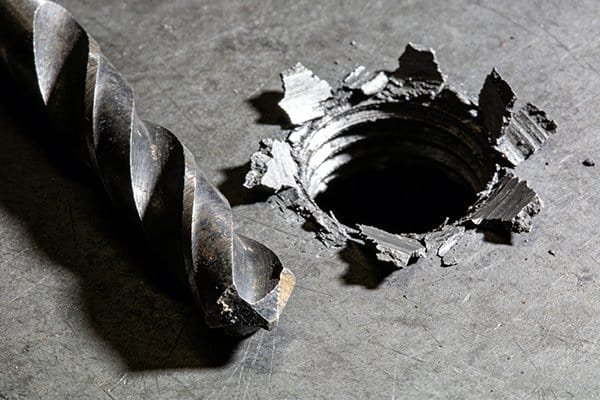
Choosing the wrong drill bit wastes time and money. You see bits breaking, poor hole finishes, and production slowing down. A carbide-tipped drill1 can solve these issues.
A carbide-tipped drill1 is the smarter choice when drilling abrasive or hard materials where a standard High-Speed Steel (HSS)2 bit wears out too quickly. It offers a cost-effective performance3 boost without the full expense of a solid carbide drill4, especially for larger diameter holes.
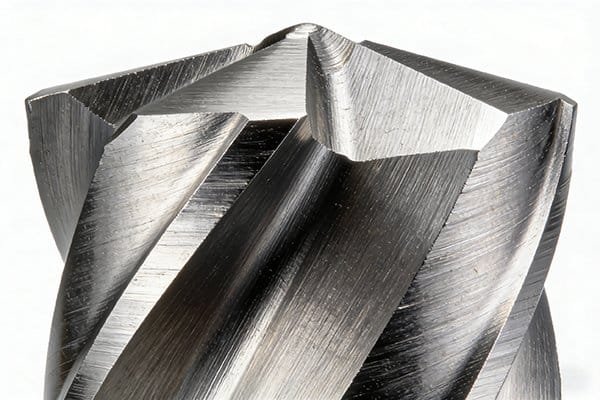
I've talked to hundreds of machine shop owners, from Brazil to Poland, and the same question always comes up: "Which drill should I use?" The answer isn't always about buying the most expensive tool. It's about buying the smartest tool for the job. Let's break down exactly when a carbide-tipped drill1 gives you the best return on your investment, so you can stop wasting money and start drilling more efficiently.
How Does a Carbide Tip Change a Drill's Performance?
Are your standard HSS drills wearing out too fast on a tough job? You're losing precision and spending too much on replacements. A carbide tip is the upgrade you need.
A carbide tip adds extreme hardness and heat resistance5 directly to the cutting edge. This fundamental change allows the drill to run at much higher speeds, last significantly longer, and effectively cut harder materials that would quickly destroy a standard HSS drill.

Based on my years of manufacturing these tools, the magic is all in the material. A carbide tip isn't just a slightly harder piece of steel; it's a completely different class of material. We make it by taking tungsten carbide6 powder, which is incredibly hard, and mixing it with a metal binder like cobalt. Then, we press it and heat it in a process called sintering. The result is a composite material with properties that steel just can't match.
The Power of Hardness and Wear Resistance
The most obvious benefit is hardness. A typical carbide tip has a hardness of HRA90 or more. This is much, much harder than even the best high-speed steel. This hardness means it resists wear exceptionally well. When you're drilling abrasive materials7 like cast iron or certain composites, an HSS drill edge gets rounded off quickly. A carbide edge just keeps on cutting, giving you a tool life8 that can be dozens of times longer. This means fewer tool changes, less machine downtime, and more consistent parts.
Thriving Under Heat
The other critical factor is "hot hardness9." When you're drilling, friction creates intense heat right at the cutting point. HSS starts to soften around 600°C, losing its sharp edge. Carbide, on the other hand, can maintain its hardness at temperatures up to 800-1000°C. This is why you can run carbide drills at speeds 3 to 5 times faster than HSS. The drill doesn't soften, the edge stays sharp, and you get holes drilled in a fraction of the time.
A Quick Comparison: Carbide vs. HSS
| Property | High-Speed Steel (HSS)2 | Tungsten Carbide Tip |
|---|---|---|
| Typical Hardness | ~HRC 65 | ~HRA 90+ (much harder) |
| Hot Hardness | Softens around 600°C | Stays hard up to 1000°C |
| Typical Cutting Speed | 1x (Baseline) | 3x - 5x |
| Wear Resistance | Good | Exceptional |
| Best For | General purpose, soft metals | Abrasive & hard materials |
When is 'Tipped' Better Than 'Solid' Carbide?
Solid carbide drills are top performers, but they are expensive. You worry about the high cost, especially for larger diameters or in less stable machines. This is where a tipped drill shines.
A carbide-tipped drill1 is better than solid carbide when cost is a primary concern, especially for large diameter holes. It provides the essential carbide cutting performance on a less expensive and more shock-absorbent steel body, offering an excellent balance of price and capability.
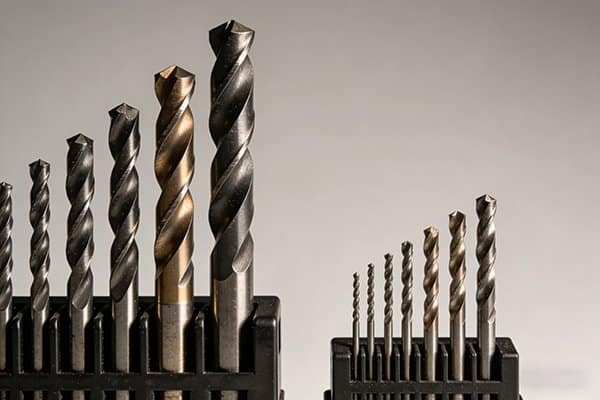
At our factory, we produce both solid and tipped carbide tools, so I see the trade-offs firsthand. Choosing between them is a strategic business decision. Solid carbide drills are fantastic—they are extremely rigid and offer the best possible performance for precision and speed. But that performance comes at a high price, because tungsten carbide6 is an expensive and difficult material to machine into a complex drill shape. A tipped drill is a clever compromise. We take a body made from a tough, affordable tool steel and braze a small, precision-ground carbide tip onto the cutting point.
The Cost-Benefit Breakdown
For a purchasing manager in Mexico or an automotive parts supplier in South Africa, budget is always a factor. The biggest advantage of a tipped drill is its lower initial cost. The bulk of the tool is made from steel, which is significantly cheaper than carbide. This is especially true for larger diameters. A 50mm solid carbide drill4 would be incredibly expensive and heavy. A 50mm carbide-tipped drill1, however, is a practical and affordable solution.
Toughness Over Brittleness
Another key point is toughness. Solid carbide is very hard, but it's also brittle. If you have an older machine with some spindle wobble, or you're doing an interrupted cut, the shock can easily chip or shatter a solid carbide drill4. The steel body of a tipped drill provides much better shock absorption10 and toughness, making it more forgiving in less-than-perfect conditions. It can handle vibration11s that would destroy its solid counterpart.
Tipped vs. Solid: The Right Tool for the Situation
| Factor | Choose Carbide-Tipped When... | Choose Solid Carbide When... |
|---|---|---|
| Budget | Cost is a major consideration. | Performance outweighs the initial cost. |
| Hole Diameter | You need medium to large diameter holes. | You need small to medium diameter holes. |
| Machine Rigidity | Your setup has some vibration11 or is less rigid. | You have a modern, rigid CNC machine. |
| Performance Need | You need good wear resistance and speed. | You need maximum precision, speed, and tool life8. |
Why Not Just Use a Coated HSS Drill Bit?
Coated HSS drills seem like a great middle-of-the-road option. But I’ve seen them fail again and again when the job gets really tough, especially with difficult materials.
While a coating improves the surface hardness and lubricity of an HSS drill, the tool's core is still steel. It cannot match the fundamental hot hardness9 of carbide. For high-temperature alloys, hardened steels, or very abrasive materials7, the HSS substrate will soften and fail where carbide excels.
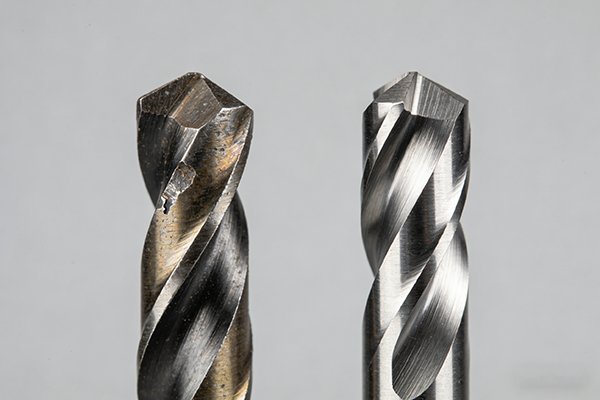
Coatings like Titanium Nitride (TiN) or Titanium Aluminum Nitride (TiAlN) are excellent technologies. We use advanced PVD coatings on many of our tools at NV-Tool. A coating on an HSS drill acts like a thin, hard shell. It reduces friction and protects the cutting edge from initial wear, often doubling or tripling the tool's life in mild steel or aluminum. It’s a fantastic value-add. However, it’s important to remember that it’s just a shell.
The Coating's Limit is the Steel's Limit
The problem arises when you generate serious heat. When drilling tough materials like stainless steel or Inconel, temperatures at the cutting edge can easily surpass 600°C. At this point, the HSS material underneath the coating begins to anneal, or soften. Once the substrate loses its hardness, it can no longer support the hard coating, and the cutting edge deforms and fails catastrophically. The coating might be intact, but the tool is useless. I've heard this story from clients in the aerospace and mold-making industries who tried to save money with coated HSS, only to lose it in scrap parts and downtime.
When Hot Hardness is Non-Negotiable
This is where carbide's inherent hot hardness9 becomes the critical advantage. A carbide tip doesn't rely on a thin coating for its heat resistance. The entire cutting point is made of a material that stays hard and strong well past the temperatures where HSS gives up. This allows it to power through materials that cause HSS to fail.
Material-Specific Scenarios: Coated HSS vs. Carbide
| Material Being Drilled | Coated HSS Performance | Carbide-Tipped Performance | Why Carbide Wins |
|---|---|---|---|
| 304/316 Stainless Steel | Struggles with work hardening, short life. | Cuts cleanly, much longer life. | Resists the heat from work hardening. |
| Hardened Steel (45+ HRC) | Barely scratches the surface, fails quickly. | Drills effectively. | Hardness to penetrate the material. |
| Ductile/Gray Cast Iron | Wears down very quickly from abrasion. | Excellent wear resistance and long life. | Superior abrasion resistance. |
| High-Temp Alloys (Inconel) | Fails almost instantly due to extreme heat. | The only viable option besides solid carbide. | Maintains hardness at extreme temperatures. |
So, while a coated HSS drill is a great choice for general-purpose work, it's simply outmatched when the heat is on.
What's the Final Checklist for Choosing Your Drill?
Feeling overwhelmed by the options of HSS, tipped, and solid carbide? Making the wrong choice is costly. A simple checklist can guide you to the perfect drill every time.
Your final checklist should cover four key areas: the workpiece material, the hole specifications (diameter and depth), your machine's capabilities (rigidity and speed), and your overall budget and production volume12. Answering these questions will clearly point you to the most economical and effective drill.

Over the years, I've helped thousands of customers, from small job shops to large manufacturers in places like Russia and Vietnam, optimize their drilling operations13. It almost always comes down to asking the right questions before you even place an order. I’ve condensed this process into a simple decision-making framework. Before you buy your next set of drills, walk through this checklist.
Your 4-Point Drill Selection Checklist
| Checklist Question | If Your Answer Is... | Your Smartest Choice Is Likely... |
|---|---|---|
| 1. What material am I drilling? | Soft materials (mild steel, aluminum, brass). | HSS or Coated HSS |
| Abrasive or hard materials (cast iron, hardened steel <50 HRC). | Carbide-Tipped | |
| Very hard or tough materials (stainless steel, titanium, high-temp alloys). | Solid Carbide | |
| 2. What is the hole diameter? | Small to medium (e.g., under 20mm). | Solid Carbide (if budget allows) or Carbide-Tipped |
| Large (e.g., over 20mm). | Carbide-Tipped (most cost-effective) | |
| 3. How rigid is my machine? | Older machine, manual drill press, or some known vibration11. | Carbide-Tipped (more forgiving and shock-absorbent) |
| Modern, well-maintained, rigid CNC machining center. | Solid Carbide (to maximize machine's capability) | |
| 4. What is my production goal? | One-off jobs, prototyping, low volume, tight budget. | Coated HSS or Carbide-Tipped |
| High volume production where cost-per-hole14 is key. | Solid Carbide (longer life means lower cost over time) |
By using this checklist, you move from guessing to making an informed, strategic decision. A distributor in India might find that for their customers making agricultural equipment, carbide-tipped drill1s are the perfect blend of performance for cast iron parts and a price that makes sense. An aerospace shop in Poland, however, will lean on solid carbide for its precision work15. The key is to match the tool to the specific application, not just buy what you used last time.
Conclusion
Choosing the right drill isn't about what's "best," but what's "smartest." A carbide-tipped drill1 is the smart choice for balancing cost and performance in abrasive materials7 and large-diameter jobs.
Explore the advantages of carbide-tipped drills for efficient and cost-effective drilling. ↩
Learn about HSS, its properties, and why it's commonly used in drilling. ↩
Find strategies to enhance drilling performance while managing costs. ↩
Discover the benefits of using solid carbide drills for precision applications. ↩
Understand the significance of hardness and heat resistance in drill bit selection. ↩
Learn about tungsten carbide and its applications in high-performance drilling. ↩
Discover the ideal drill bits for tackling tough, abrasive materials effectively. ↩
Learn tips and techniques to maximize the lifespan of your drill bits. ↩
Understand the concept of hot hardness and its relevance in drill bit performance. ↩
Understand the role of shock absorption in enhancing drill performance. ↩
Learn how vibration affects drilling and how to mitigate its effects. ↩
Discover how production volume influences the choice of drill bits for efficiency. ↩
Learn best practices to enhance the efficiency of your drilling operations. ↩
Learn how to calculate cost-per-hole to optimize your drilling budget. ↩
Understand the significance of precision in drilling for high-quality results. ↩