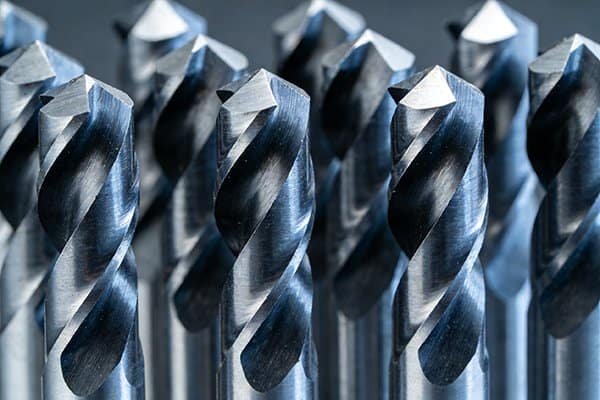
Struggling to drill tough materials? Are your standard drills wearing out too quickly? This downtime costs money and slows production, but carbide drill bits1 are the perfect solution for you.
The right carbide drill bit depends on your material, machine, and budget. Solid carbide drills excel in high-performance tasks, while carbide-tipped bits2 offer a cost-effective alternative. Coatings further boost performance for specific materials, ensuring you get the perfect tool for the job.
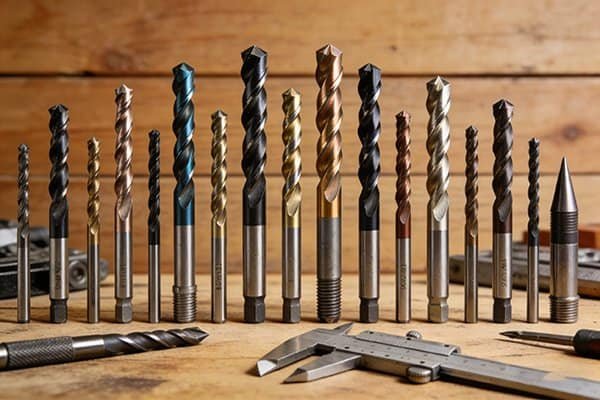
Choosing the right drill bit is one of the most important decisions you can make for your shop's efficiency and the quality of your finished parts. Over the years, I've seen firsthand how the correct tool can transform an operation, reducing cycle times and eliminating scrap. It can feel complex, but it doesn't have to be. Let's break down everything you need to know, starting with why carbide is the king of cutting tools.
What makes carbide drill bits1 the top choice for tough materials?
Are your regular high-speed steel (HSS)3 drills failing on hardened steel or stainless steel? This often leads to broken tools, scrapped parts, and a lot of frustration on the shop floor.
Carbide drill bits are the top choice because of their extreme hardness and incredible heat resistance4. Made from tungsten carbide5, they cut much faster and last significantly longer than HSS drills, especially when you're working with difficult-to-machine materials.
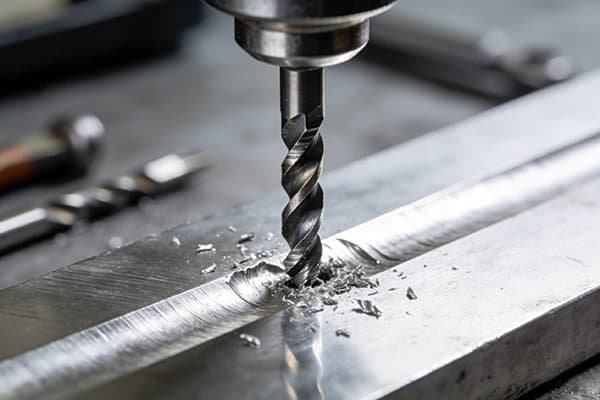
When we talk about "carbide," we're really talking about a composite material called tungsten carbide5. It's made by mixing tungsten carbide5 (WC) powder with a metal binder, usually cobalt (Co). We then sinter this mixture at very high temperatures and pressures. The result is a material that is incredibly hard and wear-resistant. While HSS drills are tough, they just can't handle the heat when cutting speed6s increase. Carbide, on the other hand, maintains its hardness even at temperatures up to 800-1000°C. This "hot hardness" is the secret to its high performance. It allows you to run your machines much faster, sometimes 3 to 5 times the speed of HSS, which dramatically shortens your cycle times. This means more parts per hour and better use of your expensive machinery. The superior wear resistance also means a carbide drill's lifespan can be dozens of times longer than an HSS drill's, reducing tool changes and keeping production running smoothly.
Carbide vs. High-Speed Steel (HSS)
| Feature | Carbide Drill Bit | High-Speed Steel (HSS) Drill Bit |
|---|---|---|
| Hardness | Extremely High (HRA 90+) | Good |
| Heat Resistance | Excellent (up to 1000°C) | Limited |
| Cutting Speed | Very High | Moderate |
| Tool Life | Very Long | Standard |
| Best For | Hardened materials, high-volume production | General-purpose, softer materials |
| Cost | Higher Initial Investment | Lower |
Should you choose solid carbide or carbide-tipped bits2?
Are you unsure whether to invest in solid carbide or go for a more affordable carbide-tipped option? Making the wrong choice can lead to poor performance or unnecessary spending on tools.
Choose solid carbide for maximum performance, rigidity, and tool life7, especially in precision or high-volume jobs. Opt for carbide-tipped bits2 for a budget-friendly solution in general-purpose applications or for drilling larger diameter holes.
This is a question I get all the time, and the answer really depends on the job. There isn't one "best" type; there's only the best type for your specific application. At NV-Tool, we help our clients weigh these factors every day. Let's look at the main options you'll encounter.
Drill Bit Construction Types
-
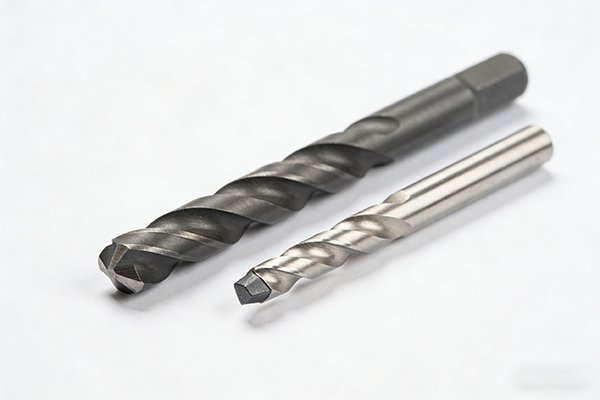
Solid Carbide Drills: These drills are made from a single, solid piece of tungsten carbide5. This construction provides the highest possible rigidity and stability. Because they are so rigid, they vibrate less, which results in more accurate holes with better straightness and a superior surface finish. They are the ultimate choice for high-performance machining, tight tolerance work, and drilling in challenging materials. Their excellent heat dissipation also makes them ideal for high-speed applications. If you are doing high-volume production where consistency and speed are critical, solid carbide is the best investment.
-
Carbide-Tipped Drills: This type of drill has a body made of less expensive steel, with a small piece of carbide brazed onto the cutting end. This is a more economical design, especially for larger diameter drills where a solid carbide body would be very expensive. They are a great general-purpose option and still offer much better performance than HSS drills. However, they are not as rigid as solid carbide drills8, so they may not be the best choice for extremely precise or deep holes.
-
Indexable Insert Drills: For very high-volume production, especially in larger diameters, indexable drills are often the most cost-effective solution. These tools consist of a reusable steel drill body that holds small, replaceable carbide cutting inserts. When an edge wears out, you simply turn the insert to a new edge or replace it. You don't have to replace the entire drill, which saves a lot of money and time.
What materials can you drill with carbide?
Do you work with a wide range of materials in your shop, from standard steel to exotic alloys and composites? Using the wrong drill can quickly ruin both the tool and your expensive workpiece.
Carbide drill bits are perfect for drilling difficult materials where HSS fails. This includes hardened steels9, stainless steel, titanium alloys, high-temperature superalloys10, cast iron, and even abrasive non-metallic composites11 like carbon fiber.
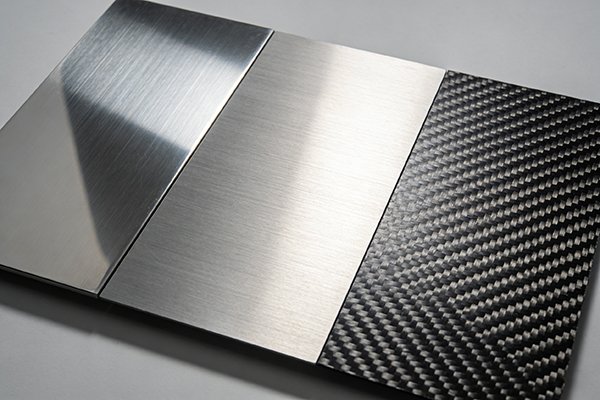
One of the biggest advantages of carbide is its versatility. It gives you the power to machine materials that would be impossible or highly inefficient with traditional HSS tooling. In our factory, we manufacture tools designed to tackle these specific challenges for clients in aerospace, automotive, and mold & die industries. The unique properties of carbide make it the go-to solution for a long list of demanding materials.
Common Materials Machined with Carbide
-
Hardened Steels & High-Strength Alloys: For steels hardened above 40 HRC, carbide is not just an option; it's a necessity. The high hot hardness of carbide allows it to cut through these materials without losing its sharp edge.
-
Stainless Steels: Stainless steel is known for being "gummy" and for work-hardening as you cut it. This means it gets harder during the machining process. A carbide drill's ability to maintain a sharp edge and resist heat buildup is critical for preventing this and achieving a clean hole.
-
Superalloys (Inconel, Hastelloy): These materials are used in aerospace and energy for their incredible strength at high temperatures. They are extremely difficult to machine, and carbide drills with specific geometries and coatings12 are the only effective tools for the job.
-
Titanium Alloys: Similar to superalloys10, titanium is strong, lightweight, and has poor thermal conductivity. This traps heat at the cutting edge. Carbide's heat resistance4 is essential for surviving these conditions.
-
Cast Iron: Cast iron can be very abrasive and quickly wear down HSS tools. The superior wear resistance of carbide provides a much longer tool life7 and more consistent performance.
-
Non-Metallic Composites (CFRP, Fiberglass): Materials like carbon fiber are not hard, but they are extremely abrasive. They act like sandpaper on a cutting tool. Carbide's hardness makes it one of the few materials that can withstand this abrasive wear for any reasonable length of time.
How do coatings12 enhance a carbide drill bit's performance?
Have you seen drills with different colors but aren't sure if the coatings12 are worth the extra cost? Choosing the wrong coating—or no coating at all—can dramatically shorten your tool life7.
Coatings add a micro-thin, super-hard layer to the drill bit to enhance its performance. They increase surface hardness, reduce friction, and improve heat resistance4. This results in longer tool life7, faster cutting speed6s, and better chip evacuation.
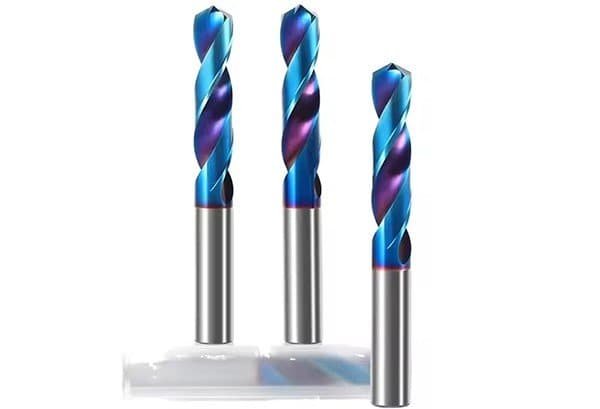
Think of a coating as a force multiplier for your drill bit. The carbide itself is already powerful, but a coating fine-tunes it for a specific job. At our PVD coating13 facility, we apply these advanced layers, which are only a few microns thick, to give our tools a critical performance edge. The coating acts as a thermal barrier, protecting the carbide substrate from the extreme heat generated during cutting. It also provides lubricity, which means the surface is slicker. This reduces friction between the tool and the workpiece, allowing chips to slide off more easily instead of sticking to the tool. Better chip evacuation is crucial, especially in deep hole drilling, as it prevents chips from packing up and breaking the drill. This combination of heat resistance4 and lubricity allows you to run the tool faster and extends its life significantly.
Common PVD Coatings and Their Uses
| Coating | Appearance | Key Properties | Best Applications |
|---|---|---|---|
| TiN (Titanium Nitride) | Gold | All-purpose, good hardness | General-purpose drilling in steels and irons. |
| TiCN (Titanium Carbonitride) | Blue-Gray or Violet | Higher hardness, good wear resistance | Abrasive materials like cast iron, aluminum alloys. |
| TiAlN (Titanium Aluminum Nitride) | Dark Purple / Black | Excellent hot hardness, thermal barrier | High-speed dry machining, stainless steels, nickel alloys. |
| AlTiN (Aluminum Titanium Nitride) | Black / Bronze | Superior hot hardness, for extreme heat | Hardened steels (>45 HRC), titanium, superalloys10. |
Ready to find your drill bit? Choose a category below.
Feeling confident about carbide but now need to find the specific tool for your job? Searching through endless catalogs can be a frustrating waste of your valuable time.
We offer a complete range of carbide drilling solutions. This includes our standard 3D/5D/8D series with internal coolant, micro-drills14 for small holes, and reamers for achieving perfect final dimensions and surface finish.
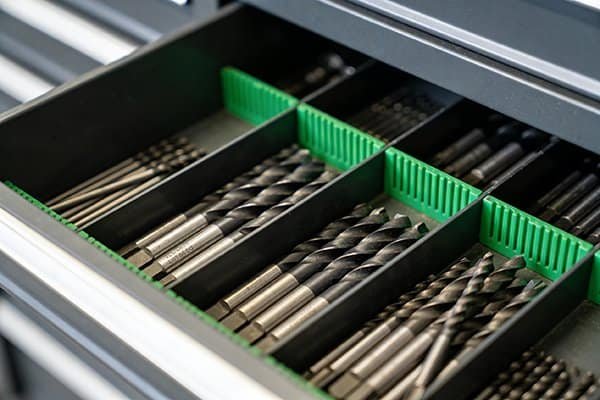
As a manufacturer, we've designed our product lines to be a one-stop solution for our B2B customers. We know that purchasing managers and shop owners need clear, effective options without the guesswork. Whether you are a distributor looking to stock a reliable product line or a large factory needing a custom solution, we have the capability and inventory to support you.
Our Drilling Solutions
-
Standard Carbide Drills (3D, 5D, 8D, and more): The "D" number refers to the maximum drilling depth15 as a multiple of the drill's diameter. For example, a 10mm 5D drill can safely drill a hole 50mm deep. We stock thousands of specifications in our 3D, 5D, and 8D series, which cover most industrial applications. For deeper holes, we also offer 12D, 16D, and even longer series. Many of these drills feature internal coolant channels. These channels deliver high-pressure coolant directly to the cutting edge, which is the most effective way to cool the cut and forcefully flush chips out of the hole.
-
Specialized Hole-making Tools: Beyond standard drilling, we provide tools for precision finishing. Our Micro Drills are designed for industries that require extremely small, precise holes, with diameters starting as low as 1.6mm. For achieving the final size and surface finish, our Carbide Reamers are essential. After you drill a hole slightly undersized, a reamer is used to open it up to the exact final dimension with a mirror-like finish.
If you have any questions or need help selecting the perfect tool, my team and I are here to help. We provide complete technical support, including cutting parameter recommendations.
Conclusion
Choosing the right carbide drill bit boosts your shop's efficiency, quality, and profitability. We have the expertise and product range to help you succeed. Contact us to find your perfect solution.
Explore the advantages of carbide drill bits for enhanced performance and longevity in tough materials. ↩
Discover when carbide-tipped bits are a cost-effective solution for general-purpose drilling. ↩
Explore the drawbacks of HSS drills compared to carbide options for tough materials. ↩
Understand the importance of heat resistance in drill bits for maintaining performance under high temperatures. ↩
Find out why tungsten carbide is the material of choice for durable and efficient drill bits. ↩
Learn how cutting speed influences productivity and tool life in drilling operations. ↩
Discover the key factors that determine the lifespan of drill bits and how to maximize it. ↩
Learn how solid carbide drills can improve precision and efficiency in high-performance machining. ↩
Find out which drill bits are most effective for machining hardened steels and alloys. ↩
Learn about the challenges of machining superalloys and the tools best suited for the job. ↩
Explore the difficulties of machining non-metallic composites and the tools that can handle them. ↩
Explore how different coatings can improve the performance and durability of drill bits. ↩
Discover the advantages of PVD coatings for enhancing drill bit performance and longevity. ↩
Learn about the applications and benefits of micro-drills for precision hole-making. ↩
Learn about the significance of drilling depth in selecting the right drill bit for your application. ↩