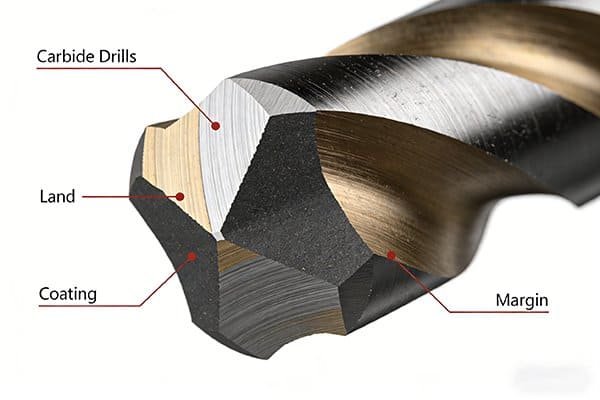
Staring at a solid block of metal and need a complex part? It seems impossible, but end milling is the secret. It’s how raw material becomes a precision component.
End milling1 is a machining process that uses a rotating cylindrical cutter to remove material. It can create a huge variety of features, like slots, pockets, steps, and complex surface contours, making it one of the most versatile methods for shaping metal.
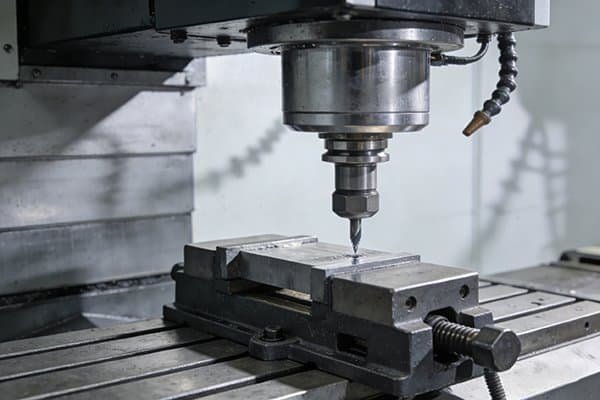
That's the simple answer, but the real magic is in the details. I remember my first time seeing a CNC machine2 at work; it looked like it was carving metal like butter. But I quickly learned that every move, every tool, and every setting was carefully chosen. To really understand how we get from a block to a final part, we have to look at the tools and the jobs they do. It all starts with understanding why this process is so fundamental in our industry. Let's dive in and see how it all works.
Why Is End Milling the Go-To Process for Shaping Metal?
You have a complex design that needs to be made from metal. Other methods are too limited or slow. End milling1 offers the flexibility to create almost any shape imaginable.
End milling1 is the go-to process because of its incredible versatility. Unlike turning, which is for round parts, milling can create flat surfaces, deep pockets, intricate contours, and precise slots on parts of almost any shape. This adaptability makes it a cornerstone of modern manufacturing.
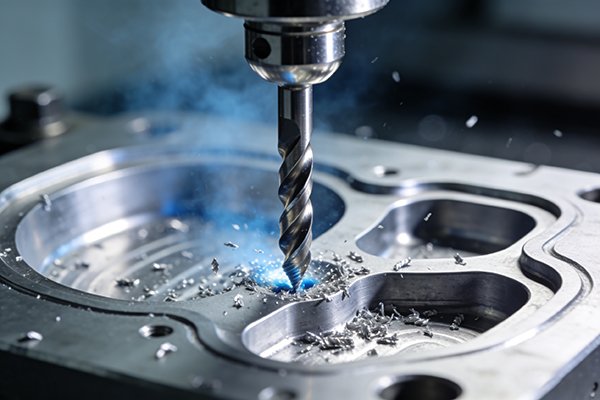
When I talk to customers, from automotive parts makers to aerospace engineers, they all rely on milling. Why? Because it solves so many problems at once. A single machine setup can perform multiple operations, which saves a ton of time. Think about making an engine block. You need flat surfaces for gaskets, circular bores for pistons, and various threaded holes for bolts. End milling1 handles all of this. It’s not just about removing metal; it’s about creating precise geometry. The process can achieve very tight tolerances, which is critical for high-performance parts. Compared to other methods, its ability to work on multiple faces of a part (with 4-axis or 5-axis machines) is a game-changer. This is why you’ll find milling machines in every serious machine shop, from small job shops to massive production facilities like ours.
What Kind of "Cutting Job" Determines Your Choice of Tool?
You have a specific shape you need to cut into a metal block. Using the wrong tool will ruin the part, waste time, and cost you money. The solution is simple: match the tool to the job.
The specific cutting job dictates the tool you choose. For large flat surfaces, you need a face mill. For carving complex 3D curves, a ball nose end mill is required. And for cutting simple, straight grooves, you'll use a specific grooving or slotting end mill.
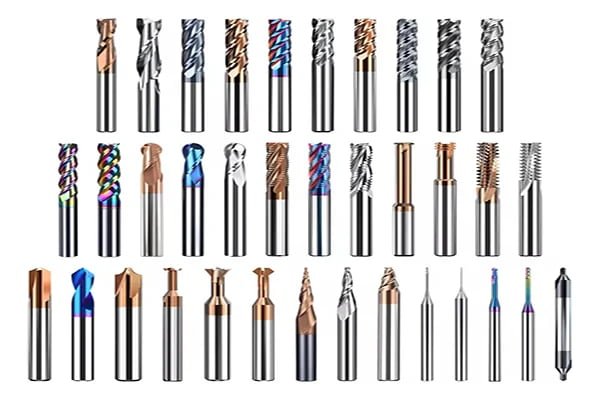
Over the years at NV-Tool, I've seen how picking the right tool geometry makes all the difference. We can break the main types down by the job they are designed for.
Task 1: Milling Large Flat Surfaces
When you need to make the top of a block perfectly flat and do it quickly, you need a tool designed for efficiency. This is where Face Mills3 come in. These are large-diameter cutters, often 50mm or more, fitted with multiple indexable inserts. Their whole purpose is to remove a lot of material in a single pass, creating a smooth, flat surface. This requires a powerful and rigid machine, but the time savings are huge.
Task 2: Versatile Milling for Steps and Cavities
This is where the term "end mill" is most common. These are the workhorses of the shop.
- Square Shoulder End Mills4: These are for creating sharp, 90-degree corners, like milling a step or the side of a part.
- Ball Nose End Mills5: The tip is a perfect hemisphere. We use these for machining 3D curved surfaces, like in molds or for creating smooth, organic shapes.
- Bull Nose End Mills6: This is a hybrid. It has a flat bottom but with rounded corners (an R-angle). This combines the strength of a flat end mill with the ability to create smoother surfaces, making it great for roughing and semi-finishing complex parts.
Task 3: Specialized Jobs
Sometimes, you need a tool for one specific task.
- Grooving End Mills7: As the name suggests, these are for milling straight grooves or keyways.
- Specialty End Mills: The list is long. We have chamfering cutters to break sharp edges, T-slot cutters for machine tables, and even thread mills to create threads. Each one is a specialist designed to do its one job perfectly.
| Tool Type | Primary Job |
|---|---|
| Face Mill | Creating large, flat surfaces quickly. |
| Square Shoulder End Mill | Milling 90-degree steps and side walls. |
| Ball Nose End Mill | Machining 3D curves and complex contours. |
| Bull Nose End Mill | General-purpose roughing and semi-finishing. |
How Does the Right Cutter Unlock a Perfect Finish and Faster Speed?
Your parts have a rough finish, or the job is taking way too long. Wasting time and material is expensive. The secret is choosing a cutter with the right construction for the task.
The cutter’s construction is key to performance. A solid carbide end mill provides high rigidity for a beautiful, precise finish. An indexable insert end mill allows for fast material removal and has economical, replaceable tips, making it ideal for roughing.
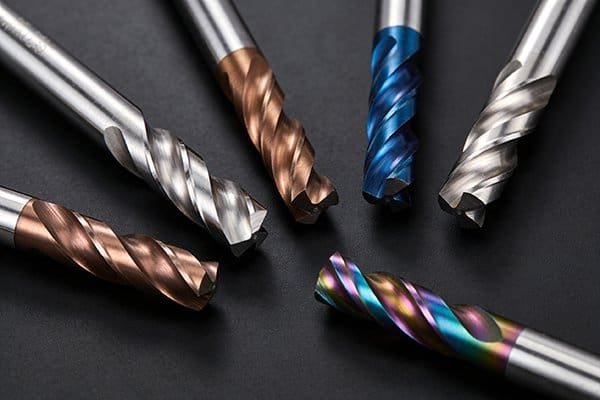
The "job" tells you the shape of the tool, but the "construction" of the tool tells you how it will perform. I always tell our new clients that this is where you balance cost, speed, and quality.
The Precision Finisher: Solid Carbide End Mill8
This tool is made from a single, solid piece of ultra-fine grain carbide. Its main advantage is its high rigidity and precision. Because it's one solid piece, there's very little vibration, which allows it to cut smoothly and leave an excellent surface finish. This makes it perfect for semi-finishing and finishing operations where accuracy is everything. The downside is that they are more expensive, and once the cutting edges wear out, the entire tool needs to be professionally re-sharpened. They are the top choice when the final quality of the surface is the most important goal.
The Economical Workhorse: Indexable Insert End Mill9
This tool has a steel body (the shank) with small, replaceable carbide inserts screwed onto the tip. The big advantage here is economy and flexibility. When a cutting edge gets dull, you don't replace the whole tool. You just turn the insert to a new edge or swap it out for a new one. This takes seconds and dramatically reduces downtime. Because of this design, they are slightly less rigid than a solid end mill, making them best for roughing and semi-finishing, where the goal is to remove a lot of material quickly, not achieve a perfect finish.
The Middle Ground: Welded/Brazed End Mills10
These tools have a carbide cutting head welded or brazed onto a steel shank. They offer a balance between the cost of an indexable tool and the performance of a solid one. However, their use is declining. With the advancements in solid carbide and indexable technology, these tools are now mostly used for special, non-standard applications.
| Cutter Construction | Best For | Key Advantage | Key Disadvantage |
|---|---|---|---|
| Solid Carbide | Finishing | High precision, excellent surface finish | Higher cost, requires resharpening |
| Indexable Insert | Roughing | Economical, fast insert changes, low downtime | Lower rigidity, less precise finish |
| Welded/Brazed | Special Applications | A cost-performance compromise | Less common, not indexable |
When is End Milling the Smartest Choice (And When Is It Not)?
You're not sure if end milling is the right process for your project. Choosing the wrong manufacturing method is a very costly mistake that wastes time and resources.
End milling1 is the smartest choice for parts with complex shapes, pockets, slots, and flat surfaces, especially on non-round stock. It is not the best choice for making simple cylindrical parts (turning is better) or for just creating a basic hole (drilling is faster).
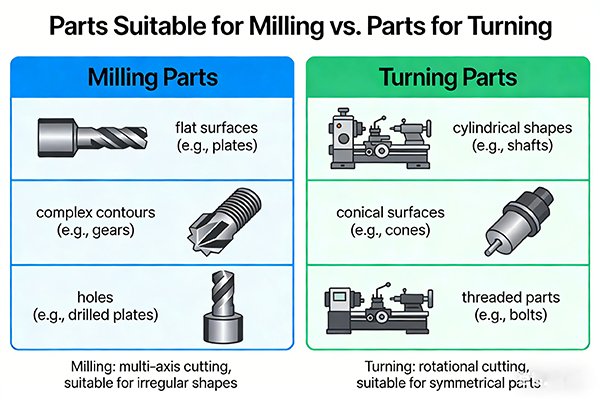
I've learned that being a good manufacturer isn't just about knowing how to run the machines; it's about knowing which machine to run. End milling1 is powerful, but it's not the answer to everything.
End Milling is the Smart Choice For:
- Complex Geometries11: If your part has pockets, contours, steps, and slots, milling is almost always the answer. Think of mold cavities or aerospace structural components.
- Prismatic Parts12: This is a technical term for blocky, non-round parts. Engine blocks, machine bases, and custom brackets are perfect examples.
- Flat Surfaces: When you need a perfectly flat and true surface on a part, face milling is the most efficient way to achieve it.
- Secondary Operations13: Often, a part might be turned on a lathe first to get its basic round shape, and then it's moved to a mill to add features like keyways, flats, or drilled holes on the side.
Other Processes Might Be Better When:
- You Need a Simple Round Part: If you're making a shaft, pin, or anything purely cylindrical, a lathe (turning) is much faster and more efficient.
- You Just Need a Hole: If the only feature is a simple, straight hole, a drill press or a drilling operation is the correct and most cost-effective tool.
- You Need Ultra-High Precision14: For surface finishes and tolerances that are extremely demanding, grinding might be required after milling to achieve the final result.
- You're Cutting Thin Sheets: For cutting profiles out of sheet metal, processes like laser cutting, plasma cutting, or waterjet cutting are far more suitable.
Knowing when to use end milling—and when not to—is key to efficient and cost-effective manufacturing. It's about using the right tool for the right job, every single time.
Conclusion
Choosing the right end mill and process is the secret to turning a simple metal block into a precise, finished part. It's about matching the tool to the job.
Explore the versatility of end milling and its applications in creating complex metal parts. ↩
Learn about CNC machines and their role in precision machining and manufacturing. ↩
Discover how face mills create large, flat surfaces efficiently in machining. ↩
Understand the applications of square shoulder end mills in creating sharp corners. ↩
Find out how ball nose end mills are essential for machining 3D curves. ↩
Learn about the hybrid design of bull nose end mills for versatile machining. ↩
Explore the specific tasks that grooving end mills are designed for in machining. ↩
Discover why solid carbide end mills are preferred for high precision and finish. ↩
Learn about the cost-effectiveness and flexibility of indexable insert end mills. ↩
Understand the applications and limitations of welded/brazed end mills. ↩
Explore the importance of complex geometries in modern manufacturing processes. ↩
Learn about prismatic parts and their significance in machining operations. ↩
Discover how secondary operations enhance the functionality of machined parts. ↩
Explore the techniques used to achieve ultra-high precision in manufacturing. ↩