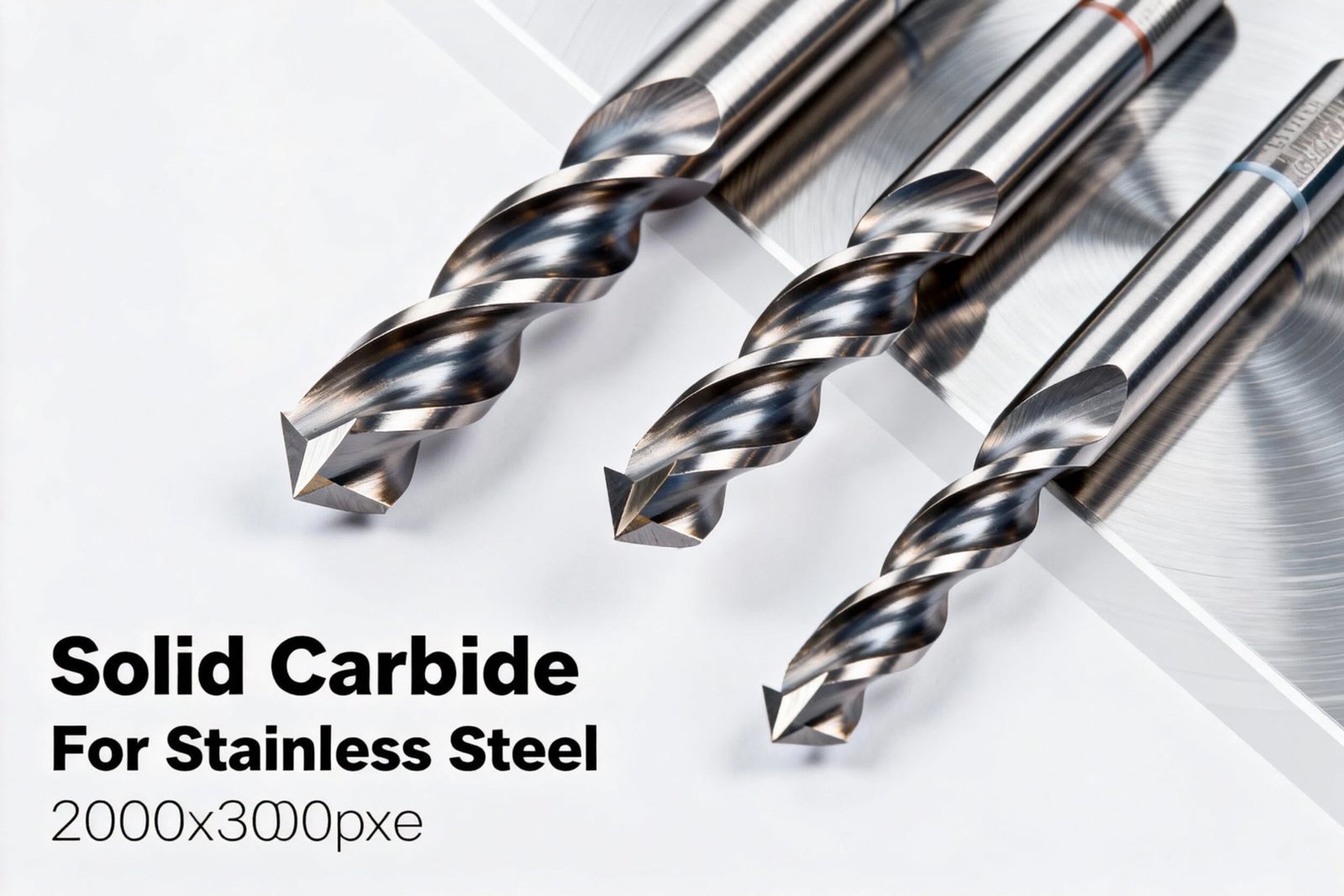
Drilling stainless steel burns through your bits and budget. We know the frustration. The solution is using the right tool, and this guide will show you exactly what to choose.
The best solid carbide drill bits for stainless steel feature a tough K10-K30 carbide grade, a 30° helix angle for good chip removal, and a TiAlN coating for high-heat resistance. These features allow for faster speeds and provide a much longer tool life on difficult materials.
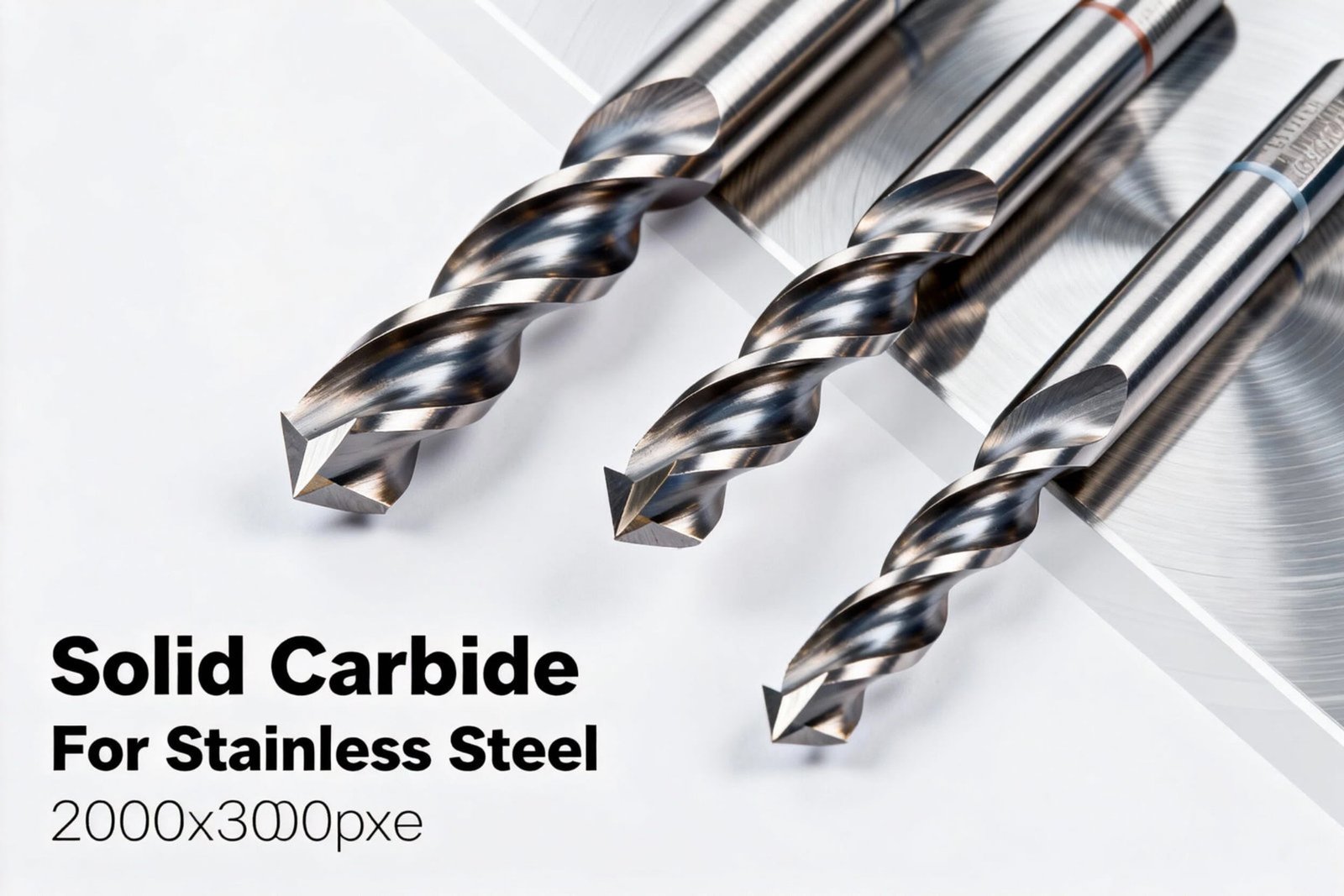
I've spent years helping machine shops solve their toughest drilling problems. Stainless steel is a common challenge, but it doesn't have to be a headache. Once you understand why it's so difficult to machine and what tools are designed to handle it, you can turn a frustrating job into a profitable one. Let's walk through everything you need to know to select the perfect solid carbide drill bit for your stainless steel applications.
What Makes Stainless Steel Drilling Challenging and How Do Solid Carbide Bits Help?
Struggling with drills failing constantly on stainless steel? It’s not just bad luck; it’s the material's nature. Understanding this is the first step to finding a real solution.
Stainless steel's toughness and ductility cause extreme heat and work-hardening during drilling, which quickly destroys standard HSS drills. Solid carbide bits solve this by maintaining extreme hardness at high temperatures (up to 800°C), allowing for cutting speeds 4-6 times faster and increasing tool life exponentially.
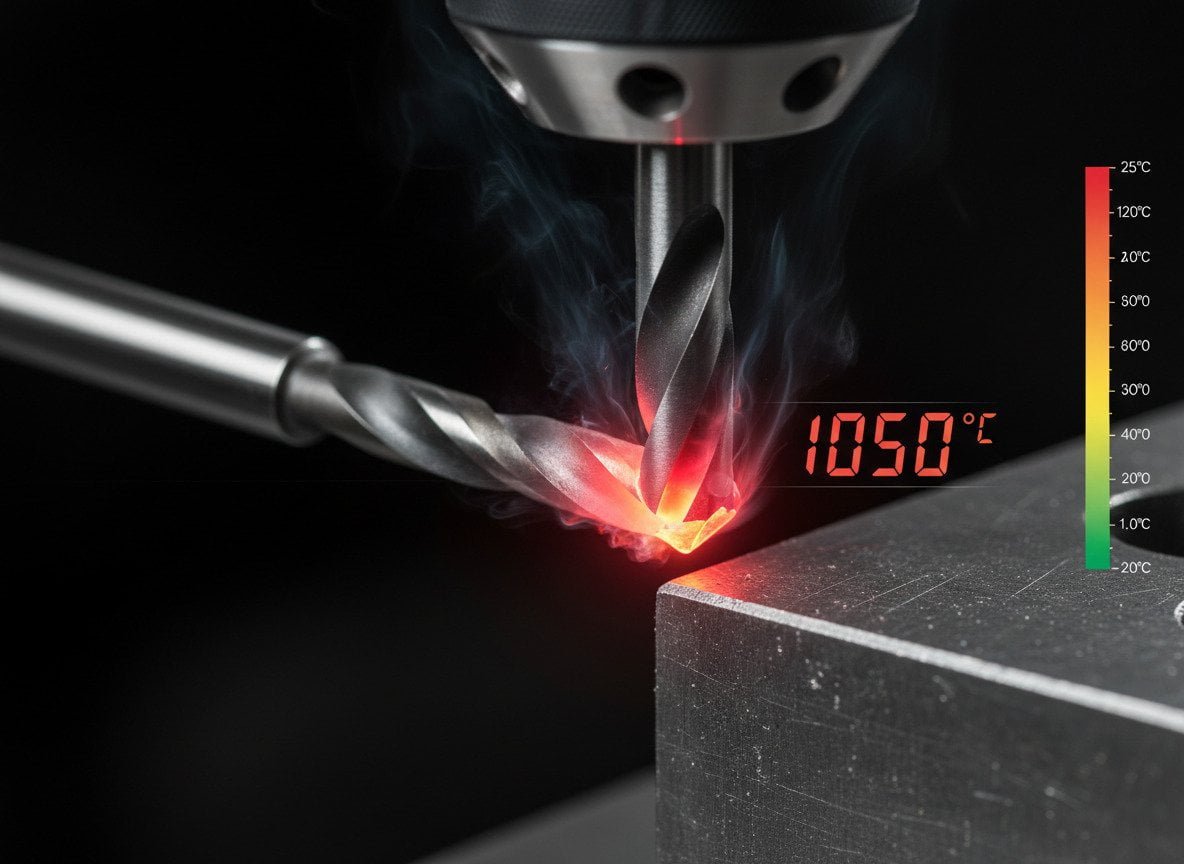
When you're drilling, the material doesn't just chip away cleanly. Stainless steel, in particular, has a tendency to deform plastically under the heat and pressure of cutting. This creates a "gummy" effect where chips don't break off easily. Instead, they can stick to the drill's cutting edge, a problem we call chip adhesion or built-up edge. This clogs the flutes, prevents proper heat dissipation, and causes vibrations that lead to a poor-quality hole and rapid tool failure. I’ve seen brand-new HSS drills turn red and fail after just a few holes.
Solid carbide is a game-changer. It's not just harder; its properties are fundamentally better for this task.
| Feature | High-Speed Steel (HSS) Drill | Solid Carbide Drill | The Advantage |
|---|---|---|---|
| Heat Resistance | Softens around 500°C | Stays hard up to 800°C+ | Can handle the intense heat of drilling stainless steel without failing. |
| Cutting Speed (304 SS) | 8–15 m/min | 40–80 m/min | 4-6x faster cycle times, boosting productivity significantly. |
| Tool Life (316 SS) | 3–80 holes | 200–500 holes | Drastic reduction in tool changes and overall cost per hole. |
This is why we always recommend solid carbide for any serious stainless steel drilling. It’s an investment that pays for itself through higher productivity and lower tooling costs.
What Key Features Should You Look for in Solid Carbide Drill Bits for Stainless Steel?
Choosing a carbide drill can feel overwhelming with all the technical specs. Making the wrong choice is a costly mistake. Let’s simplify it by focusing on three critical features.
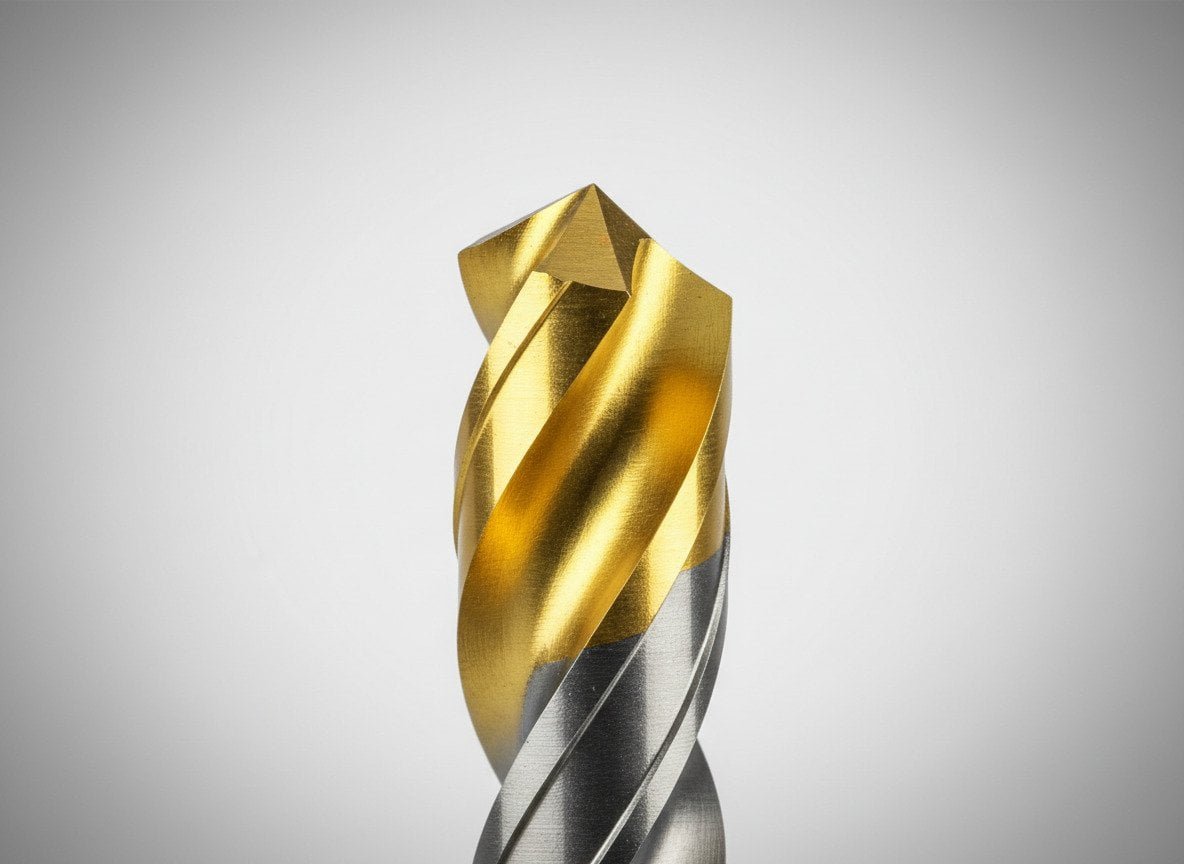
When buying carbide drills for stainless steel, focus on the raw material (K10-K30 grade, 6-12% cobalt), the geometry (a 30° helix angle is ideal), and a high-performance coating like TiAlN. These three elements work together to ensure optimal performance and tool life.
Over the years, I've learned that not all carbide is created equal. For a tough material like stainless steel, the details matter. Let's break down what you need to look for.
1. The Right Raw Material
The foundation of a great drill bit is the carbide itself.
- Grade (Hardness vs. Toughness): Look for grades between K10 and K30. This range offers a great balance of wear resistance (hardness) and the ability to withstand shock (toughness), which is crucial for interrupted cuts or less rigid setups.
- Cobalt Content: A cobalt content of 6% to 12% provides the necessary toughness to prevent the bit from chipping under pressure.
- Grain Size: An ultra-fine grain size (0.5–1.5 μm) makes the carbide stronger and more wear-resistant, leading to a sharper, more durable cutting edge.
2. Optimized Geometry
The shape of the drill controls how it cuts and clears chips.
- Helix Angle: A helix angle between 25° and 35° is standard. For stainless steel, we find that 30° (±3°) provides the best balance between cutting edge strength and efficient chip evacuation, preventing chips from clogging the flutes.
3. A High-Performance Coating
The coating is a thin layer that acts as a shield.
- Coating Type: For stainless steel, a Titanium Aluminum Nitride (TiAlN) coating is an excellent choice. It has fantastic high-temperature stability, which protects the carbide substrate from the extreme heat generated during cutting.
A customer once joked, "Fred, your drill could last forever, but if it costs a fortune, I can't afford it!" He's right. The final, and most practical, feature is finding a supplier who offers great value—a high-quality, reliable drill bit at a fair price. That's what we aim to provide at NV-Tool.
What Are the Different Types of Solid Carbide Drill Bits and When to Use Each?
The term "carbide drill" covers a few different tool types. Using the wrong one for your job can lead to poor performance or unnecessary costs. Let's clarify the main types.
Carbide drills are mainly defined by their construction and coating. Solid carbide drills offer the highest precision. Indexable drills are cost-effective for large holes. Coatings like TiN are for general use, while advanced TiAlN or multi-layer coatings are for high-performance, high-heat applications.
![Different types of carbide drill bits on a table]https://nv-tool.com/wp-content/uploads/2025/12/Types-of-Carbide-Drill-Bits.jpg")
Choosing the right type of drill is about matching the tool to the application's demands for precision, cost, and volume. Here’s a breakdown of the options we manufacture.
By Manufacturing Process
| Drill Type | Description | Best For... |
|---|---|---|
| Solid Carbide Drill | Made entirely from one piece of solid carbide. | High-precision applications like aerospace, high-volume production in automotive, and molds where accuracy and tool life are critical. |
| Indexable Drill | A steel body that holds replaceable carbide inserts. | Cost-effective drilling of large-diameter holes. The reusable body and standard inserts lower the cost per hole and simplify inventory. |
| Brazed (Welded) Drill | A carbide tip welded onto a steel shank. | A budget-friendly option offering better performance than HSS. Good for general-purpose jobs where flexibility is needed and costs must be managed. |
In our experience, most machine shops rely on solid carbide and indexable drills for their stainless steel work.
By Coating Type
The coating is just as important as the drill itself. It's a micro-thin layer that enhances performance.
| Coating Type | Best For... | Key Feature |
|---|---|---|
| TiN (Titanium Nitride) | General-purpose drilling in 304/316 SS. | Good all-rounder, low cost. |
| TiAlN (Titanium Aluminum Nitride) | High-speed drilling in high-strength and stainless steels. | Excellent high-temperature stability. |
| AlCrN (Aluminum Chromium Nitride) | Hard-to-machine steels. | Superior resistance to chip adhesion. |
| Multi-Layer / Nano | The most demanding applications. | Combines layers (e.g., TiAlN + AlCrN) to maximize hardness, heat resistance, and toughness for extreme performance. |
For most stainless steel jobs, a TiAlN-coated solid carbide drill is the sweet spot for performance and value.
What Speeds and Feeds Work Best When Drilling Stainless Steel with Carbide Bits?
You have the perfect drill, but your results are still poor. The problem is likely your speeds and feeds. Let's get your machine parameters dialed in for success.
For optimal results, start with a recommended cutting speed (Vc) and calculate your spindle speed (RPM). For a 6mm drill in 304 stainless steel, a Vc of 60–80 m/min and a feed of 0.08–0.12 mm/rev is a great starting point. Always use coolant.

Setting the right parameters is critical. Too fast, and you'll burn the tool. Too slow, and you'll cause work hardening, which also kills the tool. The goal is to find the balance that creates a clean chip and maximizes tool life. While complex formulas exist, here's a practical starting point.
A simple formula for spindle speed is: RPM ≈ (Cutting Speed × 318) / Drill Diameter
Below are our field-tested recommendations. Use these as a starting point and adjust based on your machine's rigidity, coolant setup, and the sound of the cut.
Recommended Parameters for 304 Stainless Steel
| Drill Diameter | Cutting Speed (Vc) | Spindle Speed (RPM) | Feed per Rev (f) | Coolant |
|---|---|---|---|---|
| 3–6 mm | 60–80 m/min | 3200–5300 | 0.08–0.12 mm/rev | Internal + Emulsion |
| 6–12 mm | 50–70 m/min | 1300–3700 | 0.10–0.15 mm/rev | High-Pressure Internal |
| 12–20 mm | 40–60 m/min | 650–1600 | 0.12–0.20 mm/rev | High-Flow |
Recommended Parameters for 316 Stainless Steel
| Drill Diameter | Cutting Speed (Vc) | Spindle Speed (RPM) | Feed per Rev (f) | Coolant |
|---|---|---|---|---|
| 3–6 mm | 50–70 m/min | 2650–4650 | 0.06–0.10 mm/rev | Enhanced Cooling |
| 6–12 mm | 40–60 m/min | 1050–3200 | 0.08–0.12 mm/rev | High-Pressure Internal |
| 12–20 mm | 35–50 m/min | 550–1350 | 0.10–0.18 mm/rev | High-Flow |
Remember, these are guidelines. A rigid machine can handle higher rates, while a less stable setup may require you to back off a bit. Listen to the cut—a smooth hum is good; a high-pitched squeal means something is wrong.
What Common Mistakes Should You Avoid When Using Solid Carbide Bits on Stainless Steel?
Even with the best tools, simple mistakes can lead to costly failures and dangerous situations. Knowing what to avoid is just as important as knowing what to do.
The most common mistakes are using incorrect speeds (too fast or slow), providing inadequate cooling, and skipping a pilot hole. These errors cause premature tool failure, poor hole quality, and create serious safety risks. Always double-check your parameters and prioritize a good setup.
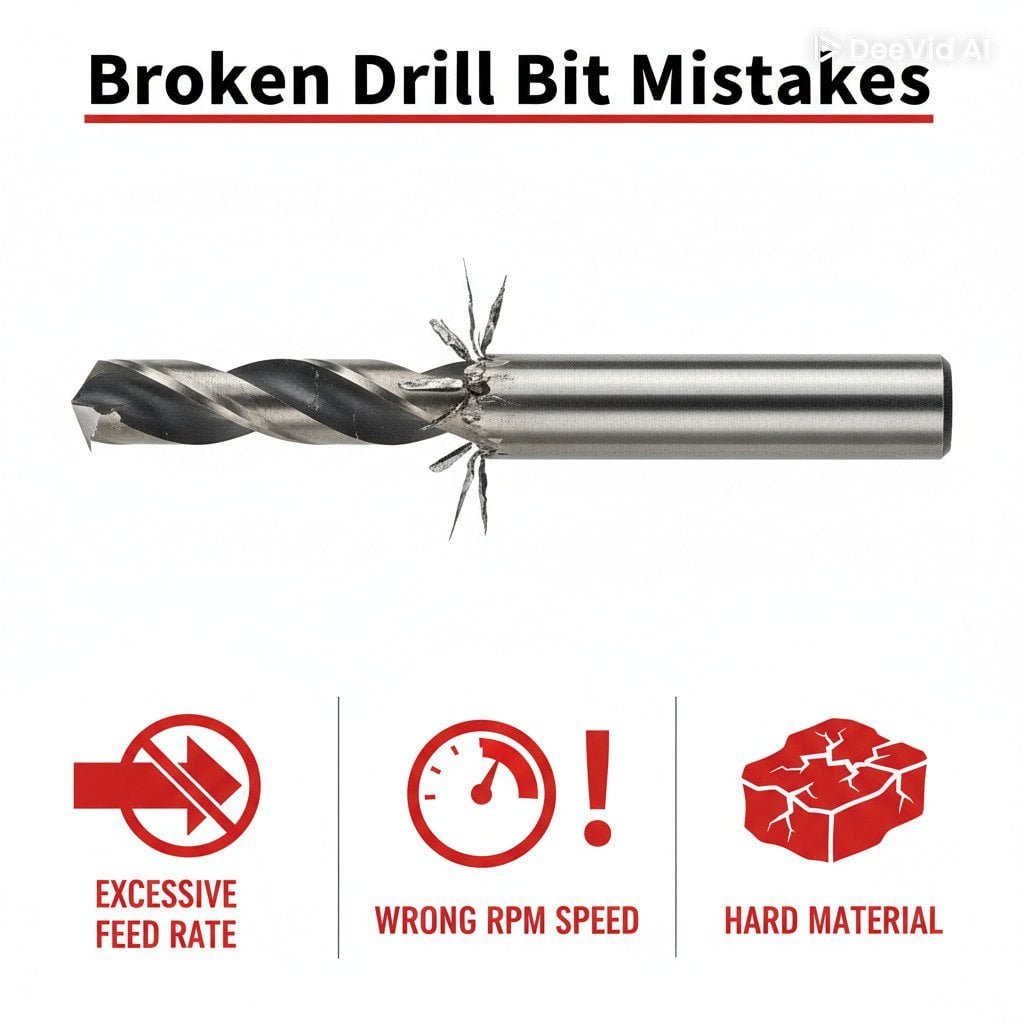
I've visited hundreds of shops, and I see the same preventable mistakes costing people time and money. Here’s a checklist of what to watch out for.
Parameter and Process Mistakes
- Speed Too High: This is a fatal error. The drill will overheat, the coating will fail, and the carbide will soften, destroying the tool instantly.
- Speed Too Low: This causes rubbing instead of cutting, leading to work hardening of the stainless steel. The result is a torn surface finish and a quickly dulled drill.
- No Pilot Hole: Forcing a drill directly into a surface without a center drill or pilot hole can cause it to "walk" or wander, resulting in an inaccurate hole location. Always spot drill first.
- Inadequate Coolant: Running with too little coolant, or worse, dry, is the fastest way to kill a drill in stainless steel. The heat builds up instantly. Ensure a constant, heavy flow of coolant is directed right at the cutting edge. An interruption in coolant flow mid-cut is also a fatal error.
The Most Important Thing: Safety
I'll never forget the first lesson I learned in a machine shop: safety above all else. A tool can be replaced, a part can be remade, but you can't be.
- Flying Chips & Debris: Stainless steel chips are hot, sharp, and fly off at high speeds. Always use machine guarding and wear safety glasses.
- Entanglement: Never wear loose clothing, jewelry, or gloves that can get caught in the rotating spindle.
- Workpiece Security: Ensure your part is clamped securely. A part that comes loose at high RPM is incredibly dangerous.
Pay attention to your setup, double-check your parameters, and always prioritize safety. A few extra minutes of preparation can save you hours of trouble.
How Do You Properly Care for Solid Carbide Drill Bits to Extend Their Lifespan?
Solid carbide drills are a valuable investment. Neglecting them after a job is like throwing money away. A simple care routine can significantly extend their life and ensure consistent performance.
To maximize your drill bit's life, clean it immediately after use with compressed air to remove chips. For a deeper clean, use an ultrasonic cleaner or wipe with ethanol. Finally, dry it completely and store it in VCI anti-rust paper to prevent corrosion.
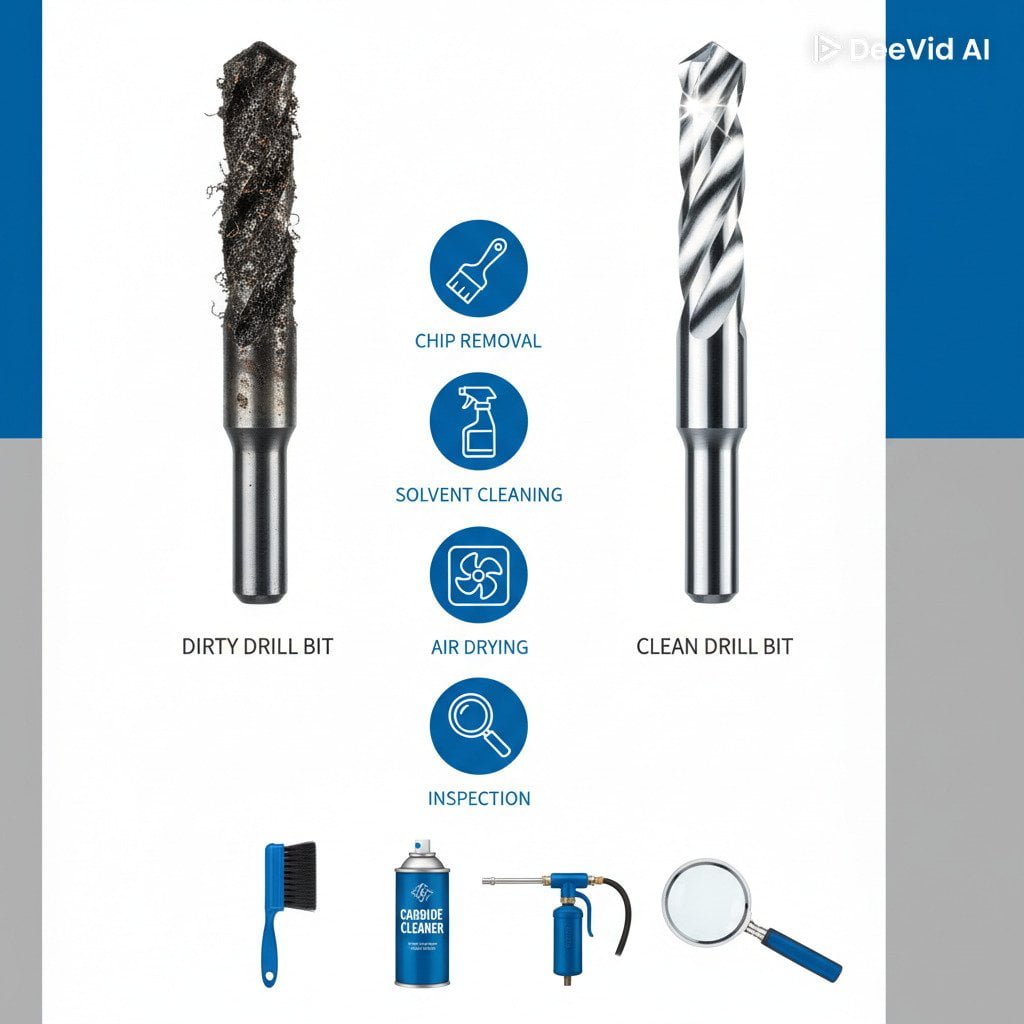
Proper care is simple and doesn't take much time, but it makes a huge difference in the long-term value you get from your tools. Think of it as routine maintenance for your investment. Here is the process we recommend to our customers.
1. Cleaning
- Initial Clean: As soon as you remove the drill from the machine, use compressed air to blow away any visible chips and coolant residue from the flutes and body. Be sure to wear safety glasses during this step.
- Deep Clean: For a more thorough cleaning, especially before storage, you have a couple of options. An ultrasonic cleaner with a suitable cleaning agent works wonders. Alternatively, you can carefully wipe the drill down with a soft cloth and anhydrous ethanol. Be gentle to avoid damaging the sharp cutting edges or the coating.
2. Drying
- Thorough Drying: After cleaning, the drill must be completely dry. Any remaining moisture can lead to corrosion, even on carbide. You can use a hot air blower or simply wipe it dry with a clean, lint-free cloth. Make sure there are no water spots left.
3. Storage
- Short-Term Storage: If you plan to use the drill again soon, wrap it in VCI (Vapor Corrosion Inhibitor) anti-rust paper. This special paper releases a harmless vapor that prevents rust from forming on the tool's surface.
- Long-Term Storage: For longer storage, place the cleaned and dried drill in a sealed plastic bag or its original tube. Adding a small desiccant packet to the bag will absorb any ambient moisture and provide extra protection.
This simple "clean, dry, store" routine will keep your carbide drills in top condition, ready for the next job.
What Are the Top Solid Carbide Drill Bit Brands for Stainless Steel Applications?
When you want the absolute best performance, you look to the industry leaders. However, the market is full of options, making it hard to know who to trust.
The world's top-tier brands for high-performance carbide tools include Sandvik Coromant, Seco Tools, and Kennametal. These companies set the industry benchmark, but the best supplier for you is one that provides the right balance of proven quality, technical support, and value.
In the world of precision cutting tools, a few names consistently stand out for their innovation, quality, and extensive research and development. When machinists talk about the "best of the best," they are usually referring to:
- Sandvik Coromant (Sweden): A global leader known for its cutting-edge technology and comprehensive tooling solutions.
- Seco Tools (Sweden): Another Swedish giant with a reputation for high-quality, reliable tools and strong customer relationships.
- Kennametal (USA): An American powerhouse famous for its material science innovations and high-performance tooling across many industries.
These brands represent the peak of tooling technology and performance. However, their premium products often come with premium price tags, which may not be the best fit for every shop's budget or application.
As a manufacturer, we at NV-Tool have studied these leaders for years. We've invested in the same advanced equipment from Walter and ANCA and use premium raw materials to produce tools that deliver exceptional performance. Our business model is focused on providing that top-tier quality and reliability directly to you, without the massive overhead of the global giants. For many of our partners in the automotive, aerospace, and general machining industries, we represent the ideal balance: world-class performance at a price that makes business sense.
What Are the Best Practices for Achieving Clean, Precise Holes in Stainless Steel?
You want perfect, in-spec holes every single time. It's frustrating when results are inconsistent, leading to scrap parts and wasted time. Follow this simple checklist for repeatable success.
For clean, precise holes in stainless steel, you must: 1) use correct and stable cutting parameters, 2) select the right carbide drill and coating, 3) ensure constant and targeted cooling, 4) use a rigid machine setup, and 5) perform regular quality checks.
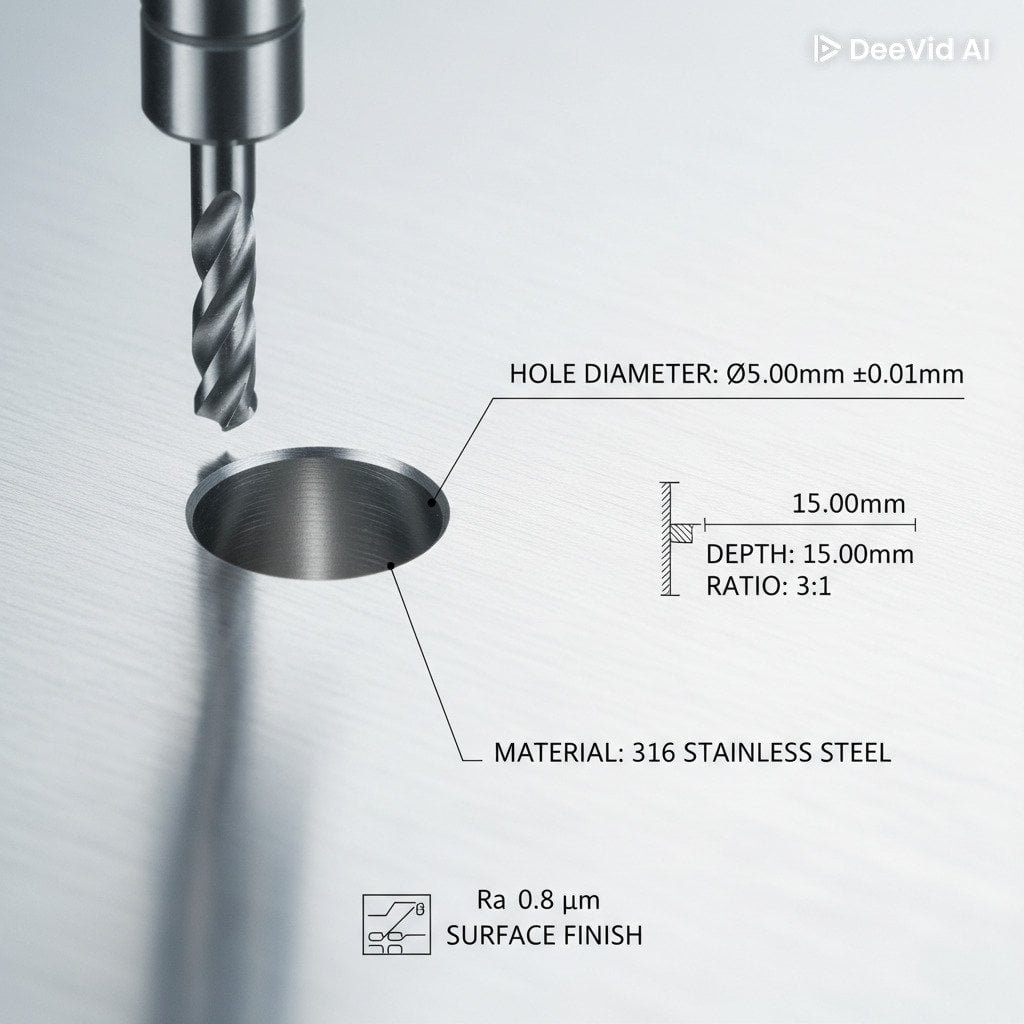
Achieving consistent quality in stainless steel isn't about one magic trick; it's about getting all the fundamentals right. If you follow these best practices, you can turn a challenging material into a predictable process.
1. Precise Parameter Control
Don't guess your speeds and feeds. Use the recommended charts as a starting point and fine-tune them for your specific setup. Consistency is key. A stable cutting speed and feed rate produce a better finish and longer tool life.
2. The Right Tool for the Job
As we've discussed, this is non-negotiable. Use a solid carbide drill with the right geometry (30° helix) and coating (TiAlN) for the job. Matching the tool to the material is the first and most important step.
3. Optimized Cooling and Lubrication
Coolant is not optional; it's essential. For the best results, use a through-spindle coolant system that forces fluid directly to the cutting zone. This flushes chips, prevents overheating, and lubricates the cut, all of which are critical for a clean hole.
4. Machine and Setup Rigidity
Your machine and workholding must be stable. Any vibration or chatter will be transferred to the cutting edge, resulting in a poor surface finish, inaccurate hole size, and potential tool breakage. Use high-quality tool holders and clamp your workpiece securely.
5. Consistent Quality Control
Don't wait until the end of a run to find a problem. Check your first part carefully. Periodically inspect holes throughout the production run to ensure you are staying within tolerance. This allows you to catch and correct any issues, like tool wear, before they lead to scrapped parts.
Conclusion
Choosing the right carbide drill, using correct parameters, and applying proper technique are key. This guide helps you master stainless steel drilling for better results and lower operational costs.